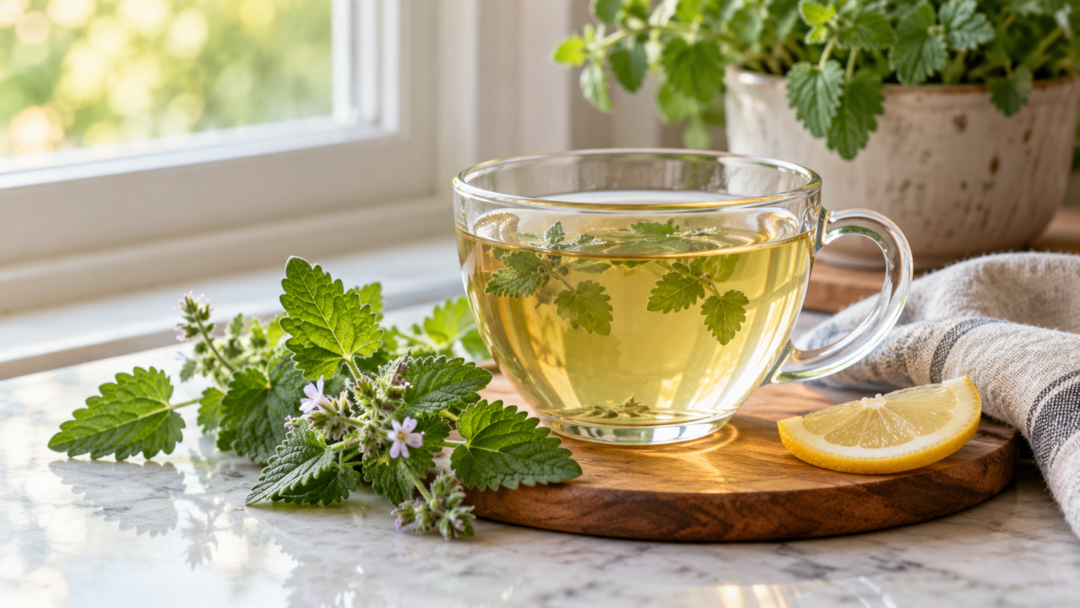
Catnip isn’t just for cats. The leaves of Nepeta cataria, a member of the mint family, can also be used to make a simple herbal infusion for people.
Catnip tea has a mild, herbaceous flavor with subtle minty notes. You can make it with fresh leaves harvested from your indoor garden, then add lemon or honey if you prefer a brighter or sweeter cup.
If you’re growing catnip at home, this recipe offers another way to use your harvest beyond sharing the plant with your feline friends.
Why People Love This Drink
Catnip tea is easy to prepare and doesn’t require any special equipment. All you need are catnip leaves, hot water, and a few minutes to let the flavors infuse.
- Simple ingredients: Fresh catnip and water are enough to make a basic herbal tea.
- A gentle herbal flavor: Catnip has a mild, mint-like taste that pairs well with lemon and honey.
- Easy to customize: Adjust the strength by changing the amount of catnip or steeping time.
- A use for your harvest: Growing catnip gives you fresh leaves for herbal infusions as well as a plant many cats enjoy.
Unlike traditional tea made from Camellia sinensis, catnip tea is a caffeine-free herbal infusion when prepared with catnip alone.
One important distinction: catnip is not well studied in humans, and traditional claims about its calming or medicinal effects aren’t supported by strong clinical evidence. Enjoy it as an herbal drink rather than relying on it to treat a health condition.
Fresh Ingredients From Your Garden
Fresh catnip leaves are all you need for this recipe. The plant’s scientific name is Nepeta cataria, and its aromatic leaves can be used fresh or dried.
For one cup of tea, harvest a small handful of healthy leaves from an established plant. Choose clean, undamaged leaves and avoid harvesting more than the plant can comfortably replace.
Wash the leaves under running water and gently pat them dry before brewing.
You can also dry extra leaves for future cups. Dried catnip has a more concentrated flavor by volume, so you’ll generally need less than you would with fresh leaves.
Ingredients
Makes 1 cup
- 1–2 teaspoons fresh catnip leaves, lightly crushed, or 1 teaspoon dried catnip
- 1 cup (240 ml) freshly boiled water
- 1 teaspoon honey, optional
- 1–2 teaspoons fresh lemon juice, optional
- 1 lemon slice, optional
Start with a small amount of catnip if you’re trying it for the first time. You can adjust the flavor in future batches.
How To Make It
Step 1: Harvest and Prepare the Catnip
Pick a few healthy leaves, rinse them thoroughly, and gently crush them between your fingers to release their aroma.
Step 2: Add Hot Water
Place the leaves in a mug or heatproof teapot. Pour over 1 cup of freshly boiled water.
Step 3: Let It Steep
Cover and steep for about 5–10 minutes. Start at the shorter end for a lighter flavor, or steep a little longer if you prefer a stronger herbal taste.
Step 4: Strain the Leaves
Remove the leaves using a fine-mesh strainer.
Step 5: Customize Your Cup
Add lemon juice or honey if desired. Stir and taste before adding more.
Step 6: Serve
Enjoy the tea warm, or let it cool and serve over ice for a refreshing herbal drink.
Quick tip: Covering the cup while the tea steeps helps retain its aroma.
Harvest Notes
Catnip: Once your plant is established, harvest healthy leaves or tender stem tips with clean scissors. Leave plenty of foliage behind so the plant can continue growing.
For the best flavor, choose fresh, healthy leaves before the plant becomes heavily woody. If flower buds appear, you can still harvest the leaves; flowering doesn’t automatically make them unsuitable for tea.
To dry catnip, spread clean leaves in a single layer in a well-ventilated area away from direct sunlight. Make sure they’re completely dry before storing them in an airtight container. Discard any leaves that show signs of mold or spoilage.
Keep your harvesting tools clean, and only use catnip that has been grown and handled for human consumption. Plants exposed to pesticides or other products not intended for edible herbs shouldn’t be used to make tea.
Nutrition Highlights
Catnip tea is primarily water, so its nutritional contribution depends on the ingredients you add.
- Catnip leaves: Contain naturally occurring plant compounds that contribute to the herb’s aroma and flavor. The nutritional value of a typical cup of catnip tea hasn’t been well established.
- Water: Helps you maintain fluid intake.
- Lemon juice: Adds acidity and a small amount of vitamin C.
- Honey: Adds sweetness and carbohydrates.
Because the leaves are steeped and then removed, catnip tea shouldn’t be treated as a significant source of vitamins or minerals.
Catnip has a long history of traditional herbal use, but evidence for specific health benefits in humans is limited. If you’re interested in drinking it regularly, remember that natural herbs can still have side effects or interact with medications.
Safety note: Avoid using catnip tea during pregnancy unless your healthcare professional advises otherwise, as its safety in pregnancy hasn’t been established. If you take medication or have a health condition, check with a qualified healthcare professional before using it regularly.
Ingredient Swaps
You can adjust the flavor of catnip tea without making the recipe complicated.
- Lemon: Adds a bright, citrusy finish that balances the herbal flavor.
- Honey: Sweetens the tea. Skip it if you prefer an unsweetened drink.
- Fresh mint: Adds a more familiar mint flavor. Use a small amount so it doesn’t overpower the catnip.
- Ginger: A thin slice adds a warm, spicy note.
- Iced tea: Brew the tea as directed, let it cool, and pour it over ice.
- Dried catnip: Use a smaller quantity than fresh leaves because dried herbs are more concentrated by volume.
If you’re experimenting with other herbs, introduce one ingredient at a time so you can identify which flavors you enjoy.
FAQs
1. Can You Make Tea With Fresh Catnip Leaves?
Yes. Rinse a small handful of clean, healthy catnip leaves, lightly crush them, and steep them in hot water for 5–10 minutes. Strain before drinking.
2. What Does Catnip Tea Taste Like?
Catnip tea has a mild, herbaceous flavor with subtle mint-like notes. Lemon can brighten the flavor, while honey adds sweetness.
3. Does Catnip Tea Contain Caffeine?
Catnip itself is naturally caffeine-free. Tea made with only catnip and water contains no caffeine, although other added ingredients may change the drink’s composition.
4. Can I Use Dried Catnip Instead of Fresh Leaves?
Yes. Start with about 1 teaspoon of dried catnip per cup of hot water. Dried leaves are more concentrated by volume, so adjust the amount to suit your taste.
5. Can I Drink Catnip Tea Every Day?
There isn’t enough reliable human research to establish the safety of regular, long-term consumption. If you plan to drink it frequently, consult a healthcare professional, especially if you take medication or have an underlying health condition.
6. Is Catnip Tea Safe During Pregnancy?
Its safety during pregnancy hasn’t been established. It’s best to avoid drinking catnip tea during pregnancy unless your healthcare professional specifically advises you that it’s appropriate.
7. Is Catnip Tea the Same as Catnip Given to Cats?
Both come from the same plant, Nepeta cataria, but the intended use matters. Only use catnip grown and handled for human consumption when making tea, and don’t assume a product sold for pets is suitable for people.