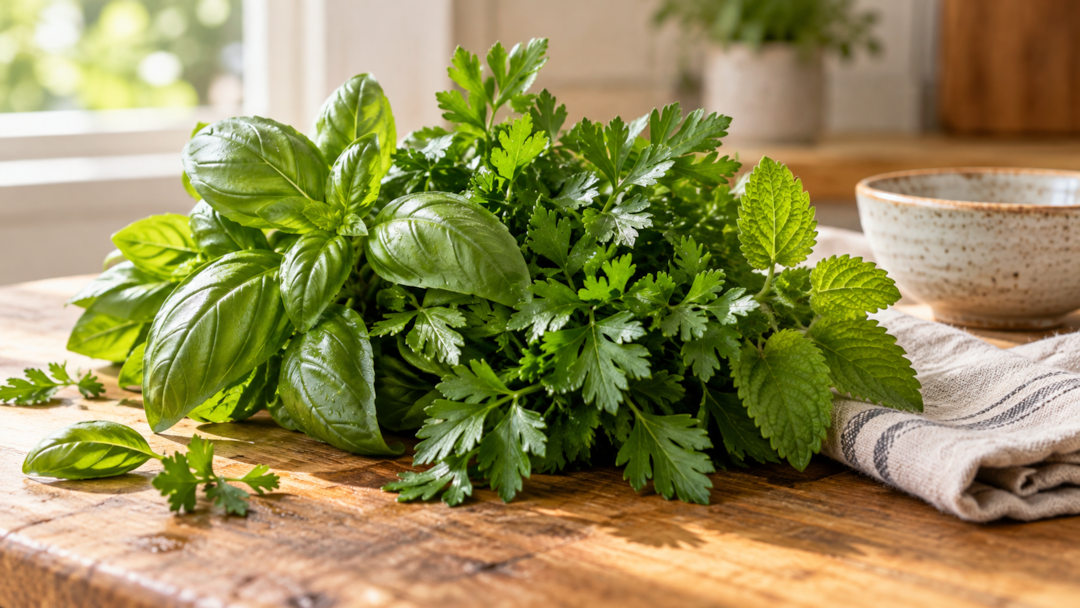
Fresh herbs can transform an ordinary meal with just a handful of leaves. Parsley adds a clean, grassy flavor, basil brings a sweet and peppery aroma, and lemon balm offers a gentle citrus note. Beyond their flavor, culinary herbs contain vitamins, minerals, and naturally occurring plant compounds that can contribute to a varied, balanced diet.
Although herbs are usually eaten in smaller portions than vegetables, they can still add nutritional value to everyday meals. They also make it easier to build flavor without relying entirely on extra salt, rich sauces, or packaged seasonings.
From sprinkling parsley over roasted vegetables to adding fresh basil to pasta or blending lemon balm into a refreshing drink, there are plenty of ways to make herbs part of your routine.
Here's what to know about the nutritional value of common culinary herbs, how fresh herbs compare with dried herbs, and how to grow your own supply at home.
What Fresh Herbs Add to Your Diet
Fresh culinary herbs serve two important purposes: they add flavor, and they contribute small amounts of nutrients and plant compounds.
Parsley, basil, and lemon balm contain various vitamins, minerals, and phytochemicals. Phytochemicals are naturally occurring compounds produced by plants. Some have antioxidant activity in laboratory studies, although that does not automatically mean eating a particular herb will prevent or treat a disease.
The nutritional contribution of herbs depends on the variety, growing conditions, freshness, preparation method, and amount eaten.
For most people, the main dietary advantages of fresh herbs include:
- More flavor and variety: Herbs introduce distinctive aromas and flavors that make everyday meals more interesting.
- Additional micronutrients: Parsley and basil contain nutrients such as vitamin K, with amounts varying by herb and serving size.
- Naturally occurring plant compounds: Herbs contain different aromatic and other plant compounds that contribute to their characteristic flavors.
- A useful way to vary plant foods: Adding herbs alongside vegetables, legumes, whole grains, and other plant foods helps broaden the variety of ingredients in your diet.
- More options for seasoning: Fresh herbs can help build flavor without depending entirely on salt or heavy sauces.
One important distinction: herbs are not a substitute for a substantial serving of vegetables. A tablespoon of chopped parsley contributes less overall nutrition than a full bowl of leafy greens. Their value comes from what they add to a meal, rather than from replacing other nutritious foods.
Nutrients Found in Common Culinary Herbs
Different herbs have different nutritional profiles. Parsley is particularly notable for its vitamin K content, basil contributes vitamin K and other micronutrients, and lemon balm is valued primarily for its lemon-like aroma and traditional culinary uses.
Parsley: Vitamins and Plant Compounds
Parsley is more than a decorative garnish. Both Italian flat-leaf parsley and dark green parsley can add flavor and nutrients to meals.
Parsley contains:
- Vitamin K: Important for normal blood clotting and bone metabolism.
- Vitamin C: Supports normal immune function and collagen formation.
- Vitamin A precursors: Parsley contains carotenoids that the body can use to produce vitamin A, which supports normal vision and immune function.
- Folate: A B vitamin involved in normal cell division and the formation of DNA.
- Plant compounds: Parsley contains naturally occurring compounds, including flavonoids and carotenoids.
The amount you obtain depends on the portion. A small garnish contributes less than several tablespoons of chopped parsley mixed into a salad, dressing, grain bowl, or sauce.
Italian flat-leaf parsley has broad, relatively flat leaves and a fresh, slightly peppery flavor. It is easy to chop and distribute throughout a dish.
Dark green parsley has a deeper green appearance and a similar fresh, savory flavor, although characteristics vary by cultivar.
Both can be used in much the same way. Try adding chopped parsley to bean salads, roasted vegetables, homemade dressings, or lemon-and-herb sauces.
A practical nutrition note: Parsley is rich in vitamin K relative to its typical serving size. People taking warfarin should keep their vitamin K intake reasonably consistent and consult their healthcare professional before making significant dietary changes.
Basil: Flavor and Nutritional Components
Basil is widely used in Mediterranean and Southeast Asian cooking. Its flavor can range from sweet and peppery to citrus-like, depending on the variety.
Common culinary varieties include:
- Genovese basil: A classic Italian basil with a sweet, aromatic flavor, commonly used in pesto and tomato dishes.
- Lemon basil: Has a distinct citrus-like aroma that works well in salads, fish dishes, sauces, and drinks.
- Red Rubin basil: A purple-leaved basil with a bold appearance and a flavor suited to salads, garnishes, and herb sauces.
Basil contains vitamin K and smaller amounts of other nutrients, depending on the variety and portion. It also contains naturally occurring aromatic compounds that contribute to its distinctive scent and flavor.
Basil's main dietary advantage is often its ability to make simple meals more appealing. A few fresh leaves can bring fragrance and complexity to tomatoes, pasta, sandwiches, and vegetables without requiring a rich sauce.
For example, a tomato salad with Genovese basil, olive oil, and a little vinegar can be flavorful with just a few ingredients. Lemon basil can bring a bright note to cucumber salads or a homemade dressing.
Different basil varieties are not necessarily nutritionally interchangeable in every respect, but all can be useful additions to a varied diet.
Lemon Balm: Culinary Uses and What Is Known About It
Lemon balm (Melissa officinalis) is an aromatic herb in the mint family. Its leaves have a fresh, lemon-like fragrance that works well in teas, infused water, fruit salads, and light sauces.
Lemon balm contains naturally occurring plant compounds, including rosmarinic acid and other phenolic compounds. Researchers have studied lemon balm in relation to several health effects, but evidence varies by use, and studies of concentrated extracts or supplements cannot automatically be applied to ordinary culinary portions.
For everyday cooking, lemon balm is best appreciated as a flavorful herb rather than a proven treatment for a health condition.
Try these simple uses:
- Add a few fresh leaves to a jug of cold water with cucumber or citrus.
- Tear the leaves into a fruit salad.
- Steep fresh leaves in hot water for an aromatic herbal infusion.
- Finely chop the leaves into a light dressing for fruit or mild vegetables.
If you take medication or are considering lemon balm supplements for a health concern, ask a healthcare professional about possible interactions. Culinary use and concentrated herbal products are not equivalent.
Fresh Herbs as Flavorful Alternatives to Extra Salt or Heavy Sauces
One of the easiest ways to use herbs in a healthy eating routine is to treat them as seasoning rather than decoration.
Salt enhances flavor, but excessive sodium intake can contribute to high blood pressure in susceptible people. Rich sauces can also add substantial calories, saturated fat, or sodium, depending on their ingredients.
Fresh herbs offer another way to build flavor.
| Herb | Flavor Profile | Foods It Pairs Well With |
|---|---|---|
| Italian flat-leaf parsley | Fresh, grassy, mildly peppery | Beans, fish, potatoes, salads, roasted vegetables |
| Dark green parsley | Fresh, green, savory | Grain bowls, soups, vegetables, dressings |
| Genovese basil | Sweet, aromatic, peppery | Tomatoes, pasta, pesto, mozzarella |
| Lemon basil | Citrus-like, fresh | Cucumbers, fish, fruit salads, light sauces |
| Red Rubin basil | Aromatic, bold, slightly spicy | Tomato salads, sandwiches, herb dressings |
| Lemon balm | Light, lemony, mint-like | Herbal infusions, fruit, cucumber, light sauces |
For a quick flavor boost, combine chopped parsley with lemon juice, olive oil, black pepper, and minced garlic. For pasta, toss fresh basil with tomatoes and a little olive oil. For vegetables, add herbs near the end of cooking so their aromas remain noticeable.
Herbs do not eliminate sodium or calories, and a homemade herb sauce can still contain substantial amounts of salt or oil. However, they give you more ways to create satisfying flavor while deciding how much salt, oil, or sauce a dish needs.
Frequently Asked Questions
Are Fresh Herbs Nutritionally Useful in Small Portions?
Yes. Fresh herbs contain nutrients and naturally occurring plant compounds, even though the amounts you consume are usually smaller than those from a full serving of vegetables.
Parsley and basil can contribute vitamin K, and parsley also provides vitamin C, folate, and carotenoids. The exact nutritional contribution depends on the herb and serving size.
Their value also comes from flavor. Herbs can make vegetables, legumes, and whole grains more appealing, helping you enjoy a wider variety of plant foods.
Can Basil and Parsley Be Eaten Every Day?
For most people, ordinary culinary amounts of fresh basil and parsley can be part of an everyday diet.
You can add them to salads, soups, pasta, eggs, vegetables, dressings, and grain bowls. There is no universal requirement to eat a particular quantity of herbs every day, and they should not replace other nutritious foods.
If you take warfarin, maintain a consistent intake of vitamin K-containing foods and discuss significant dietary changes with your healthcare professional. Concentrated herbal extracts and supplements should not be assumed to have the same safety profile as small culinary portions.
What Is the Difference Between Culinary Herbs and Leafy Greens?
Culinary herbs are generally used in smaller amounts to add flavor and aroma, while leafy greens are often eaten in larger portions as a main part of a meal.
Parsley and basil are examples of culinary herbs. Kale, collard greens, lettuce, and Swiss chard are commonly treated as leafy vegetables.
The distinction is based largely on how the plants are used in cooking, rather than a strict botanical boundary. Both herbs and leafy greens can provide vitamins, minerals, fiber, and other plant compounds, but larger servings of leafy vegetables generally contribute more total food and nutrients.
Which Fresh Herb Is Best for Everyday Cooking?
There is no single best choice. Parsley is versatile in savory dishes, Genovese basil works particularly well with tomatoes and pasta, lemon basil suits lighter dishes, and lemon balm is useful for citrus-like flavor in drinks and fruit-based recipes.
Start with the foods you cook most often and choose herbs that complement them. Growing two or three varieties can give you a useful range of flavors without requiring a large indoor garden.
Do Fresh Herbs Have More Nutrients Than Dried Herbs?
It depends on the nutrient, herb, processing method, and amount used. Drying removes water, which can concentrate some nutrients by weight, but drying and storage can also reduce certain sensitive compounds.
Because fresh and dried herbs are used in different amounts, comparing their nutrition per 100 grams may not reflect what you actually consume in a meal.
Choose fresh herbs when you want their texture and bright flavor, and dried herbs when convenience or a concentrated seasoning is more appropriate.
Make Fresh Herbs Part of Your Everyday Routine
Parsley, basil, and lemon balm bring different flavors to the kitchen while contributing small amounts of nutrients and naturally occurring plant compounds. They can help you add variety to meals and build flavor without depending entirely on salt or heavy sauces.
Start with a few simple habits: add parsley to salads and soups, keep basil on hand for tomatoes and pasta, or use lemon balm to make an aromatic infusion. If you enjoy having fresh ingredients available, growing culinary herbs indoors can make these small additions easier to maintain.
Fresh herbs are not a substitute for a balanced diet, but they are a practical way to make nutritious food more flavorful, varied, and enjoyable.