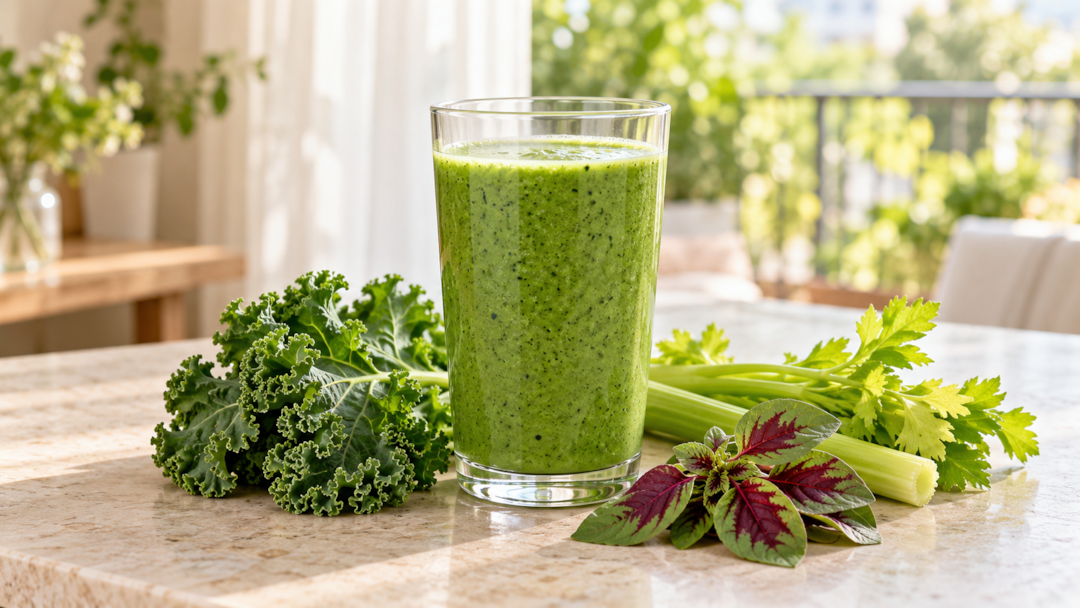
Fresh greens don't have to stay on your salad plate.
This Super Greens Smoothie blends Red Russian Kale, Classic Kale, Amaranth, and Celery.
It makes a fresh, bright green drink that is easy to make.
Customizing it is also easy. Add fruit for natural sweetness. Blend with your favorite liquid. You have a simple way to turn fresh greens into a refreshing smoothie.
The real advantage of growing these ingredients at home is freshness. Instead of buying many greens for one smoothie, harvest what you need from your indoor garden. Leave the rest growing for your next meal.
This recipe follows the Maygrove Garden-to-Table idea. Grow what you want to eat. Harvest what you need. Make something fresh.
Why People Love This Drink
A Simple Way to Eat More Greens
Kale, amaranth, and celery each bring a different flavor and texture to the smoothie.
Kale provides a hearty leafy-green base. Amaranth adds tender leaves with a mild, earthy flavor, while celery contributes a fresh, crisp character.
Blending them together makes it easy to enjoy several homegrown greens in one drink.
Fresh Ingredients From Your Garden
Freshly harvested greens can go straight from your indoor garden into your blender.
You don't need to harvest an entire plant. Pick the amount you need, rinse the leaves, and save the rest for another recipe.
That makes this smoothie especially useful when you're growing a variety of greens in a compact indoor garden.
Easy to Customize
The greens are only the starting point.
Banana can add creaminess and natural sweetness. Berries can bring a bright fruit flavor. Apple can add sweetness and acidity, while lemon or lime can make the smoothie taste lighter and more refreshing.
You can also adjust the consistency with water, coconut water, milk, or your favorite plant-based milk.
A Garden-to-Glass Breakfast
This smoothie works well as part of breakfast, a post-workout snack, or a quick afternoon drink.
Because the recipe is flexible, you can change the ingredients based on what you can harvest from your garden.
Fresh Ingredients From Your Garden
This smoothie uses four homegrown greens:
- Red Russian Kale
- Classic Kale
- Amaranth
- Celery
You don't need to use equal amounts of every green. Kale is the main leafy base. You can change the amounts of amaranth and celery to control their flavor strength.
For the freshest smoothie, harvest the greens shortly before blending.
Ingredients
Makes about 2 servings.
- 1 cup Red Russian Kale leaves
- 1 cup Classic Kale leaves
- 1 cup fresh Amaranth leaves
- ½ cup chopped Celery
- 1 ripe banana
- 1 cup frozen berries
- 1 cup unsweetened milk or plant-based milk
- ½ cup cold water, as needed
- 1 tablespoon fresh lemon juice, optional
- Ice, optional
How To Make It
Step 1: Harvest Your Greens
Start by harvesting the kale, amaranth, and celery.
Choose fresh, healthy leaves without yellowing or visible damage.
For kale, harvest individual outer leaves or small amounts of tender growth rather than removing all the leaves from the plant.
For amaranth, younger leaves are generally a good choice for a smoothie because of their tender texture.
For celery, harvest the amount you need and keep the remaining plant growing for another use.
Step 2: Wash the Ingredients
Rinse the greens and celery thoroughly under cool running water.
Gently pat them dry.
Because everything will blend, you don’t need to finely chop the leafy greens. However, cutting the celery into smaller pieces can make blending easier.
Step 3: Add the Liquid First
Pour the milk or plant-based milk into the blender first.
Adding liquid before the solid ingredients can help the blender move the ingredients more easily.
Add the banana, frozen berries, kale, amaranth, and celery.
Step 4: Add Lemon Juice
If you're using lemon juice, add about 1 tablespoon.
The acidity can brighten the flavor and balance the earthy notes from the greens.
Step 5: Blend
Start blending on a low speed and gradually increase the speed.
Blend for about 60–90 seconds, or until the mixture is smooth.
If the smoothie is too thick, add cold water a little at a time.
If it is too thin, add a little more frozen fruit or greens.
Step 6: Taste and Adjust
Taste the smoothie before serving.
- For a sweeter taste, add more banana or another fruit.
- For more acidity, add a small amount of lemon juice.
- For a stronger green flavor, add another handful of kale or amaranth.
Step 7: Serve Fresh
Pour the smoothie into two glasses and serve immediately.
For the best texture and flavor, smoothies are generally most enjoyable soon after blending.
Nutrition Highlights
This smoothie combines several leafy greens with fruit and a milk or plant-based milk base.
Kale
Kale is a nutrient-dense leafy green. It provides fiber, vitamins, and minerals, including vitamin K, vitamin C, and vitamin A precursors.
The exact nutrition content varies with the kale variety and the amount used.
Amaranth
Amaranth leaves contribute leafy-green nutrients, fiber, and minerals. Young leaves have a tender texture that makes them particularly convenient for smoothies.
Celery
Celery contributes water, fiber, and several vitamins and minerals while adding a fresh, savory flavor to the smoothie.
Berries
Berries provide natural sweetness and contribute fiber and vitamin C, depending on the fruit and quantity used.
Frozen berries are particularly convenient because they help make the smoothie cold and thick.
Banana
Banana contributes carbohydrates and natural sweetness while helping create a creamy texture.
It also provides potassium.
Milk or Plant-Based Milk
The nutrition profile depends heavily on the liquid you choose.
Dairy milk usually provides protein and calcium. Fortified plant-based milks can provide varying amounts of protein and calcium. They may also provide vitamin D and other nutrients, depending on the product.
For the most accurate nutrition details, check the label on the milk or plant-based milk you use.
One More Reason to Grow Greens
A homegrown smoothie doesn’t automatically offer more nutrition just because you grew it at home.
The bigger advantage is practical: having fresh greens available makes it easier to use them regularly.
When kale, amaranth, celery, and other greens grow near your kitchen, smoothies can start with fresh harvests. They do not need store-bought greens.
FAQs
1. Can I Use Both Red Russian Kale and Classic Kale in One Smoothie?
Yes.
Using both varieties gives you a combination of flavors and textures. Red Russian Kale can provide tender leaves, while Classic Kale adds another hearty leafy-green component.
You can also use whichever kale variety is ready to harvest.
2. Can I Eat Amaranth Leaves Raw in a Smoothie?
You can use young amaranth leaves as a leafy-green ingredient in smoothies. Wash the leaves thoroughly before blending and use fresh, healthy foliage.
3. Does Celery Make a Smoothie Taste Too Savory?
It can if you use a large amount.
The recipe starts with ½ cup chopped celery, which provides freshness without dominating the fruit and greens. If you prefer a sweeter smoothie, reduce the celery slightly.
4. Can I Make This Smoothie Without Banana?
Yes.
Cooks mainly use banana for sweetness and creaminess. You can replace it with mango, pear, avocado, or another fruit with a suitable texture.
5. What Fruit Goes Best With Kale in a Smoothie?
Berries, banana, mango, pineapple, apple, and pear all pair well with kale.
For this recipe, frozen berries provide a bright flavor that balances the earthy character of the greens.
6. How Do I Make a Green Smoothie Taste Less Bitter?
Start with tender greens. Balance stronger greens with naturally sweet fruit. Add enough liquid for a smooth texture.
Banana, berries, mango, and pineapple can all help balance stronger leafy-green flavors.
7. Can I Prepare This Smoothie Ahead of Time?
Best enjoyed soon after blending.
To prepare it ahead, keep it refrigerated in a sealed container and shake or stir before drinking. The color, texture, and flavor can change during storage.
8. Can I Use Frozen Kale or Amaranth?
Yes, although the texture may differ from fresh greens.
Freshly harvested greens are convenient when you're growing them indoors because you can harvest only what you need.
9. How Often Can I Harvest Kale for Smoothies?
You can harvest kale repeatedly as the plant continues producing new leaves.
Take individual outer leaves and leave the central growing area intact so the plant can continue producing.