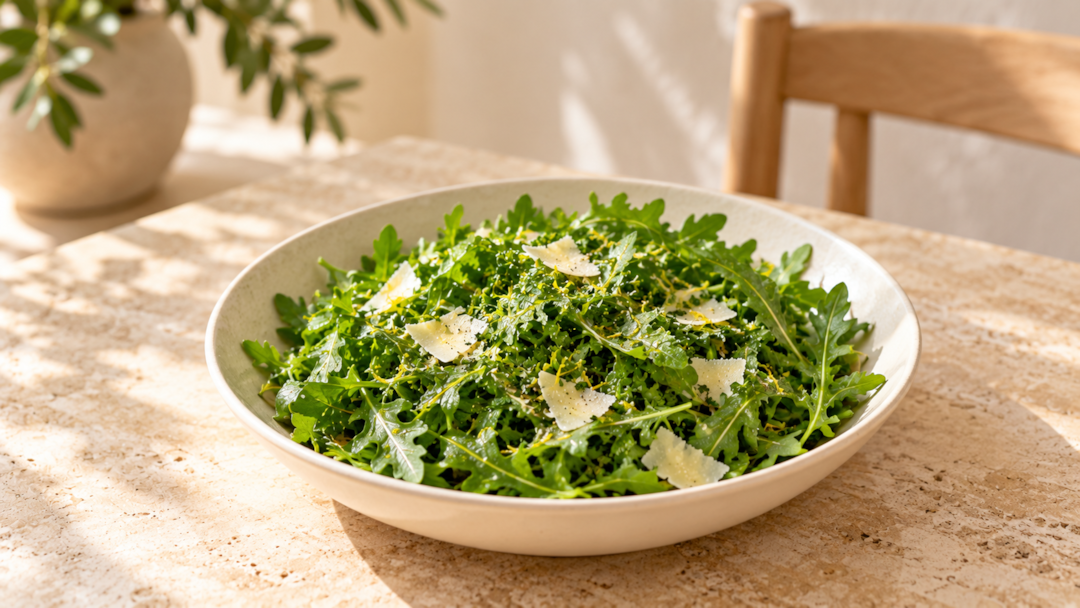
Peppery arugula, bright lemon dressing, fresh herbs, and salty Parmesan make a simple salad that works alongside almost any meal. The ingredients are easy to find, the preparation takes only a few minutes, and the dressing brings everything together without hiding the flavor of the greens.
If you’re growing arugula at home, this is a practical way to use a fresh harvest. You don’t need a large bowl of leaves or a long list of ingredients—just enough arugula for a crisp, flavorful side salad.
Why This Salad Works So Well
Arugula has a distinctive peppery flavor that sets it apart from milder salad greens. Lemon juice balances that sharpness with acidity, olive oil softens the overall flavor, and Parmesan adds a savory, salty finish.
Fresh herbs bring another layer of aroma, but they should complement the arugula rather than overwhelm it. Parsley and basil both work well in small amounts.
This salad is particularly useful when you want a fresh side dish without a heavy dressing.
- A balanced flavor: Peppery greens, tangy lemon, rich olive oil, and salty cheese work together.
- Quick preparation: The salad takes around 10 minutes to assemble.
- Flexible serving: Serve it with pasta, roasted vegetables, grilled chicken, or fish.
- A practical harvest: Arugula can be harvested in small batches, so you can make this salad whenever enough leaves are ready.
What You’ll Harvest From Your Garden
For two side-salad servings, aim for approximately 60–80 g (2–3 oz) of fresh arugula.
| Crop | Amount to Harvest | Purpose |
|---|---|---|
| Arugula | 60–80 g | Provides the peppery, leafy base of the salad |
This amount is a recipe target, not a guarantee of what one plant will produce. Harvest what your plants can reasonably provide, and adjust the recipe if you have a smaller or larger quantity.
Choose young, tender leaves for a milder flavor. More mature leaves tend to have a stronger peppery bite.
Ingredients
Serves: 2 as a side salad
Prep time: 10 minutes
Cook time: None
For the Salad
- 60–80 g fresh arugula
- 2 tbsp shaved or finely grated Parmesan cheese
- 1 tbsp finely chopped fresh parsley or basil, optional
- Freshly ground black pepper, to taste
For the Lemon Dressing
- 1½ tbsp extra-virgin olive oil
- 1 tbsp fresh lemon juice
- ½ tsp Dijon mustard, optional
- ¼ tsp honey, optional
- Small pinch of salt
- Freshly ground black pepper, to taste
Ingredient note: Parmesan adds a salty, savory flavor, so start with a small pinch of salt in the dressing and adjust after tossing the salad.
How To Make It
Step 1: Wash and Dry the Arugula
Rinse the arugula thoroughly under cool running water. Remove any damaged or yellowing leaves, then dry the greens using a salad spinner or clean kitchen towel.
Dry leaves are important because excess water can dilute the dressing and prevent it from coating the salad properly.
Step 2: Make the Lemon Dressing
In a small bowl, whisk together the lemon juice, olive oil, and optional Dijon mustard and honey.
Season with a small pinch of salt and freshly ground black pepper.
Taste the dressing. If it’s too sharp, add a little more olive oil or a small amount of honey. If you prefer a brighter flavor, add a few more drops of lemon juice.
Step 3: Dress the Arugula
Place the dried arugula in a large bowl. Drizzle over about two-thirds of the dressing and toss gently until the leaves are lightly coated.
Add more dressing only if needed. Arugula is delicate, and too much dressing can weigh down the leaves.
Step 4: Add the Parmesan and Herbs
Scatter the shaved Parmesan over the salad. Add the chopped parsley or basil, if using, and finish with freshly ground black pepper.
Toss gently once more, or leave the cheese on top for a more finished presentation.
Step 5: Serve Immediately
Transfer the salad to a serving plate and serve immediately.
The lemon dressing gradually softens the leaves, so it’s best to dress the salad just before eating. If you’re preparing the meal ahead, keep the dressing separate until serving time.
Harvest Notes
Arugula is well suited to salads because its leaves can be used raw and require very little preparation.
When to Harvest
- Pick young, tender leaves when they are large enough to use.
- Harvest before the plant begins flowering if you prefer milder leaves.
- Taste a leaf before harvesting a large batch, as flavor becomes more pronounced as leaves mature.
How to Harvest
- Use clean scissors to cut suitable outer leaves, leaving the growing point intact if you want the plant to continue producing.
- Avoid removing too much foliage from a small plant at one time.
- Handle the leaves gently to reduce bruising.
Indoor growing tip: Harvest according to plant size rather than assuming every plant will provide a full salad serving. If you have only a small handful of arugula, use it as a peppery accent alongside other greens instead of stripping the plant to fill the bowl.
For the freshest flavor, harvest shortly before preparing the salad, rinse the leaves, and dry them well.
Nutrition Highlights
This salad combines leafy greens, olive oil, cheese, and lemon in a light side dish.
- Arugula: Provides vitamin K, folate, and other micronutrients, along with a small amount of dietary fiber.
- Lemon juice: Adds acidity and vitamin C.
- Olive oil: Provides predominantly unsaturated fats.
- Parmesan: Contributes protein and calcium, along with sodium and saturated fat.
- Nuts or seeds, if added: Can contribute unsaturated fats, protein, and additional fiber.
The exact nutritional content depends on portion size and the amounts of dressing, cheese, and toppings used. Growing arugula at home doesn’t automatically make it more nutritious than store-bought greens, but it can make fresh leaves easier to incorporate into everyday meals.
FAQs
1. What goes well with arugula in a salad?
Lemon, olive oil, Parmesan, fresh herbs, tomatoes, pears, apples, and toasted nuts all pair well with arugula. Acidic dressing helps balance its peppery flavor, while cheese or nuts add savory richness.
2. How do you make arugula taste less bitter or peppery?
Choose younger leaves, use a balanced lemon and olive oil dressing, and add ingredients such as Parmesan, pear, or toasted nuts. Mature arugula tends to have a stronger flavor, so taste the leaves before preparing the salad.
3. Can I make arugula salad ahead of time?
You can prepare the ingredients and dressing ahead, but store them separately. Keep the dry arugula refrigerated and add the dressing, Parmesan, and toppings just before serving to help the leaves stay fresh.
4. Do I need to cook arugula before eating it?
No. Arugula is commonly eaten raw in salads. Wash it thoroughly under running water and dry it before serving. It can also be added to warm pasta or cooked dishes, where it wilts quickly.
5. Can I use bottled lemon juice for the dressing?
Yes, although freshly squeezed lemon juice generally provides a brighter flavor. If using bottled juice, start with the same amount and adjust the olive oil and seasoning to taste.
6. How much arugula should I harvest for one salad?
For two side servings, approximately 60–80 g is a useful starting point. The amount you can harvest depends on the size and growth stage of your plants. If you have less, combine the arugula with another salad green or use it as a flavorful topping.