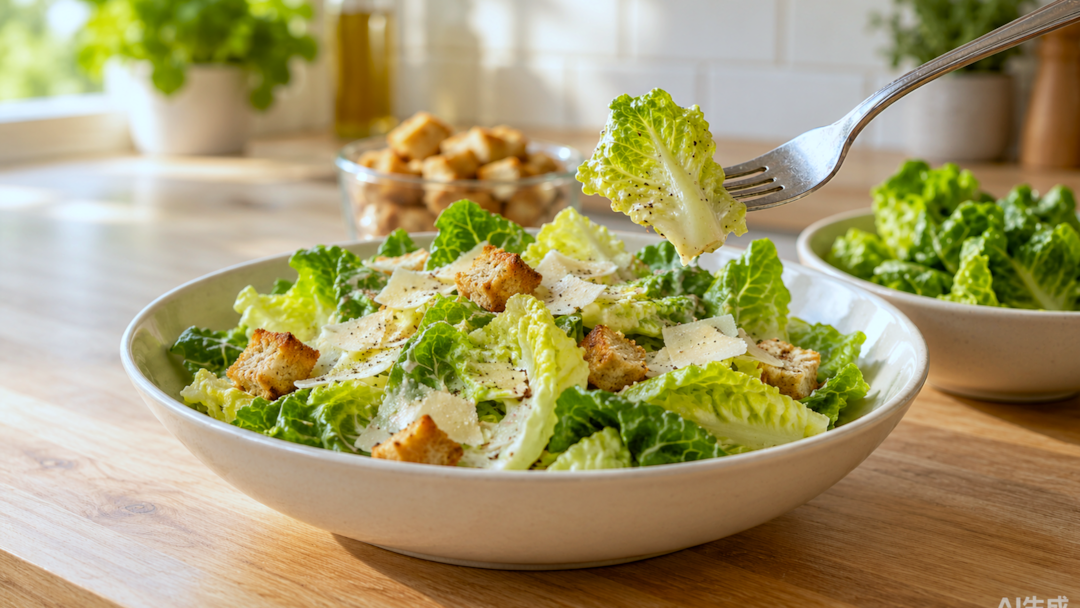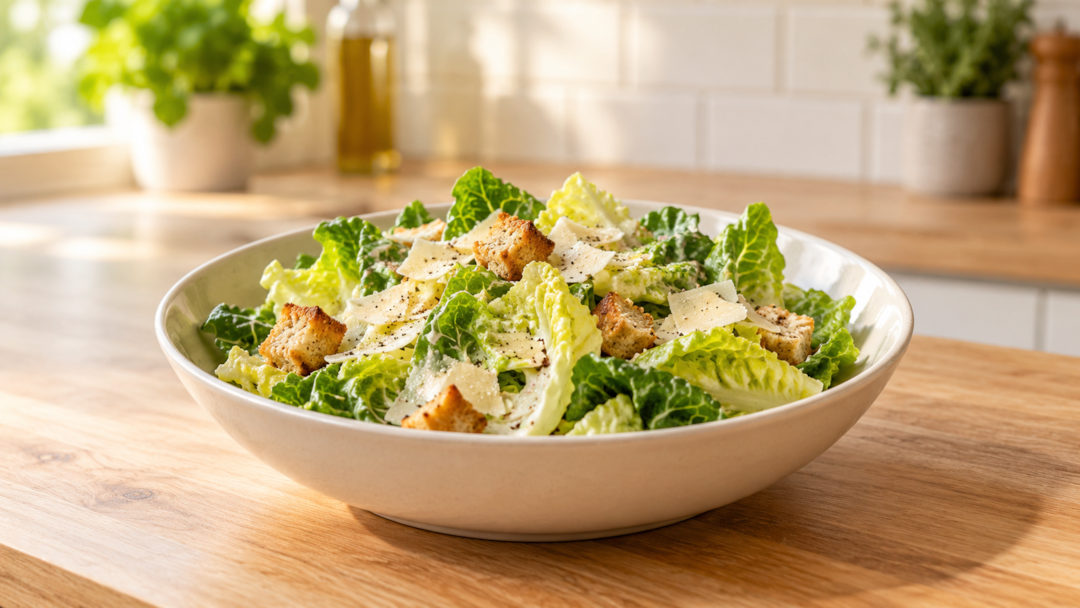
A great Caesar salad starts with crisp romaine lettuce. Its sturdy leaves hold creamy dressing well, while their fresh crunch balances the salty Parmesan and golden croutons.
With homegrown romaine, you can harvest just what you need and leave the rest of the plant growing. Whether you’re growing Cimmaron Romaine, Freckles Romaine, or Super Red Romaine, this classic salad is an easy way to turn your indoor garden harvest into lunch or a simple side dish.
Not sure which leaves make the cut? Our guide to what makes a good Caesar salad covers choosing crisp romaine, comparing red and green varieties, and balancing the bowl.
This version keeps things straightforward with a creamy Caesar dressing, crunchy croutons, and freshly grated Parmesan. You don’t need a complicated recipe to make a salad worth looking forward to.
Why This Salad Works So Well
Caesar salad is popular for a reason: it combines a few contrasting textures and flavors that work beautifully together.
- Crisp romaine: Fresh, crunchy leaves provide the base and hold the dressing without becoming soggy too quickly.
- Creamy dressing: Garlic, lemon, Parmesan, and Dijon mustard create a rich, tangy coating.
- Crunchy croutons: Toasted bread adds texture to every bite.
- Savory Parmesan: A little grated cheese brings a salty, umami flavor.
The romaine is the star here. Harvesting it shortly before serving helps preserve its crispness, and growing your own means you can enjoy fresh leaves without buying an entire head every time you want a salad.
What You’ll Harvest From Your Garden
For this recipe, you’ll need about 6–8 cups of fresh romaine leaves, depending on how generously you like to fill your salad bowl.
You can use one variety or mix several together:
- Cimmaron Romaine Lettuce: A classic romaine-style choice for crisp leaves and a satisfying crunch.
- Freckles Romaine Lettuce: Adds visual interest with its distinctive speckled leaves.
- Super Red Romaine Lettuce: Brings a deeper red color to your salad for a more colorful bowl.
Harvest healthy outer leaves from established plants, leaving the growing center intact so the plant can continue producing new leaves.
After harvesting, rinse the leaves thoroughly and dry them well. A salad spinner works particularly well. Dry lettuce helps the dressing cling to the leaves instead of becoming diluted by excess water.
Ingredients
For the Salad
- 6–8 cups fresh romaine lettuce, washed and dried
- 1 cup croutons
- ¼ cup freshly grated Parmesan cheese
- Freshly ground black pepper, to taste
For the Caesar Dressing
- ¼ cup mayonnaise
- 2 tablespoons freshly grated Parmesan cheese
- 1 tablespoon fresh lemon juice
- 1 teaspoon Dijon mustard
- 1 small garlic clove, finely minced
- 1 teaspoon Worcestershire sauce
- 1–2 tablespoons water, as needed
- Salt and black pepper, to taste
Optional: Traditional Caesar dressing sometimes includes anchovies or anchovy paste. Add a small amount if you enjoy a more savory, classic flavor. For a vegetarian version, check that your Worcestershire sauce and Parmesan are suitable for your dietary preferences.
How To Make It
Step 1: Prepare the Romaine
Wash the lettuce leaves and dry them thoroughly. Tear larger leaves into bite-sized pieces or chop them into strips.
Step 2: Make the Dressing
In a small bowl, whisk together the mayonnaise, Parmesan, lemon juice, Dijon mustard, garlic, and Worcestershire sauce until smooth.
Step 3: Adjust the Consistency
Add water a little at a time until the dressing is creamy but easy to pour. Taste and adjust the lemon juice, salt, and black pepper.
Step 4: Dress the Lettuce
Place the romaine in a large bowl. Add a little dressing and toss gently until the leaves are lightly coated. Add more dressing as needed.
Step 5: Add the Toppings
Sprinkle over the croutons, Parmesan, and freshly ground black pepper.
Step 6: Serve Immediately
Caesar salad is best served right after tossing, while the lettuce is crisp and the croutons still have their crunch.
Quick tip: Start with less dressing than you think you need. You can always add more, but too much dressing can overwhelm the fresh flavor of the romaine.
Harvest Notes
Cimmaron Romaine Lettuce: Harvest individual outer leaves when they’re large enough to eat, or harvest a more mature head if you need a larger quantity. Leave the central growing point intact when picking individual leaves.
Freckles Romaine Lettuce: Pick mature outer leaves as needed. Its speckled appearance adds variety to a salad, and younger leaves can be especially tender.
Super Red Romaine Lettuce: Harvest outer leaves once they’ve developed enough size for serving. Mixing red leaves with green romaine creates an attractive contrast in the bowl.
For all three varieties, use clean scissors or gently remove leaves by hand. Avoid taking too many leaves at once, as the plant needs healthy foliage to continue growing.
For the freshest Caesar salad, harvest shortly before preparing the meal. If you need to harvest ahead, refrigerate the washed and thoroughly dried leaves in a container lined with a clean paper towel.
Make It Your Own
Once you’ve mastered the basic recipe, there are plenty of ways to customize it.
- Add protein: Top with grilled chicken, hard-boiled eggs, shrimp, or chickpeas to make it a more filling meal.
- Make it extra crunchy: Add toasted sourdough croutons or roasted chickpeas.
- Try a lighter dressing: Replace some of the mayonnaise with plain Greek yogurt. The result will be tangier and slightly lighter.
- Add more greens: Mix in a small handful of fresh arugula or baby spinach for a different flavor.
- Make it vegetarian: Skip anchovies and choose suitable Parmesan and Worcestershire alternatives.
- Add a lemony finish: Squeeze a little fresh lemon juice over the salad just before serving.
If you’re serving Caesar salad as a main course, adding protein and a slice of crusty bread can turn it into a satisfying lunch or dinner.
Nutrition Highlights
Romaine lettuce makes a refreshing base for this salad while contributing important nutrients.
- Romaine lettuce: Provides vitamin K, folate, vitamin A precursors, and water. It also contributes some dietary fiber.
- Parmesan cheese: Adds protein and calcium, along with its characteristic savory flavor.
- Lemon juice: Contributes vitamin C and brightens the dressing.
- Croutons: Supply carbohydrates and add the crunchy texture that makes Caesar salad distinctive.
The overall nutritional profile depends on your portions and dressing. Mayonnaise and Parmesan contribute fat and calories, so adjusting the dressing amount is an easy way to customize the salad.
Growing your own romaine doesn’t automatically make a salad more nutritious than store-bought lettuce. The practical benefit is having fresh leaves available whenever you want them, making it easier to prepare a salad at home.
FAQs
1. What lettuce is best for Caesar salad?
Romaine lettuce is the classic choice because its crisp, sturdy leaves hold dressing well. Cimmaron Romaine, Freckles Romaine, and Super Red Romaine can all work in a homemade Caesar salad.
2. Can I make Caesar salad without anchovies?
Yes. This recipe uses Worcestershire sauce for savory depth, but you can leave out anchovies entirely. If you want a vegetarian version, check the ingredients in your Worcestershire sauce and Parmesan cheese.
3. How do I keep romaine lettuce crisp?
Wash the leaves, dry them thoroughly, and refrigerate them until you’re ready to serve. Add the dressing just before eating to help prevent the leaves from becoming soggy.
4. Can I prepare Caesar salad ahead of time?
You can prepare the dressing and wash the lettuce ahead of time. Store them separately in the refrigerator, then toss everything together just before serving.
5. Can I use homegrown romaine for Caesar salad?
Absolutely. Harvest healthy leaves from your indoor garden, rinse them thoroughly, and dry them well before use. Pick only what you need and leave the remaining plant growing for future meals.
6. Is Caesar salad healthy?
Caesar salad can be part of a balanced meal. Romaine provides vitamins and fiber, while Parmesan contributes protein and calcium. Dressing and croutons add flavor but can also increase the calorie content, so adjust the quantities to suit your needs.