A great salad doesn’t need a long ingredient list. Sometimes, all you need is a bowl of fresh greens, a simple dressing, and a few toppings you love.
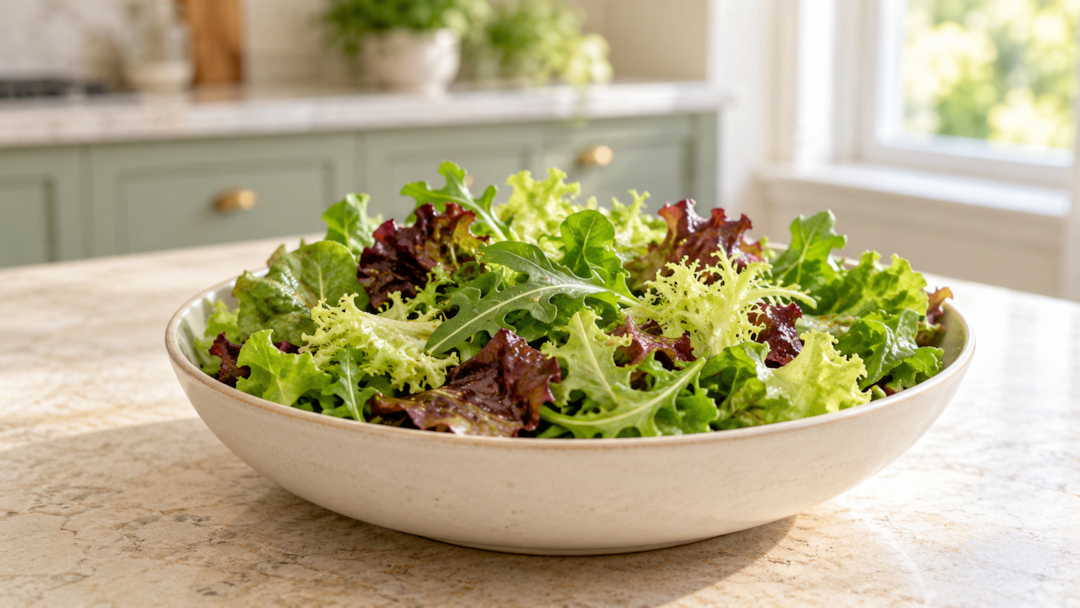
This mixed greens salad brings together different lettuce varieties for a bowl with a range of colors, textures, and flavors. From the mild, tender leaves of butterhead lettuce to the crisp bite of Black Seeded Simpson and the colorful leaves of Lollo Rosso, each variety adds something different.
When you grow lettuce at home, you can mix whatever is ready to harvest. Pick a few leaves from several plants, add a quick lemon vinaigrette, and you’ve got a fresh salad without buying a whole bag of greens.
Why This Salad Works So Well
The secret to a satisfying mixed greens salad is variety. Different lettuce varieties bring different textures, colors, and flavors, so the bowl feels more interesting even with a simple dressing.
- Tender leaves: Butterhead varieties offer a soft texture and mild flavor.
- Crisp greens: Black Seeded Simpson adds a light crunch and a refreshing taste.
- Colorful leaves: Red Sails, Ruby Red, and Lollo Rosso bring shades of red, burgundy, and green.
- Easy customization: You can add vegetables, nuts, seeds, cheese, or protein depending on what you have available.
I also like this salad because it makes good use of a home garden. You don’t need to harvest an entire head of lettuce from every plant. Picking a little from several varieties gives you a more colorful bowl while allowing established plants to keep growing.
What You’ll Harvest From Your Garden
For this recipe, aim for 6–8 cups of mixed lettuce leaves, enough for about 2–3 side-salad servings.
Try combining three or four varieties rather than using every type at once.
- Gourmet Lettuce Mix: A convenient base for a varied salad with different leaf shapes and textures.
- Black Seeded Simpson Lettuce: Known for its light-green leaves and mild flavor.
- Summer Bibb Lettuce: Adds tender leaves and a soft, buttery texture.
- Red Sails Lettuce: Brings reddish, ruffled leaves and visual contrast.
- Ruby Red Lettuce: Adds rich red coloring to the bowl.
- Lollo Rosso Lettuce: Its frilly, reddish leaves create texture and color.
- All Year Round Butterhead Lettuce: Offers tender leaves and a mild, buttery taste.
You don’t need to use all seven varieties. Start with a mild green base, add one or two red varieties, and adjust the proportions to suit your taste.
Harvest healthy leaves, rinse them thoroughly, and dry them well before assembling the salad. Dry greens help the dressing coat the leaves instead of sliding off.
Ingredients
For the Salad
- 6–8 cups mixed lettuce leaves
- ½ cup cherry tomatoes, halved
- ½ cucumber, thinly sliced
- ¼ small red onion, thinly sliced
- ¼ cup crumbled feta or shaved Parmesan, optional
- 2 tablespoons toasted sunflower seeds or chopped nuts, optional
For the Lemon Vinaigrette
- 3 tablespoons extra-virgin olive oil
- 1 tablespoon fresh lemon juice
- 1 teaspoon Dijon mustard
- ½ teaspoon honey, optional
- Salt and freshly ground black pepper, to taste
Feel free to substitute your favorite vegetables or toppings. The lettuce should remain the star of the bowl.
How To Make It
Step 1: Harvest and Prepare the Greens
Choose a mix of lettuce varieties and remove any damaged leaves. Wash thoroughly and dry using a salad spinner or clean kitchen towel.
Step 2: Prepare the Vegetables
Halve the cherry tomatoes, slice the cucumber, and thinly slice the red onion.
Step 3: Mix the Dressing
In a small bowl or jar, combine the olive oil, lemon juice, Dijon mustard, optional honey, salt, and black pepper. Whisk or shake until combined.
Step 4: Build Your Salad
Place the mixed lettuce leaves in a large bowl. Add the tomatoes, cucumber, and red onion.
Step 5: Dress Lightly
Drizzle a little vinaigrette over the greens and toss gently. Add more dressing only if needed.
Step 6: Finish and Serve
Top with feta or Parmesan and toasted seeds or nuts, if using. Serve immediately while the leaves are fresh and crisp.
Quick tip: Add the dressing just before serving. This helps keep tender lettuce varieties from wilting too quickly.
Harvest Notes
Gourmet Lettuce Mix: Follow the harvesting guidance for the varieties in your mix. When growing a cut-and-come-again blend, pick outer leaves as they become large enough to eat while leaving the growing centers intact.
Black Seeded Simpson Lettuce: Harvest individual outer leaves when they reach a usable size. Regular picking can provide a steady supply of tender greens.
Summer Bibb Lettuce: Pick outer leaves for smaller salads or harvest a mature head when you need a larger amount. Handle the tender leaves gently to avoid bruising.
Red Sails Lettuce: Harvest the outer leaves as they develop. Its ruffled, reddish foliage adds color to mixed salads.
Ruby Red Lettuce: Pick healthy outer leaves when they’re large enough to use. Mix them with green varieties to create a colorful bowl.
Lollo Rosso Lettuce: Harvest outer leaves or use a mature head, depending on how the plant is growing. Its frilly leaves are particularly useful for adding texture to salads.
All Year Round Butterhead Lettuce: Harvest outer leaves for continuous use or pick a mature head. Keep the central growing point intact if you want the plant to continue producing.
For all varieties, avoid removing too many leaves at once. Healthy remaining foliage helps the plant continue growing. Harvest shortly before preparing your salad for the freshest texture.
Make It Your Own
Once you have a bowl of mixed greens, it’s easy to change the recipe based on your mood or what’s in your kitchen.
- Make it more filling: Add grilled chicken, hard-boiled eggs, chickpeas, or white beans.
- Add crunch: Try toasted sunflower seeds, pumpkin seeds, walnuts, or croutons.
- Make it creamy: Add sliced avocado, crumbled feta, or a spoonful of creamy dressing.
- Add sweetness: Toss in sliced strawberries, apple, or orange segments.
- Change the dressing: Swap the lemon vinaigrette for balsamic vinaigrette or a simple yogurt-based dressing.
- Try different herbs: Add chopped parsley or basil for a fresh herbal note.
If you’re serving the salad as a main meal, combine the greens with a protein source, healthy fats, and other vegetables to make it more substantial.
Nutrition Highlights
Mixed greens provide a variety of nutrients, and using several lettuce types gives your salad a broader mix of leaf colors and textures.
- Lettuce: Generally provides water, folate, vitamin K, and vitamin A precursors. Nutrient levels vary by variety.
- Tomatoes: Contribute vitamin C and lycopene, a naturally occurring plant compound.
- Cucumber: Adds hydration and a refreshing crunch.
- Olive oil: Provides predominantly unsaturated fats.
- Seeds and nuts: Can add healthy fats, protein, and minerals.
- Cheese: Contributes protein and calcium, depending on the type and amount used.
The dressing and toppings affect the overall nutritional profile, so you can adjust them to suit your needs.
Growing lettuce at home doesn’t automatically make it more nutritious than store-bought greens. The everyday advantage is having fresh leaves ready to harvest, making it easier to build salads into your regular meals and enjoy a wider variety of greens.
FAQs
1. What lettuce varieties are best for a mixed greens salad?
A combination of tender butterhead lettuce, crisp green lettuce, and colorful red-leaf varieties works well. Summer Bibb, Black Seeded Simpson, Red Sails, Ruby Red, and Lollo Rosso are all good options.
2. How many types of lettuce should I use?
Three or four varieties are enough to create a mix of flavors, textures, and colors. You can use more if you have several varieties ready to harvest.
3. How do I keep mixed greens fresh and crisp?
Wash the leaves, dry them thoroughly, and refrigerate them in a container lined with a clean paper towel. Keep the dressing separate until you’re ready to serve.
4. Can I harvest lettuce leaves without picking the whole plant?
Yes. For many leaf lettuce varieties, you can harvest the outer leaves while leaving the growing center intact. This allows the plant to continue producing leaves, provided it remains healthy and has suitable growing conditions.
5. What dressing goes best with mixed greens?
A simple lemon vinaigrette works well because its acidity complements mild lettuce and colorful red-leaf varieties. Balsamic vinaigrette and creamy yogurt-based dressings are also good options.
6. Is mixed greens salad healthy?
Mixed greens salad can be a nutritious part of a balanced meal. Lettuce provides water, fiber, and vitamins, while vegetables and optional toppings add more nutrients. Including protein and healthy fats can make the salad more filling.