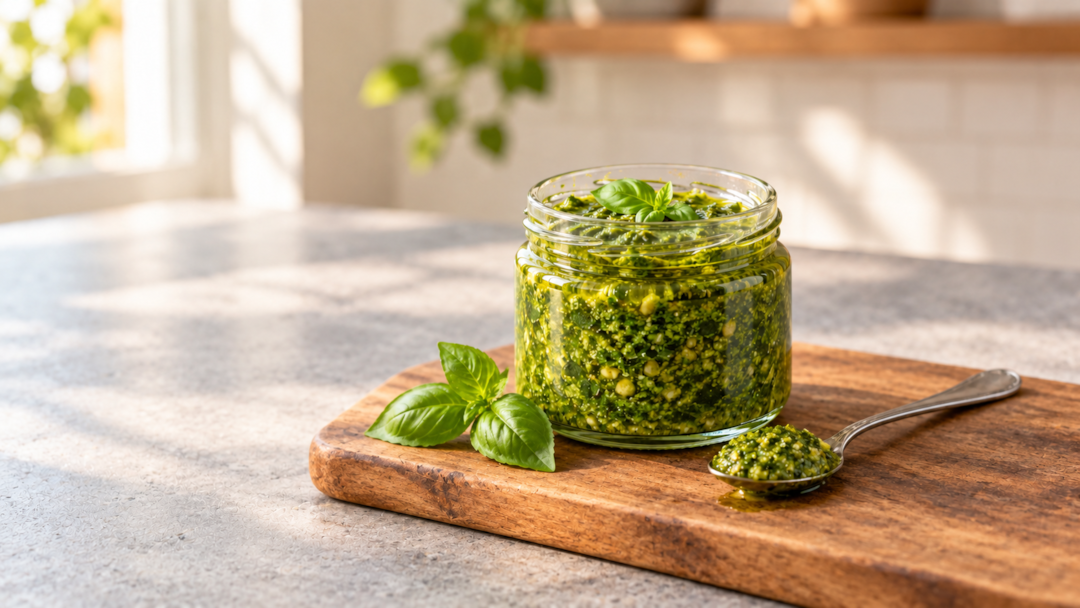
There’s something especially satisfying about making pesto with basil you just harvested.
This fresh basil pesto uses Genovese Basil for its classic sweet, aromatic flavor, combined with Parmesan, pine nuts, garlic, and olive oil. It comes together in minutes and gives you an easy way to turn a fresh harvest into something you can use throughout the week.
If you grow basil at home, pesto is also one of those recipes that makes a small harvest feel surprisingly useful.
Why Homegrown Ingredients Make It Better
Fresh basil has a bright aroma and tender leaves that make a noticeable difference in pesto. When you grow your own, you can harvest exactly what you need instead of buying a large bunch and wondering what to do with the rest.
I also like pesto because it doesn’t require a complicated recipe. Harvest the basil, blend everything together, taste, and adjust.
With Maygrove, you can grow Genovese Basil indoors and harvest it as needed for pasta, sandwiches, vegetables, or a quick snack.
Harvest Checklist
Before making your pesto, harvest:
- 2 packed cups fresh Genovese Basil leaves
- Choose healthy, bright green leaves
- Harvest from the outer or upper leaves rather than stripping the whole plant
- Remove thick stems and damaged leaves
- Harvest in the morning when the plant is well hydrated
Give the leaves a gentle rinse and dry them well before making pesto. Excess water can make the finished sauce thinner.
Ingredients
- 2 packed cups fresh Genovese Basil leaves
- ½ cup grated Parmesan cheese
- ⅓ cup pine nuts
- 2 garlic cloves
- ½ cup extra-virgin olive oil
- ¼ teaspoon salt, plus more to taste
- 1–2 teaspoons fresh lemon juice, optional
- Black pepper, to taste
For a stronger basil flavor, you can slightly reduce the Parmesan or pine nuts. For a smoother pesto, add a little more olive oil.
How To Make It
Step 1: Prepare the Basil
Wash the basil leaves and dry them thoroughly.
Step 2: Blend the Base
Add basil, pine nuts, garlic, Parmesan, and salt to a food processor.
Step 3: Add the Olive Oil
Pulse while slowly adding the olive oil until the pesto reaches your preferred texture.
Step 4: Taste and Adjust
Add lemon juice if you want a brighter flavor. Adjust the salt, Parmesan, or olive oil as needed.
Step 5: Serve Fresh
Toss with warm pasta, spread on toast, or spoon over roasted vegetables.
You don’t need to blend pesto until completely smooth. I prefer leaving a little texture because it gives the sauce more character.
Harvest Notes
Genovese Basil: Harvest individual leaves or small stem sections regularly once the plant is well established. Pinch just above a pair of leaves to encourage branching and continued growth.
For the best flavor, harvest before the plant produces many flowers. If flower buds appear, remove them promptly to help the plant continue producing leafy growth.
You don’t need to harvest enough basil for a giant batch of pesto at once. Regular small harvests can give you enough leaves for fresh pesto whenever you’re ready to make it.
Ways To Use It
Fresh pesto is much more versatile than just a pasta sauce.
Try it with:
- Pasta: Toss with warm pasta and a splash of pasta water.
- Toast: Spread on toast and top with tomatoes, eggs, or fresh vegetables.
- Sandwiches: Use it instead of mayonnaise or other spreads.
- Roasted vegetables: Spoon over roasted tomatoes, zucchini, or potatoes.
- Grain bowls: Add a spoonful to rice, quinoa, or other grains.
- Eggs: Serve with scrambled eggs, omelets, or breakfast sandwiches.
- Pizza: Drizzle pesto over pizza after baking.
A small spoonful can add a lot of basil flavor, so you don’t need much.
Storage Tips
Fresh pesto is best when used soon after making it, but you can store it for later.
Keep pesto in an airtight container in the refrigerator and use it within several days for the best quality. Press a thin layer of olive oil over the surface to help reduce exposure to air and discoloration.
For longer storage, freeze pesto in small portions. Ice cube trays work especially well because you can thaw only what you need for a single meal.
What To Grow Next
If you enjoy using fresh Genovese Basil, consider adding other edible plants to your indoor garden.
- Lemon Basil — a citrusy basil variety for drinks, salads, and sauces
- Italian Flat Leaf Parsley — useful in pesto, pasta, and savory dishes
- Lemon Balm — great for fresh drinks and light desserts
- Cherry Tomato — an easy pairing for basil in salads, pasta, and toast
Growing a few complementary herbs means you can harvest what you need for an entire meal instead of relying on one ingredient.
FAQs
1. What Type of Basil Is Best for Pesto?
Genovese Basil is a classic choice for pesto because of its sweet, aromatic flavor and tender leaves.
2. Can I Make Pesto Without Pine Nuts?
Yes. You can substitute walnuts, almonds, sunflower seeds, or another nut or seed you enjoy.
3. Can I Use Dried Basil for Pesto?
Fresh basil is strongly recommended. Dried basil has a very different texture and flavor and won’t produce the same fresh pesto.
4. How Long Does Homemade Basil Pesto Last?
Store homemade pesto in an airtight container in the refrigerator and use it within several days for the best freshness and flavor.
5. Can I Freeze Fresh Basil Pesto?
Yes. Freeze pesto in small portions so you can thaw only what you need. Ice cube trays are particularly convenient.
6. How Do I Keep Basil Pesto From Turning Brown?
Limit the basil’s exposure to air, store the pesto in an airtight container, and cover the surface with a thin layer of olive oil.