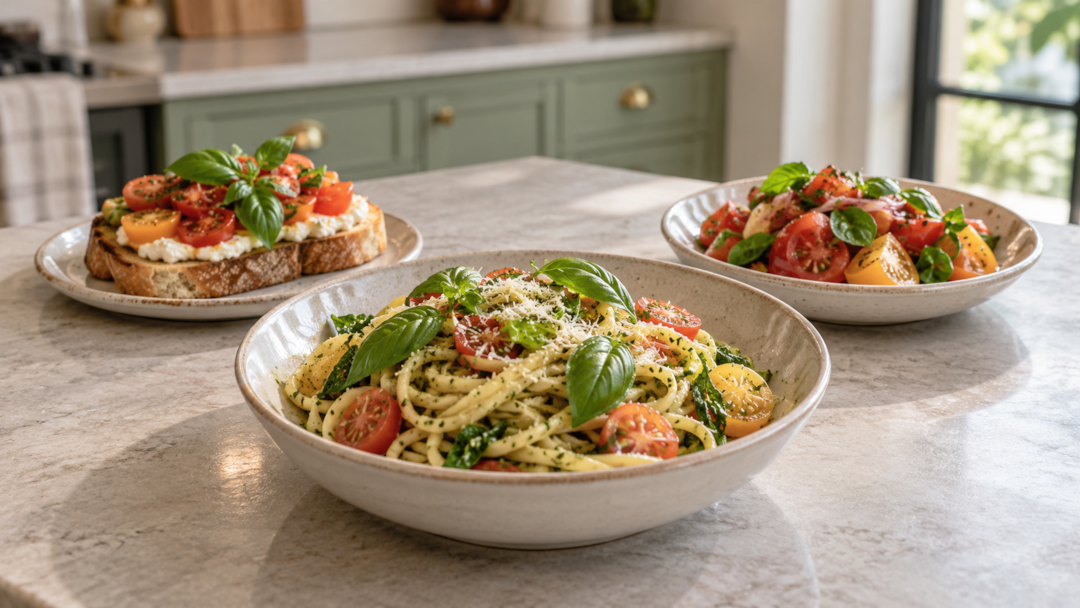
Fresh basil can do much more than make pesto. Its fragrant leaves can brighten pasta, add a citrusy note to salad dressings, or turn ordinary butter into a flavorful spread. Different basil varieties bring different flavors, so growing more than one gives you even more ways to experiment in the kitchen.
Here are three simple ways to use homegrown Genovese Basil, Lemon Basil, and Red Rubin Basil in everyday meals.
Why This Meal Is Worth Growing For
Basil is one of the most useful herbs to grow at home because you can harvest small amounts whenever you need them. You don’t have to wait until you have a large bunch or plan an elaborate recipe.
Each variety brings something different to the table:
- Genovese Basil: A classic sweet, aromatic flavor that pairs especially well with tomatoes, pasta, and olive oil.
- Lemon Basil: A fresh citrus aroma that works beautifully in dressings, marinades, and light dishes.
- Red Rubin Basil: A purple-leaved variety with a distinctive color and a slightly spiced basil flavor that adds visual interest to sauces and herb butter.
These herbs are easy to incorporate into meals you already make. A handful of fresh leaves can add aroma and flavor to familiar ingredients without requiring a completely new recipe.
Today’s Harvest Basket
For these three recipes, harvest:
| Basil Variety | Suggested Amount | Best Use |
|---|---|---|
| Genovese Basil | 1 loosely packed cup | Tomato basil pasta |
| Lemon Basil | ¼ cup | Lemon basil dressing |
| Red Rubin Basil | ¼ cup | Purple basil butter |
These amounts are flexible. Start with less if your basil has a particularly strong aroma, then adjust to taste.
You can make one recipe at a time or prepare all three to use throughout the week.
Ingredients
Want the pasta night instead? The tomato basil pasta from this lineup has its own full recipe — see our tomato basil pasta for a fresh garden-to-table dinner.
1. Lemon Basil Dressing
Makes: About ½ cup
Prep time: 5 minutes
- ¼ cup fresh Lemon Basil leaves
- 3 tbsp olive oil
- 2 tbsp fresh lemon juice
- 1 tsp Dijon mustard
- 1 tsp honey, optional
- Salt and black pepper, to taste
- 1–2 tsp water, if needed to thin
2. Red Rubin Basil Butter
Makes: About ½ cup
Prep time: 10 minutes
- ½ cup unsalted butter, softened
- ¼ cup finely chopped Red Rubin Basil leaves
- 1 small garlic clove, finely minced
- 1 tsp lemon zest
- A pinch of salt
- Black pepper, to taste
Step-by-Step Instructions
Recipe 1: Lemon Basil Dressing
Step 1: Prepare the Basil
Rinse the Lemon Basil leaves and pat them dry. Roughly chop them to help release their aroma.
Step 2: Mix the Dressing
Whisk together the olive oil, lemon juice, Dijon mustard, and optional honey in a small bowl.
Step 3: Add the Basil
Finely chop the leaves and stir them into the dressing. Season with salt and black pepper.
Step 4: Adjust the Consistency
Add a little water if you prefer a thinner dressing. Taste and adjust the lemon juice, salt, or honey as needed.
Step 5: Serve
Drizzle over mixed greens, cucumber salad, roasted vegetables, or grilled chicken.
Recipe 2: Red Rubin Basil Butter
Step 1: Chop the Basil
Rinse and thoroughly dry the Red Rubin Basil leaves. Finely chop them so their color and flavor distribute evenly through the butter.
Step 2: Mix the Ingredients
Combine the softened butter, chopped basil, minced garlic, lemon zest, salt, and black pepper in a small bowl.
Step 3: Blend Until Smooth
Stir until the ingredients are evenly distributed. Taste and add more basil or seasoning if desired.
Step 4: Shape and Chill
Transfer the mixture to a small container or roll it into a log using parchment paper. Refrigerate until firm.
Step 5: Use as Needed
Spread on warm bread, melt over roasted vegetables, or add a small pat to grilled fish or chicken.
Harvest Notes
Fresh basil is best harvested shortly before cooking, when the leaves are aromatic and in good condition.
- Genovese Basil: Harvest healthy, full-sized leaves from the upper parts of the plant. Pinch just above a pair of leaves to encourage branching and continued growth.
- Lemon Basil: Pick tender leaves as needed for dressings and marinades. Harvesting the tips regularly helps keep the plant bushy.
- Red Rubin Basil: Select healthy purple leaves for butter, sauces, or garnishes. Use the freshest leaves for the best color and aroma.
A useful tip: Avoid harvesting more than you need for a single meal. Basil leaves bruise easily, so handle them gently and add them near the end of cooking when possible. Prolonged heat can dull their fresh aroma.
If your plants begin forming flower spikes, pinch them back to encourage more leafy growth.
Nutrition Highlights
Fresh basil contributes flavor and small amounts of nutrients, including vitamin K and plant compounds. The overall nutritional value of each dish depends on the other ingredients and portion sizes.
- Tomato Basil Pasta: Tomatoes provide vitamin C and lycopene, while pasta supplies carbohydrates for energy. Parmesan adds protein and calcium.
- Lemon Basil Dressing: Olive oil provides predominantly unsaturated fats, and lemon juice adds acidity and a small amount of vitamin C.
- Red Rubin Basil Butter: Basil contributes flavor, while butter provides fat. Because butter is high in saturated fat, use a moderate amount according to your preferences.
Growing basil at home does not automatically make a dish more nutritious than one made with store-bought herbs. Its practical advantage is having fresh leaves readily available, making it easier to add herbs to meals regularly.
FAQs
1. What can I make with fresh basil besides pesto?
Fresh basil works in pasta, salad dressings, compound butter, sandwiches, soups, marinades, and tomato-based sauces. Genovese Basil is a versatile choice for Italian-inspired dishes, while Lemon Basil is especially useful in citrus-forward recipes.
2. What is the difference between Genovese Basil, Lemon Basil, and Red Rubin Basil?
Genovese Basil has a classic sweet basil aroma and pairs well with tomatoes and pasta. Lemon Basil has a noticeable citrus scent that suits dressings and lighter dishes. Red Rubin Basil has deep purple leaves and a distinctive basil flavor that adds color to sauces, salads, and herb butter.
3. Can I substitute one basil variety for another?
Yes. You can substitute one variety for another in most recipes. However, the flavor will change slightly. If you use Lemon Basil instead of Genovese Basil in pasta, for example, start with a smaller amount and taste before adding more.
4. How should I store fresh basil after harvesting?
For short-term storage, keep unwashed basil stems in a glass of water at room temperature, away from direct sunlight, and use them as soon as possible. Avoid storing fresh basil in a very cold part of the refrigerator, where the leaves may darken.
5. Can I make these recipes ahead of time?
The dressing can be prepared ahead and refrigerated in a sealed container; stir or shake it before serving. Basil butter can also be prepared in advance and refrigerated. Tomato basil pasta is best served fresh because basil loses some of its aroma as it sits and reheats.
6. How do I keep basil growing after harvesting?
Harvest individual leaves or pinch stem tips just above a pair of leaves. This encourages branching and new growth. Provide the plant with appropriate light, water, and nutrients, and remove flower spikes if your goal is to keep producing leaves.