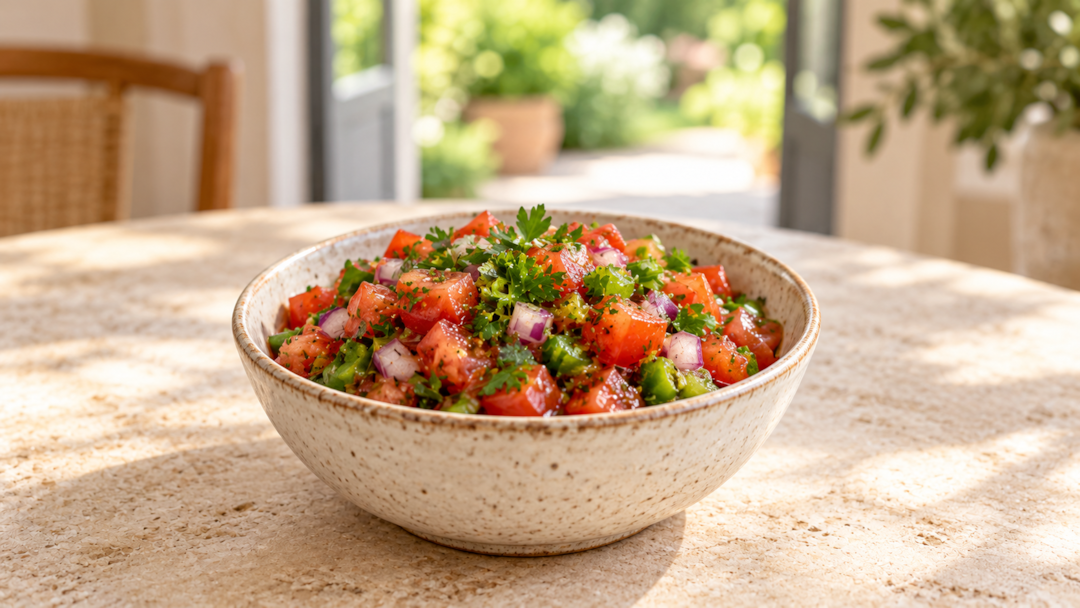
Fresh tomatoes, crisp peppers, and a handful of herbs are all you need to make a bright, flavorful garden salsa. This easy recipe combines juicy tomatoes, sweet bell peppers, onion, lime juice, and fresh herbs for a versatile dip or topping.
When you grow your own ingredients, you can pick tomatoes and peppers at their peak and adjust the flavor to your liking. Make it mild and refreshing, or add a little cayenne pepper for extra heat.
Why Homegrown Ingredients Make It Better
The best part of homemade salsa is how easily you can customize it. Use ripe cherry tomatoes for sweetness, add bell peppers for crunch, and finish with fresh herbs and lime juice.
Homegrown tomatoes are especially convenient for this recipe because you can harvest a handful at a time. Different tomato varieties also bring different textures and flavors. Cherry tomatoes tend to be sweet and juicy, while other salad tomatoes can give salsa a more traditional tomato-forward taste.
With the Maygrove Garden-to-Table approach, you can grow ingredients for everyday meals indoors and harvest what you need when you’re ready to cook.
Harvest Checklist
Before making your salsa, gather:
- 2 cups ripe tomatoes: Cherry tomatoes or Red Cherry Tomatoes work well.
- 1 small bell pepper: Choose red, yellow, or another sweet variety.
- Fresh herbs: Italian Flat Leaf Parsley adds a fresh, green flavor.
- Optional cayenne pepper: Add a small amount if you prefer a spicier salsa.
Harvest tomatoes when they’re fully colored and ripe. Pick bell peppers when they reach a usable size and develop their characteristic color.
Rinse all your produce thoroughly and let it dry before chopping.
Ingredients
- 2 cups ripe cherry tomatoes, quartered
- ½ cup finely diced bell pepper
- ¼ cup finely diced red onion
- 1 small jalapeño, finely minced, optional
- 2 tablespoons chopped fresh Italian Flat Leaf Parsley
- 1 tablespoon fresh lime juice
- 1 small garlic clove, minced
- ¼ teaspoon salt, plus more to taste
- Freshly ground black pepper, to taste
- 1–2 teaspoons finely chopped Long Slim Cayenne Pepper, optional, for extra heat
A quick note: Traditional salsa often uses cilantro. This version uses Italian Flat Leaf Parsley for a fresh herbal flavor. If you prefer the classic cilantro taste, substitute it in the same quantity.
How To Make It
Step 1: Prepare the Tomatoes
Quarter the cherry tomatoes. If they’re particularly juicy, remove some of the excess liquid to keep the salsa from becoming watery.
Step 2: Chop the Vegetables
Finely dice the bell pepper and red onion. Mince the garlic and optional jalapeño.
Step 3: Add the Herbs
Chop the Italian Flat Leaf Parsley and add it to a mixing bowl with the vegetables.
Step 4: Season the Salsa
Add lime juice, salt, and black pepper. If you enjoy spicy salsa, add a small amount of finely chopped cayenne pepper.
Step 5: Mix and Rest
Stir everything together and let the salsa rest for 10–15 minutes. This gives the flavors time to combine.
Step 6: Taste and Adjust
Add more lime juice for brightness, salt to bring out the flavors, or pepper for extra heat.
Serve fresh with tortilla chips, tacos, or your favorite savory dishes.
Harvest Notes
Cherry Tomato and Red Cherry Tomato: Harvest when the fruits are fully colored and come away easily from the plant. Their sweetness makes them a great base for fresh salsa.
Salad Tomato: Use ripe fruits for a more traditional tomato flavor. If the tomatoes are especially juicy, drain some of the liquid before mixing.
Tiny Tim Tomato: This compact tomato variety can work well when you want a small harvest for a fresh salsa serving. Adjust the quantity based on the size and yield of your fruits.
Cal Wonder Bell Pepper and Golden Cal Wonder Bell Pepper: Harvest when the peppers reach a good size and develop their characteristic green or golden color. Sweet peppers add crunch without overwhelming the tomatoes.
Mini Yellow Bell Pepper and Mini Red Bell Pepper: These smaller peppers are easy to chop and add color and sweetness to salsa.
Long Slim Cayenne Pepper: Use sparingly. Even a small amount can add noticeable heat, so start with a little and adjust to taste.
Italian Flat Leaf Parsley: Harvest individual outer leaves or stems from an established plant. Regular harvesting encourages fresh growth and gives you herbs for future meals.
Genovese Basil: Basil is not the traditional herb for salsa, but a small amount can add a sweet, aromatic note. Try it if you want a variation, especially when serving salsa with tomatoes and grilled vegetables.
Ways To Use It
Fresh garden salsa works with much more than tortilla chips.
- Tacos: Spoon over vegetable, chicken, fish, or bean tacos.
- Quesadillas: Serve on the side or add a spoonful before serving.
- Grain bowls: Add salsa to rice, beans, corn, and roasted vegetables.
- Grilled vegetables: Use it as a fresh topping for zucchini, peppers, or corn.
- Eggs: Serve with scrambled eggs, omelets, or breakfast burritos.
- Avocado toast: Add a spoonful for freshness, crunch, and acidity.
- Sandwiches and wraps: Use it as a bright alternative to heavier sauces.
For a chunkier salsa, chop the vegetables into larger pieces. For a finer texture, dice them more evenly and let the mixture rest a little longer.
Storage Tips
Fresh salsa tastes best shortly after preparation, when the tomatoes and peppers still have their texture.
- Refrigerate promptly: Store leftovers in a clean, airtight container in the refrigerator.
- Use within a few days: For the best quality, enjoy homemade fresh salsa within 3–4 days.
- Stir before serving: Some liquid may collect at the bottom as the tomatoes release moisture.
- Avoid freezing if texture matters: Freezing can soften the vegetables and make the salsa watery after thawing.
Because this is a fresh salsa rather than a tested canning recipe, keep it refrigerated instead of storing it at room temperature.
FAQs
1. What tomatoes are best for homemade salsa?
Cherry tomatoes are a convenient choice because they’re sweet and easy to chop. Red Cherry Tomatoes work especially well, while larger salad tomatoes can provide a more traditional salsa texture and flavor.
2. Can I make salsa without cilantro?
Yes. Italian Flat Leaf Parsley is a good alternative if you prefer a different herbal flavor. You can also use a small amount of Genovese Basil for a less traditional variation.
3. How do I make homemade salsa spicier?
Add finely chopped jalapeño or Long Slim Cayenne Pepper. Start with a small amount, mix well, and taste before adding more.
4. Why is my fresh salsa watery?
Tomatoes naturally release liquid after they’re chopped. Remove excess seeds and juice before mixing, or drain a little liquid from the finished salsa before serving.
5. Can I make garden salsa ahead of time?
Yes. You can prepare it a few hours ahead and refrigerate it in an airtight container. The flavors will combine as it rests, although the vegetables may soften slightly over time.
6. Is homemade salsa healthy?
Fresh salsa is made primarily from vegetables, herbs, and lime juice. Tomatoes and peppers provide vitamins and other nutrients, while making it at home lets you control the amount of salt and other seasonings.