Parsley is more than a decorative garnish. It adds a fresh, green flavor to soups, salads, sauces, marinades, and countless everyday dishes. But when choosing parsley seeds, you may encounter different types, including Italian flat leaf parsley and dark green parsley.
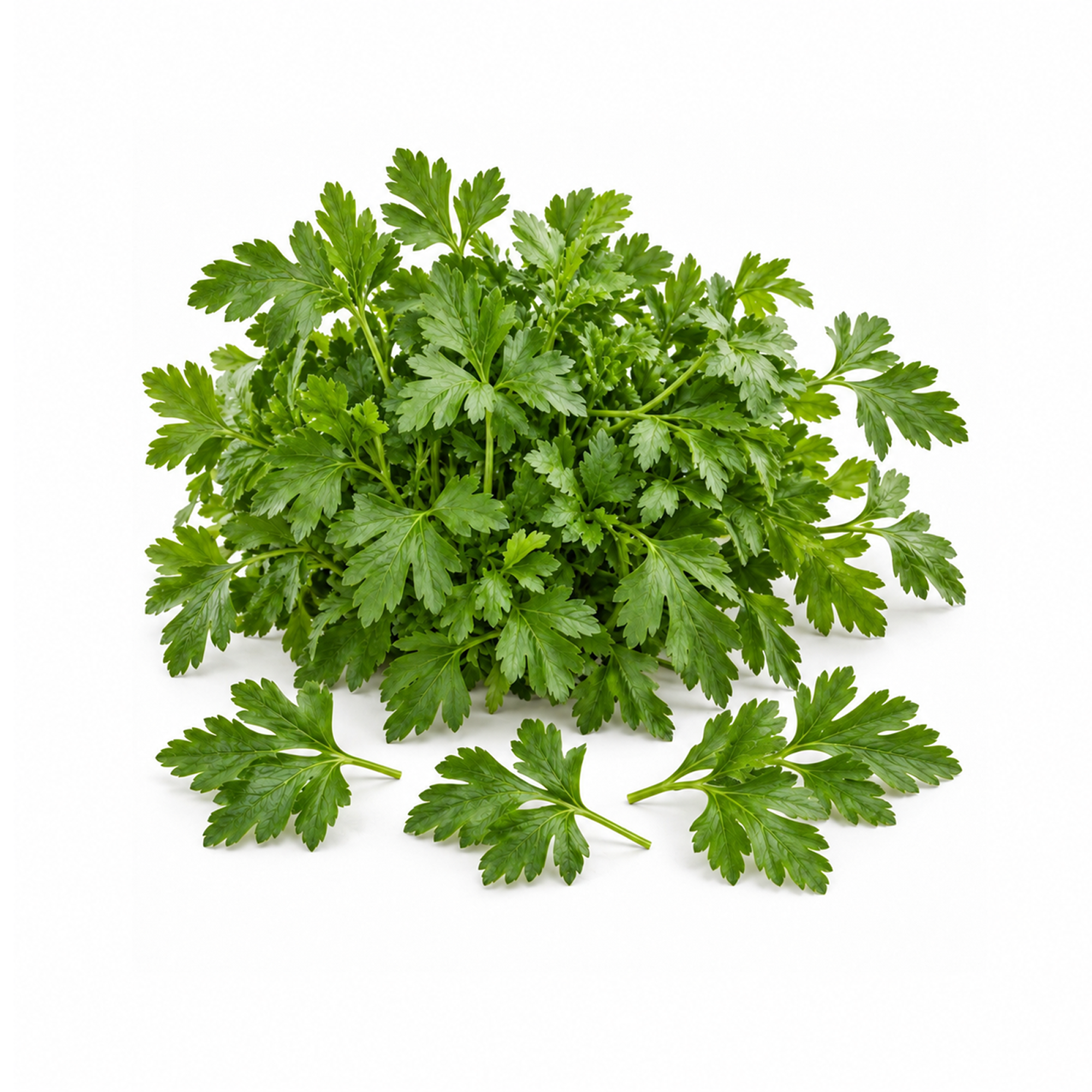
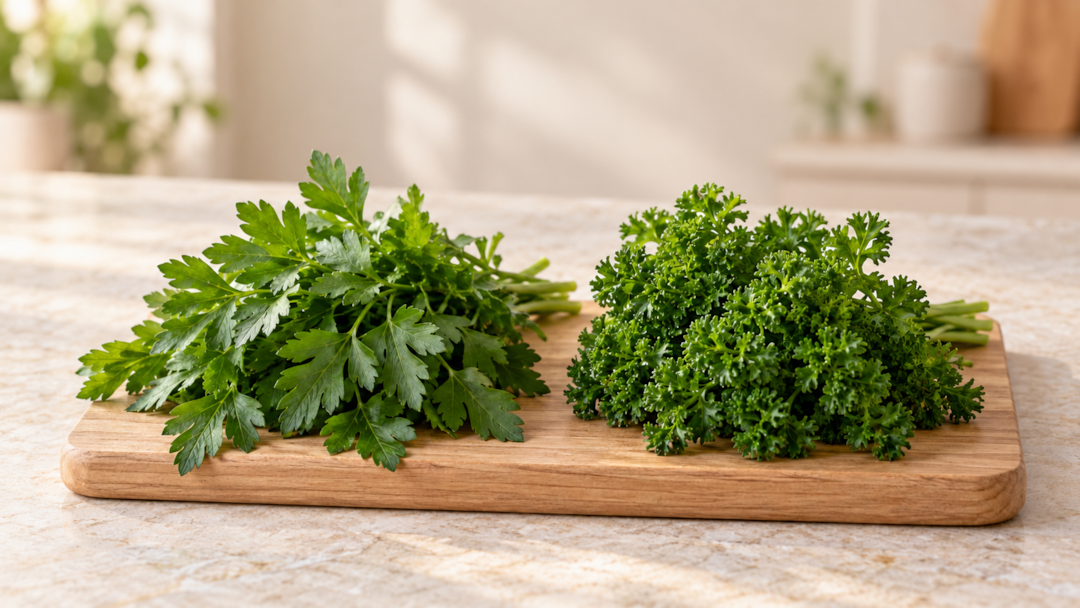
The main difference is leaf shape. Italian flat leaf parsley has broad, relatively flat leaves, while many dark green parsley varieties have more curled or ruffled leaves and a deeper green appearance. Their flavor, texture, and best culinary uses can also differ, although the exact characteristics depend on the cultivar.
Both types can be useful kitchen herbs, and either can be grown at home for a convenient supply of fresh leaves. Understanding their differences can help you choose the right variety for your recipes and growing space.
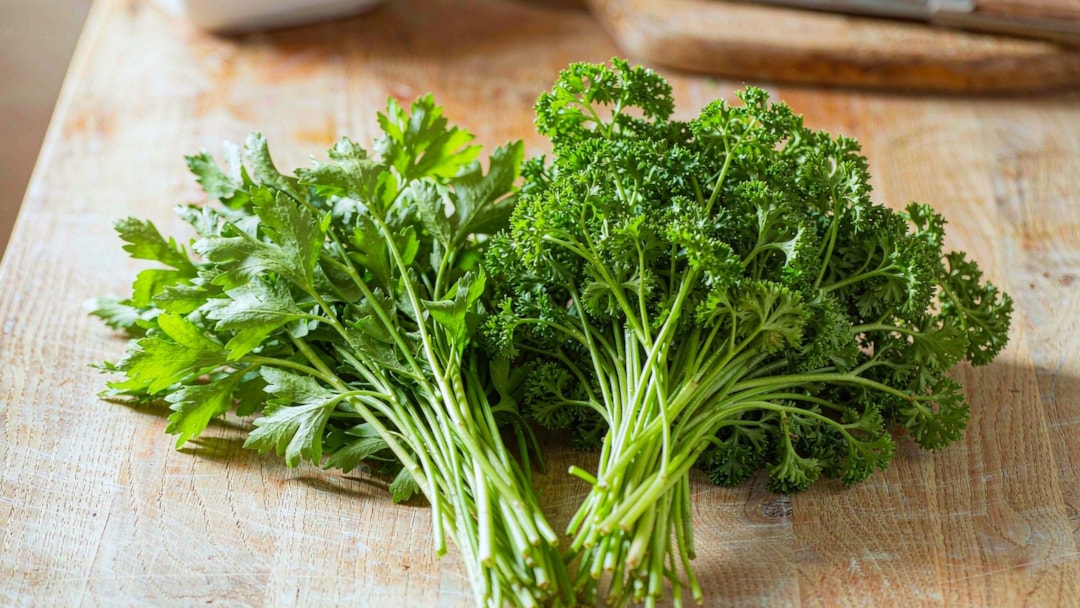
Here's how the two types differ — in the garden and on the plate.
What Is Italian Flat Leaf Parsley?
Italian flat leaf parsley (Petroselinum crispum var. neapolitanum) is a culinary parsley variety known for its broad, flat leaflets and fresh, herbaceous flavor. University of Wisconsin–Madison Extension places both it and curly parsley (P. crispum var. crispum) in the carrot family, grown as hardy biennials for their flavorful leaves.
Unlike curly parsley, its leaves have a relatively smooth surface rather than tightly curled edges. The plant typically develops branching stems with clusters of flat leaflets, making it easy to chop and mix into dishes.
Italian flat leaf parsley is widely used in Mediterranean and other European cuisines. Its flavor is often described as fresh, green, and slightly peppery, with a noticeable herbal character.
What does Italian flat leaf parsley taste like?
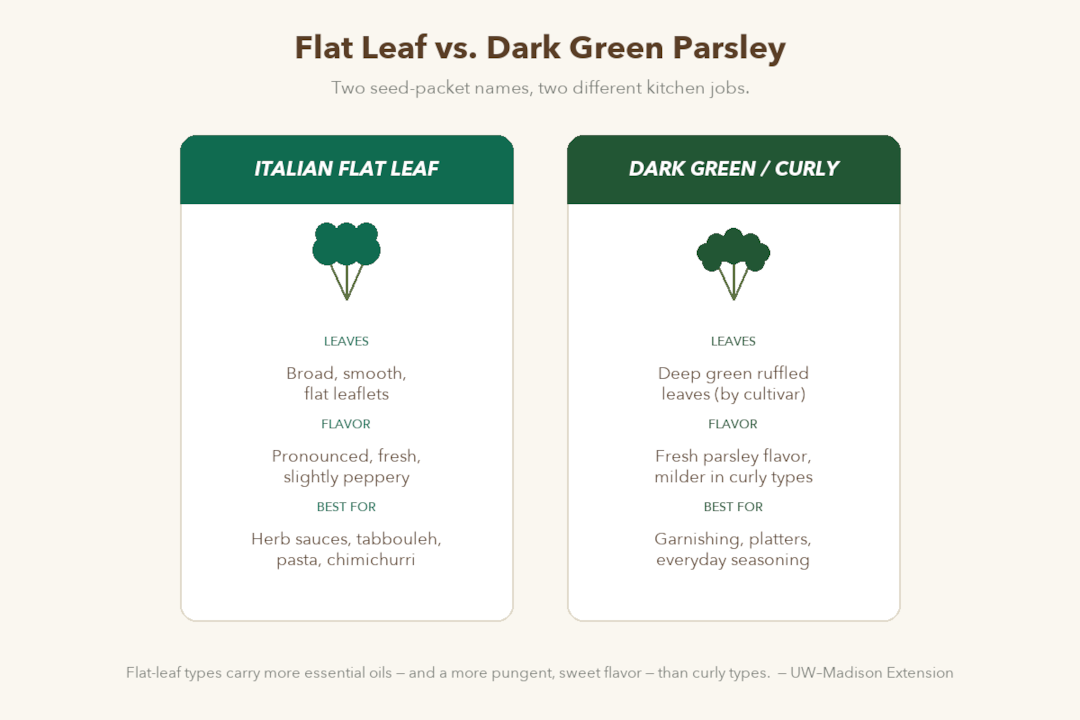
Flat leaf parsley generally has a pronounced, fresh parsley flavor. Its aroma and taste can stand out more clearly in cooked dishes and uncooked preparations such as herb sauces.
The stems also have flavor and can be used in stocks, soups, and other dishes where the parsley will be chopped or strained out later.
Italian flat leaf parsley works particularly well when you want the herb itself to contribute noticeable flavor rather than simply decorate the plate.
Common culinary uses
You can use Italian flat leaf parsley in:
- Herb sauces: Add chopped parsley to chimichurri-style sauces, herb dressings, and marinades.
- Pasta dishes: Stir fresh parsley into pasta with olive oil, garlic, lemon, or vegetables.
- Soups and stocks: Use leaves and stems to add herbal flavor.
- Salads: Mix finely chopped parsley into grain salads, tomato salads, or tabbouleh-style dishes.
- Roasted vegetables: Sprinkle parsley over roasted potatoes, carrots, or other vegetables just before serving.
- Fish and seafood: Combine parsley with lemon, garlic, and olive oil for a fresh finishing sauce.
Because flat leaf parsley is easy to chop, it is a practical choice when recipes call for a generous amount of fresh parsley. For more ways to put fresh herbs to work, our herb-forward meal ideas build whole dishes around them.
What Is Dark Green Parsley?
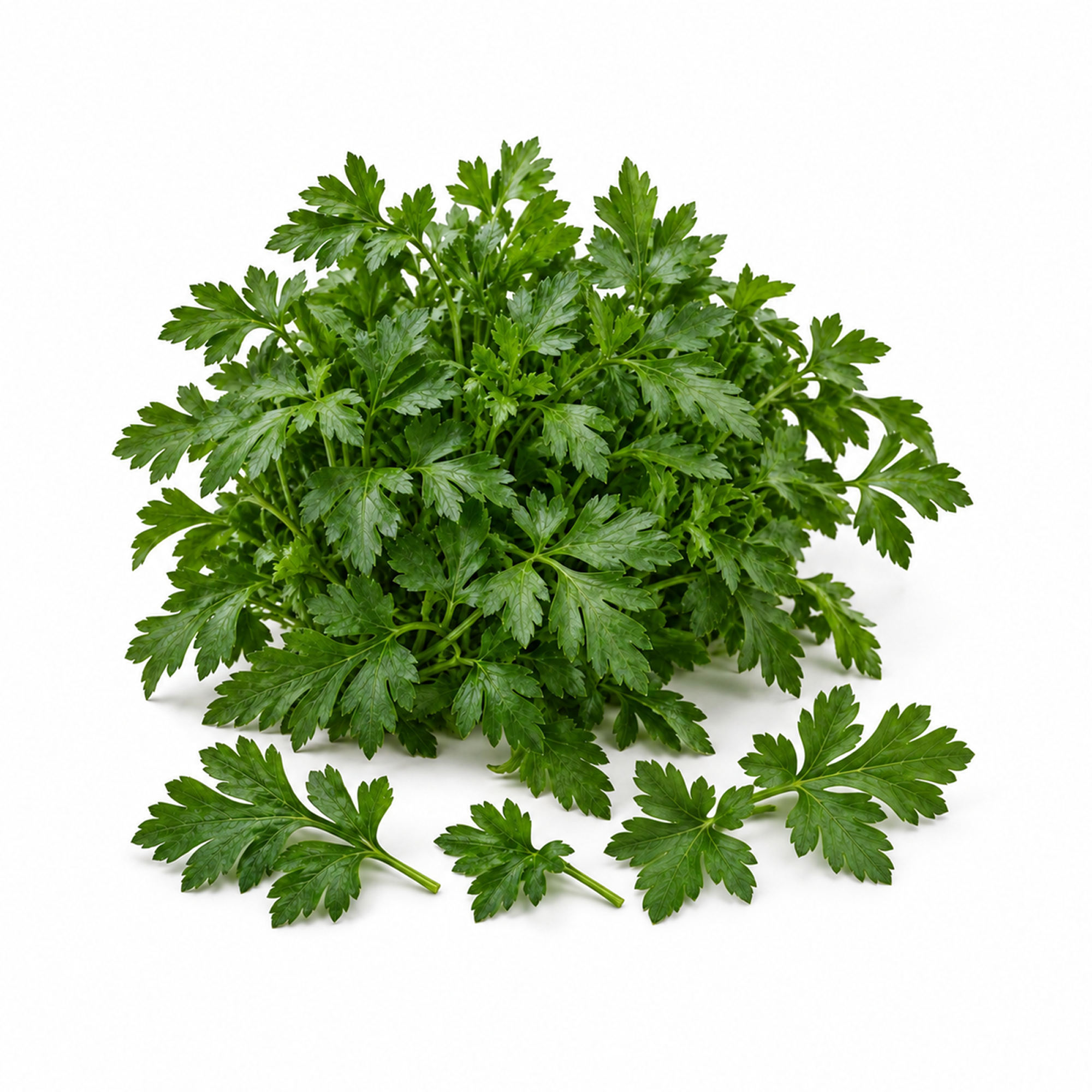
Dark green parsley is a name that describes a parsley variety or seed selection with deep green foliage. Depending on the seed variety, it may have flat, slightly curled, or more distinctly ruffled leaves.
This distinction matters because dark green parsley is not necessarily a separate botanical type from Italian flat leaf parsley. Leaf shape, color, growth habit, and flavor can vary among cultivars, and product names do not always follow a single standardized classification.
If you are comparing two seed packets, check the variety description and photographs rather than relying on the name alone.
What does dark green parsley look like?
Dark green parsley generally has rich green leaves, but the exact shape depends on the cultivar.
Some varieties have relatively compact foliage, while others produce larger clusters of leaves. If the variety is a curly type, its ruffled leaves can create a fuller, more textured appearance than the flatter leaves of Italian parsley.
Dark green foliage can make this parsley attractive as a garnish, especially when you want a strong contrast against lighter-colored foods.
However, leaf color alone does not reliably indicate stronger flavor or higher nutritional value.
Common culinary uses
Dark green parsley can be used in many of the same dishes as Italian flat leaf parsley, including:
- Garnishing soups, roasted vegetables, and savory main dishes
- Adding fresh herbs to salads and grain bowls
- Mixing into dressings, dips, and sauces
- Seasoning cooked vegetables, potatoes, and eggs
- Adding a fresh herbal finish to fish, poultry, and meat dishes
If your dark green variety has curly leaves, it may be particularly useful for decorative garnishing. The curled texture can also trap small amounts of dressing or seasoning, although finely chopping the leaves will make their texture less noticeable — a trick that works nicely on a cucumber salad with fresh herbs.
Differences in Leaf Shape, Flavor, and Texture
The most useful way to compare Italian flat leaf parsley and dark green parsley is to look at the actual leaf structure and flavor of each variety.
| Characteristic | Italian Flat Leaf Parsley | Dark Green Parsley |
|---|---|---|
| Leaf shape | Broad, relatively flat leaflets | Depends on cultivar; may be flat or curled |
| Leaf color | Usually medium to dark green | Selected or described for deep green foliage |
| Flavor | Fresh, herbaceous, sometimes slightly peppery | Usually fresh and parsley-like; intensity varies by cultivar |
| Texture | Relatively smooth leaves that are easy to chop | May be smooth or ruffled, depending on variety |
| Chopping | Easy to chop and incorporate into recipes | Flat leaves chop easily; curly leaves may require more effort |
| Garnishing | Suitable for chopped or leafy garnishes | Deep green foliage, especially curly types, can provide decorative texture |
| Cooking | Useful in sauces, soups, salads, and cooked dishes | Suitable for most of the same applications |
| Best selection factor | Choose when you want broad, flat leaves and a pronounced herbal character | Check the specific cultivar for leaf shape, color, and growth habit |
Does flat leaf parsley have a stronger flavor?
Italian flat leaf parsley is often considered more pronounced in flavor than curly parsley — and there is real chemistry behind it: Wisconsin Extension notes that curly leaf types carry much less essential oil than broad-leaved types, giving flat-leaf parsley a more pungent, sweet flavor. Its flavor can be easier to notice in sauces and other recipes that use parsley as a major ingredient.
However, this comparison should not automatically be applied to every dark green parsley variety. A dark green cultivar with flat leaves may taste similar to Italian flat leaf parsley, while another cultivar may have a different flavor intensity.
Freshness also matters. Parsley that has been stored for a long time may lose some of its fresh aroma, making it taste less vibrant regardless of its original variety.
If flavor is your priority, taste a small amount of each variety before deciding which one you prefer.
Does darker foliage mean better flavor?
Not necessarily. Leaf color is influenced by pigments and growing conditions, while flavor depends on a broader range of plant compounds.
A deep green appearance can make parsley visually appealing, but it does not prove that the herb will taste stronger or contain more nutrients.
That said, parsley of any color earns its place on nutritional merit. Wisconsin Extension describes its dark green leaves as a rich source of vitamin C, vitamin A, and iron. Our guides to parsley and fresh herb nutrition and greens rich in vitamin K — a nutrient parsley happens to supply in impressive amounts — cover the details.
Choose based on the combination of leaf shape, aroma, flavor, and intended use.
Which Parsley Works Best for Cooking and Garnishing?
Both parsley types are versatile. Your best choice depends on whether you want the herb to contribute substantial flavor, provide a decorative finish, or do both.
For sauces and herb-based recipes
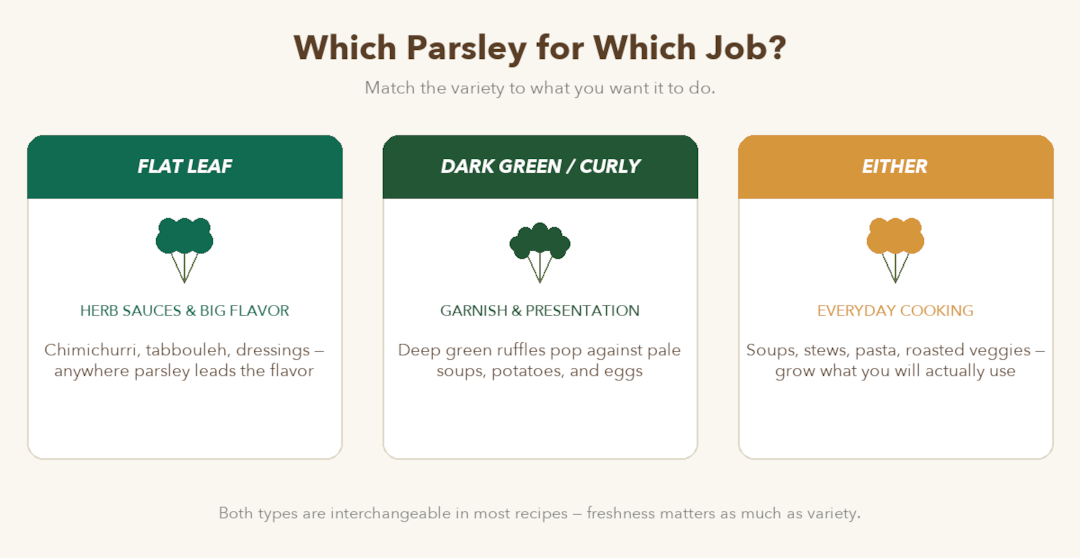
Italian flat leaf parsley is a strong choice for recipes that use parsley as a main ingredient.
Its broad leaves are convenient to chop, and its fresh flavor works well in herb sauces, marinades, dressings, and mixtures containing garlic, lemon, or olive oil.
It is also a practical option for parsley-heavy salads, where the herb contributes both texture and flavor.
For garnishing
Dark green parsley can be useful when its foliage has a compact, curled, or especially deep green appearance.
Curly leaves provide visual texture, while dark green foliage creates contrast against pale soups, potatoes, eggs, and other foods.
Italian flat leaf parsley can also make an attractive garnish, especially when chopped finely or arranged in fresh leafy sprigs. There is no requirement to use curly parsley for presentation.
For everyday cooking
You do not need separate parsley varieties for every recipe.
Either type can season soups, stews, vegetables, pasta, eggs, and roasted foods. If you cook frequently with fresh herbs, the most useful choice may simply be the variety that grows well in your space and produces leaves you enjoy eating.
For recipes that call for a large quantity of parsley, choose a variety with leaves that are easy to harvest and chop. For occasional garnishing, appearance and convenience may matter more.
Can You Grow Both Types of Parsley Indoors?
Yes — and parsley is one of the more forgiving herbs to grow indoors. Wisconsin Extension notes that parsley can be grown inside year-round for a steady supply of fresh leaves, provided the plant gets bright light, regular water, and consistent feeding.
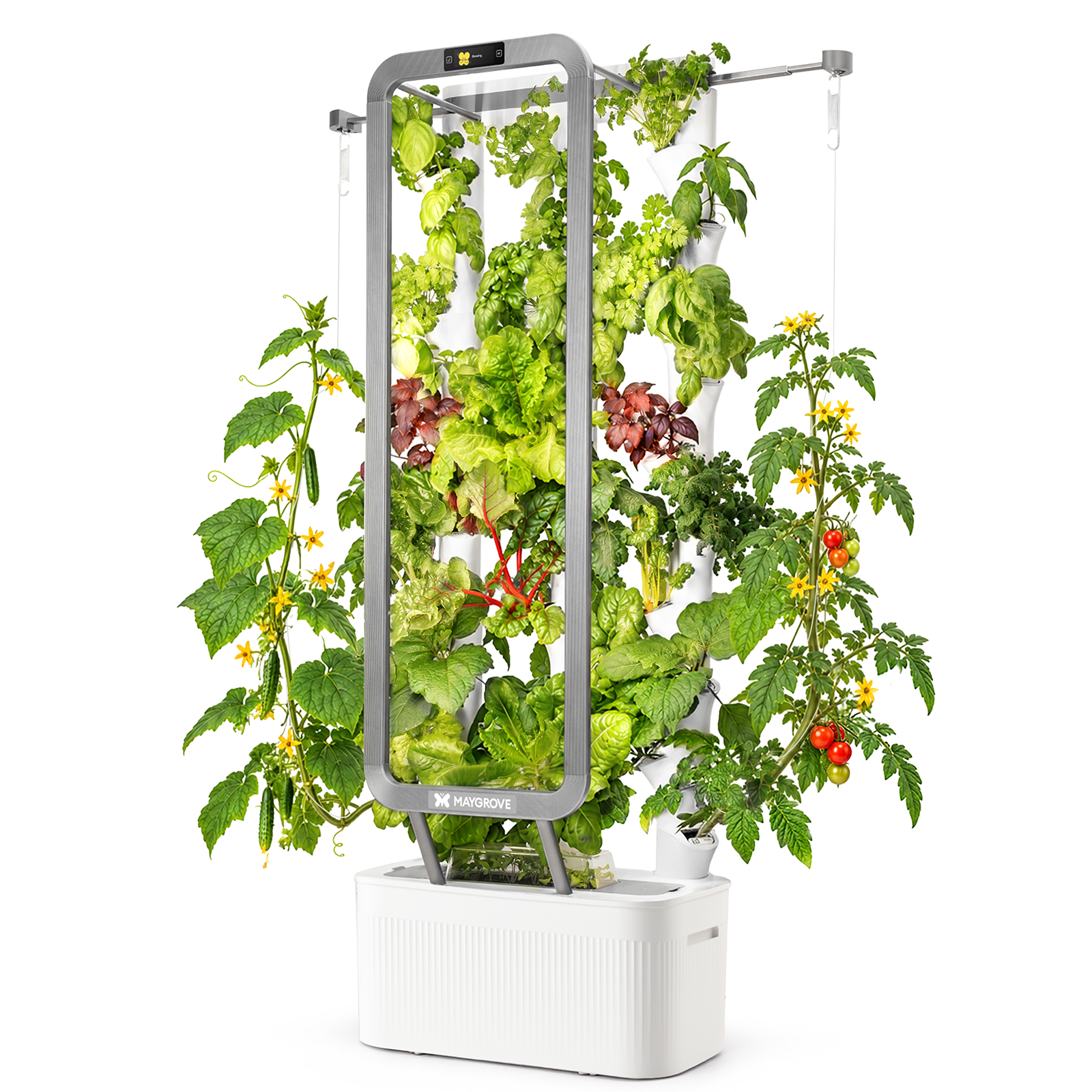
With the Maygrove AI Growbot Verti 30, full-spectrum grow lights handle the bright-light part: University of Minnesota Extension recommends about 12 hours of artificial light daily for indoor herbs, since inadequate light leads to thin, spindly growth. Both flat leaf and dark green types grow the same way, so the choice comes down to your cooking style rather than growing difficulty.
If your parsley seems stalled instead, our guide to why indoor herbs grow slowly covers the usual suspects, and what you can grow in an indoor garden shows how herbs fit alongside lettuces and other crops.
Frequently Asked Questions
Does Flat Leaf Parsley Have a Stronger Flavor?
Italian flat leaf parsley is often described as having a more pronounced, fresh herbal flavor than curly parsley. However, flavor intensity varies by cultivar, freshness, and growing conditions. Dark green parsley may have flat or curled leaves, so the name alone does not tell you whether its flavor will be stronger.
Can Both Parsley Types Be Used in Soups and Salads?
Yes. Both Italian flat leaf parsley and dark green parsley can be used in soups, salads, sauces, dressings, and cooked dishes. Flat leaf parsley is convenient for chopping into recipes, while curly varieties can add decorative texture. Taste and texture may differ slightly, but the two are generally interchangeable.
How Do You Keep Parsley Fresh After Harvest?
Remove damaged leaves, gently dry the parsley if it is wet, and refrigerate it loosely wrapped in a slightly damp paper towel inside a container or bag. Alternatively, stand trimmed stems in a small amount of water in the refrigerator. Check regularly and remove any leaves that deteriorate.
Is Dark Green Parsley a Different Species?
Not necessarily. "Dark green parsley" is a descriptive name that may be used for different parsley cultivars. It does not, by itself, identify a separate species or guarantee a particular leaf shape. Check the seed packet or cultivar description to confirm whether the plant has flat or curly leaves.
Can Parsley Grow Back After Harvesting?
Yes. Parsley can continue producing leaves when harvested selectively and given suitable growing conditions. Cut outer stems while leaving enough healthy foliage and the central growing point intact. Growth slows when light, temperature, or root conditions are unsuitable.
Is Parsley a Biennial?
Yes. Wisconsin Extension describes parsley as a hardy biennial: it produces the leafy rosette cooks value in its first year, then sends up flower stalks and sets seed in its second year. Leaf flavor is generally best in the first season, which is why many growers replant each year rather than overwintering a flowering plant.
The Bottom Line
- Italian flat leaf parsley brings broad, easy-to-chop leaves and the boldest flavor, thanks to higher essential oil content — the choice for herb sauces, tabbouleh, and parsley-led dishes.
- Dark green parsley may be flat or curly depending on the cultivar, and its deep color and ruffled texture make it a natural garnish.
- The name on the seed packet matters less than the cultivar description, so check leaf shape before you buy.
- Both types grow happily indoors and can be used interchangeably in everyday cooking.
Grow Both Types of Parsley with Maygrove
Why settle for one parsley when the two types shine in different roles? The Maygrove AI Growbot Verti 30 keeps Italian flat leaf and dark green parsley growing side by side under full-spectrum lights, so you can grab a punchy handful for chimichurri or a frilly sprig for the finishing touch — any night of the year.