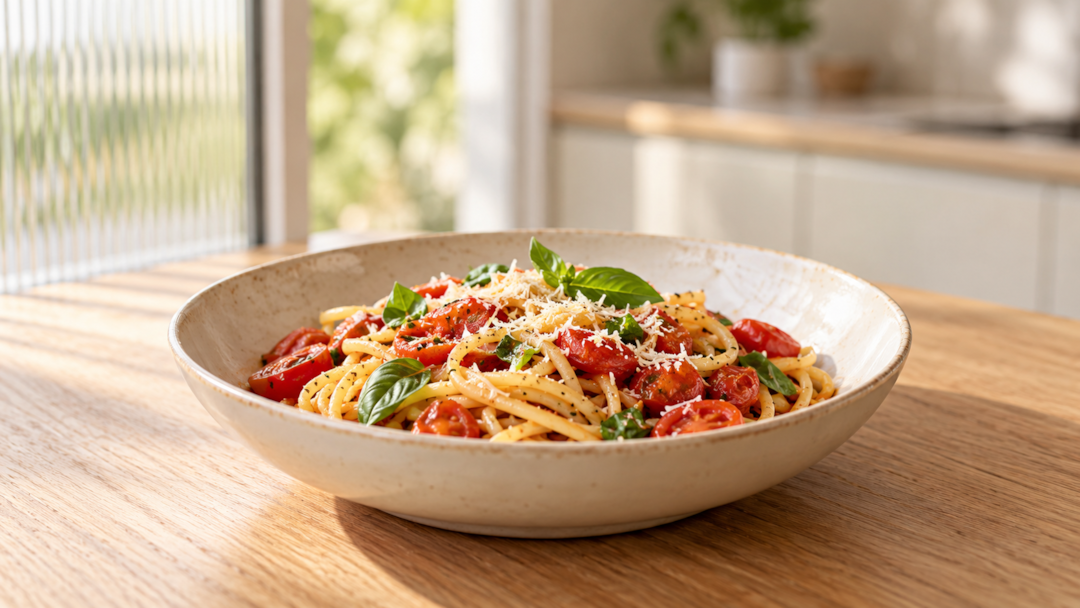
Tomato basil pasta is a simple dinner made with a handful of everyday ingredients. Ripe tomatoes create a light, flavorful sauce, while fresh Genovese Basil adds a sweet, aromatic finish. Add garlic, olive oil, and Parmesan, and you have a satisfying meal without complicated techniques or a long ingredient list.
The best part? You don’t need a large harvest. About 250–300 g of ripe tomatoes and a handful of fresh basil are enough to make pasta for two. Whether you’re growing Cherry Tomato, Red Cherry Tomato, Salad Tomato, or Tiny Tim Tomato, you can use whichever variety is ready to harvest.
Why This Meal Is Worth Growing For
Tomatoes and basil are a classic pairing for a reason. Tomatoes bring sweetness and acidity, while Genovese Basil adds a fresh herbal aroma that complements the sauce.
This recipe is also flexible enough to work with different tomato varieties. Small tomatoes are convenient because they soften quickly in a skillet. Larger tomatoes work just as well when chopped into smaller pieces.
Growing these ingredients at home gives you more control over when you harvest them. Instead of waiting until you have enough tomatoes for a large batch of sauce, you can pick a small amount and prepare a fresh meal.
Why Grow These Ingredients?
- Simple ingredients: Fresh tomatoes and basil turn everyday pantry staples into a flavorful dinner.
- Flexible harvesting: Use a few ripe tomatoes and harvest only the basil leaves you need.
- Easy to adapt: Different tomato varieties can work in the same basic recipe.
- More ways to use your harvest: Extra tomatoes can go into salads or salsa, while leftover basil can flavor dressings and other meals.
Today’s Harvest Basket
For two servings, you only need two main ingredients from your garden.
| Ingredient | Amount to Harvest | Purpose |
|---|---|---|
| Genovese Basil | ¼–½ cup fresh leaves | Adds fresh, aromatic flavor |
| One tomato variety of your choice | 250–300 g (9–10 oz) ripe tomatoes | Forms the pasta sauce |
Choose whichever tomato variety you have available:
- Cherry Tomato: Small fruits that soften quickly and release their juices as they cook.
- Red Cherry Tomato: Another suitable option for a quick, fresh tomato sauce.
- Salad Tomato: Larger fruits that can be chopped into small pieces before cooking.
- Tiny Tim Tomato: Compact tomato fruits that can be used for a small-batch sauce. The number needed depends on fruit size.
You don’t need all four varieties. Choose one, or combine varieties if you already have a mixed harvest. The total amount of tomatoes matters more than the specific combination.
Ingredients
Serves: 2
Prep time: 10 minutes
Cook time: 20 minutes
- 6 oz (170 g) dried pasta, such as spaghetti or penne
- 250–300 g (9–10 oz) ripe tomatoes, from one variety or a combination
- ¼–½ cup fresh Genovese Basil leaves
- 2 garlic cloves, minced
- 2 tbsp extra-virgin olive oil
- ¼ cup grated Parmesan cheese, plus more for serving
- Salt and black pepper, to taste
- Pinch of red pepper flakes, optional
- ¼–½ cup reserved pasta water, as needed
Before you start: If using small tomatoes, cut them in half. If using larger Salad Tomatoes, chop them into small pieces so they soften more quickly and release their juices.
Step-by-Step Instructions
Step 1: Cook the Pasta
Bring a pot of salted water to a boil. Add the pasta and cook according to the package instructions until al dente.
Before draining, reserve about ½ cup of pasta water. Its starch helps the tomato juices cling to the pasta and creates a light sauce.
Step 2: Prepare the Tomatoes and Basil
Wash the tomatoes and basil thoroughly.
Halve the small tomatoes. If using larger tomatoes, remove any tough stem portions and chop the flesh into bite-sized pieces.
Set aside a few small basil leaves for garnish. Tear the remaining leaves into smaller pieces shortly before adding them to the pasta.
Step 3: Sauté the Garlic
Heat the olive oil in a large skillet over medium heat.
Add the minced garlic and cook for about 30–60 seconds, stirring frequently until fragrant. Avoid browning the garlic, as burnt garlic can make the sauce bitter.
If you like a little heat, add a pinch of red pepper flakes.
Step 4: Cook the Tomatoes
Add the prepared tomatoes and a pinch of salt to the skillet.
Cook for 8–12 minutes, stirring occasionally. Small tomatoes should soften and release their juices. Larger chopped tomatoes may need a little longer.
As the tomatoes soften, gently press some of them with the back of a spoon to release more juice. Leave the rest intact if you prefer a chunkier sauce.
If the pan becomes too dry before the tomatoes break down, add a small splash of water.
Step 5: Toss the Pasta With the Sauce
Add the drained pasta directly to the skillet. Toss to coat it in the tomato sauce.
Add reserved pasta water a tablespoon at a time until the sauce lightly coats the pasta. You may not need all of it.
Turn off the heat. Stir in most of the fresh basil and the grated Parmesan. Toss everything together until well combined.
Step 6: Finish and Serve
Divide the pasta between two bowls.
Finish with the remaining basil leaves, extra Parmesan, and a small drizzle of olive oil if desired.
Serve immediately while the sauce is warm and the basil is fragrant.
Harvest Notes
Harvest only what you need for the recipe. You don’t need several tomato varieties to make a good sauce, and a small harvest is enough for two servings.
Genovese Basil
- Pick healthy, full-sized leaves as needed.
- Pinch stems just above a pair of leaves to encourage branching and new growth.
- Add the leaves near the end of cooking to preserve their fresh aroma.
Cherry Tomato
- Harvest when the fruits reach their mature color and come away easily from the plant.
- Halve them before cooking so they soften quickly.
Red Cherry Tomato
- Pick fully colored, ripe fruits.
- Use the same preparation and cooking method as regular cherry tomatoes.
Salad Tomato
- Harvest when the fruit has developed its mature color and yields slightly to gentle pressure, depending on the variety.
- Chop into small pieces to help the tomato flesh break down into a sauce.
Tiny Tim Tomato
- Pick the fruits when they are fully colored and ripe.
- Because individual fruits are small, weigh your harvest rather than relying on a specific fruit count.
Indoor growing tip: Harvest ripe tomatoes as they become available instead of waiting for every fruit to ripen at once. For basil, take a few leaves or pinch a stem tip at a time rather than removing most of the plant’s foliage in one harvest.
Nutrition Highlights
This dish combines carbohydrates from pasta, fats from olive oil, and nutrients from tomatoes and basil.
- Tomatoes: Provide vitamin C, potassium, and lycopene, a naturally occurring plant compound.
- Fresh basil: Adds flavor and small amounts of vitamin K and other micronutrients.
- Olive oil: Provides predominantly unsaturated fats.
- Parmesan: Contributes protein, calcium, and savory flavor.
- Pasta: Supplies carbohydrates that provide energy.
The nutritional profile depends on portion size and the amounts of oil and cheese used. Adding chicken, shrimp, or beans can increase the protein content.
Homegrown ingredients are not automatically more nutritious than store-bought ones. The practical benefit is having fresh ingredients available when you want to cook, making it easier to include tomatoes and herbs in everyday meals.
FAQs
1. What type of tomatoes are best for tomato basil pasta?
Cherry Tomato, Red Cherry Tomato, Salad Tomato, and Tiny Tim Tomato can all work. The most important factors are ripeness, flavor, and using enough tomato flesh and juice to make the sauce. You only need one variety.
2. How many fresh tomatoes do I need for pasta for two?
About 250–300 g (9–10 oz) of ripe tomatoes is a practical starting point for two servings. Use slightly more if you prefer a saucier pasta or less pasta relative to the tomatoes.
3. Can I make tomato basil pasta without canned tomatoes?
Yes. Fresh tomatoes are all you need for this recipe. Cook them until they soften and release their juices. If the sauce is too thick, add a little reserved pasta water.
4. When should I add fresh basil to pasta?
Add most of the basil after turning off the heat or during the final minute of cooking. This helps preserve its fresh aroma. Save a few leaves to garnish the finished dish.
5. How do I store leftover tomato basil pasta?
Place leftovers in an airtight container and refrigerate within two hours of cooking. Use within 3–4 days and reheat thoroughly. Add a splash of water if the sauce has thickened, and finish with fresh basil if available.
6. Can I grow tomatoes and basil indoors?
Yes, but they have different growing requirements. Basil can grow in a relatively compact space with suitable light, water, and nutrients. Tomatoes generally need stronger light and more room for their growth habit, and may require support or help with pollination indoors. Compact varieties such as Tiny Tim may be more practical for limited spaces.