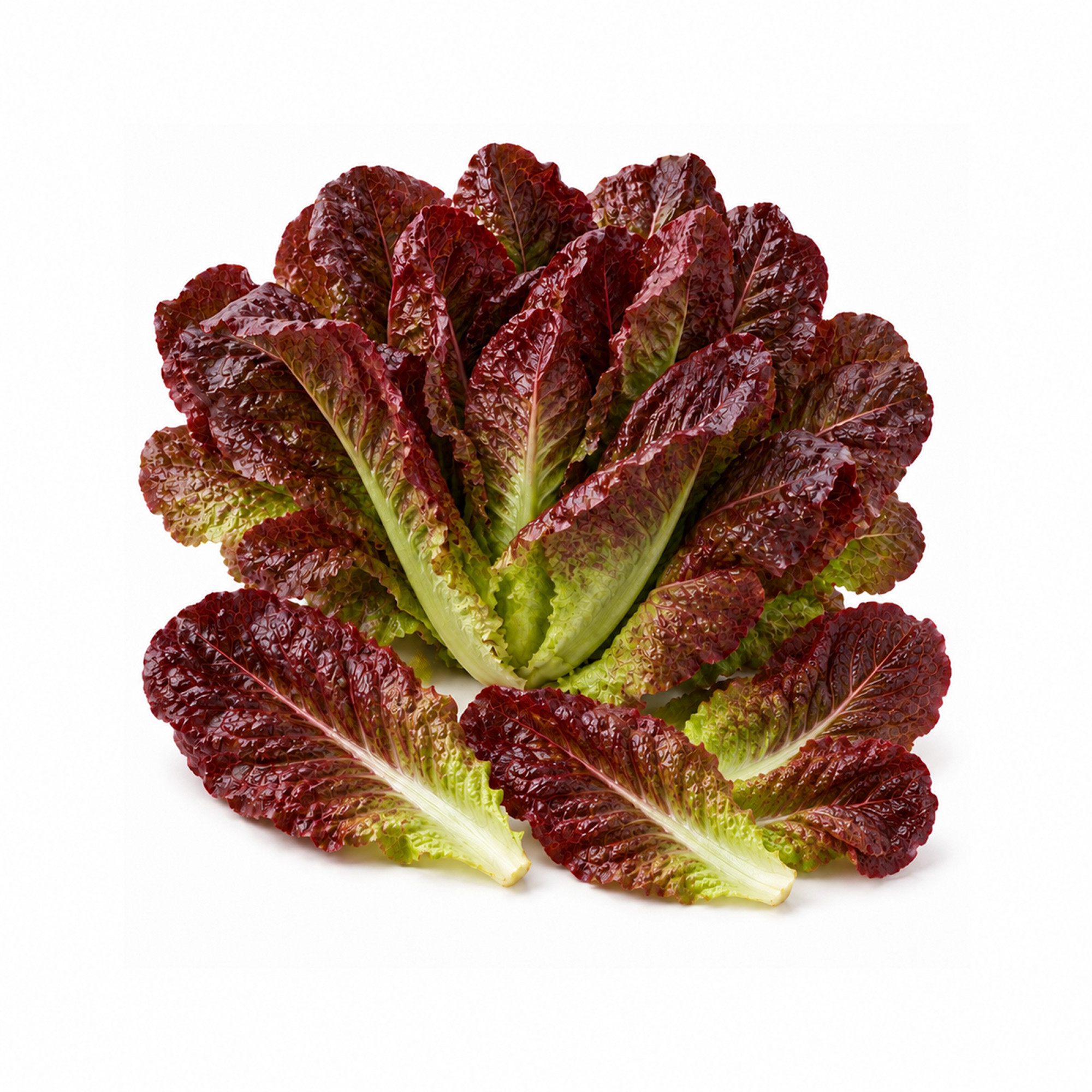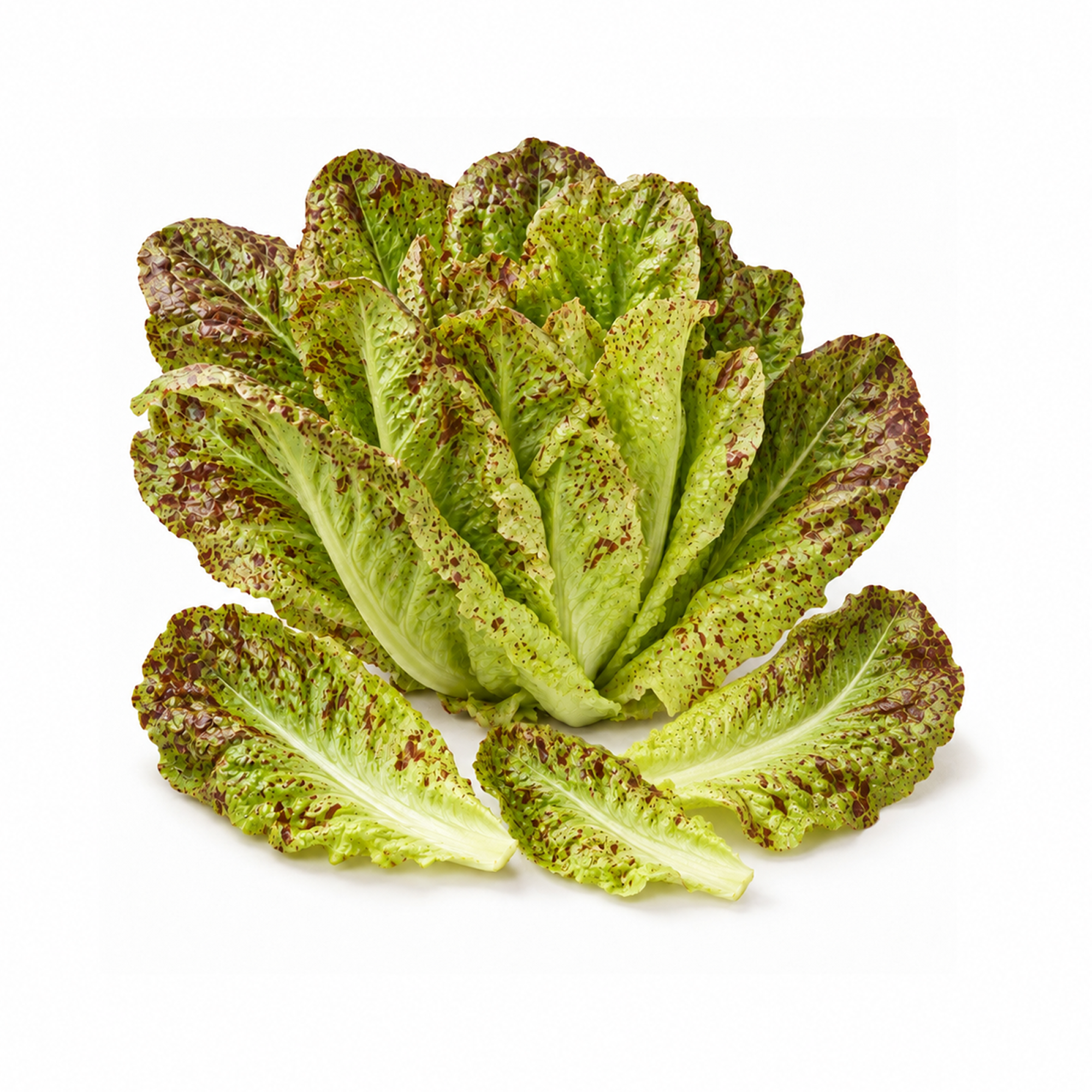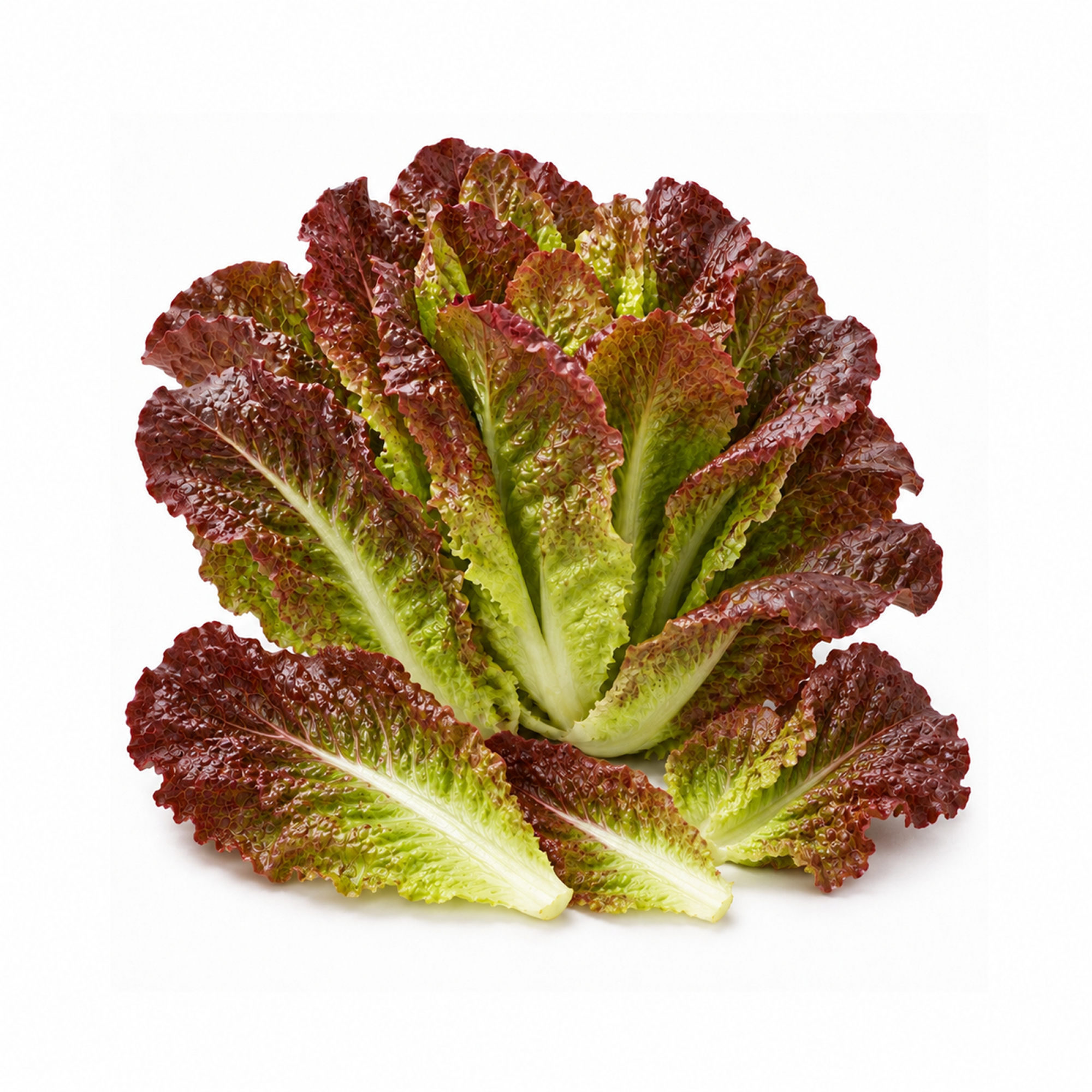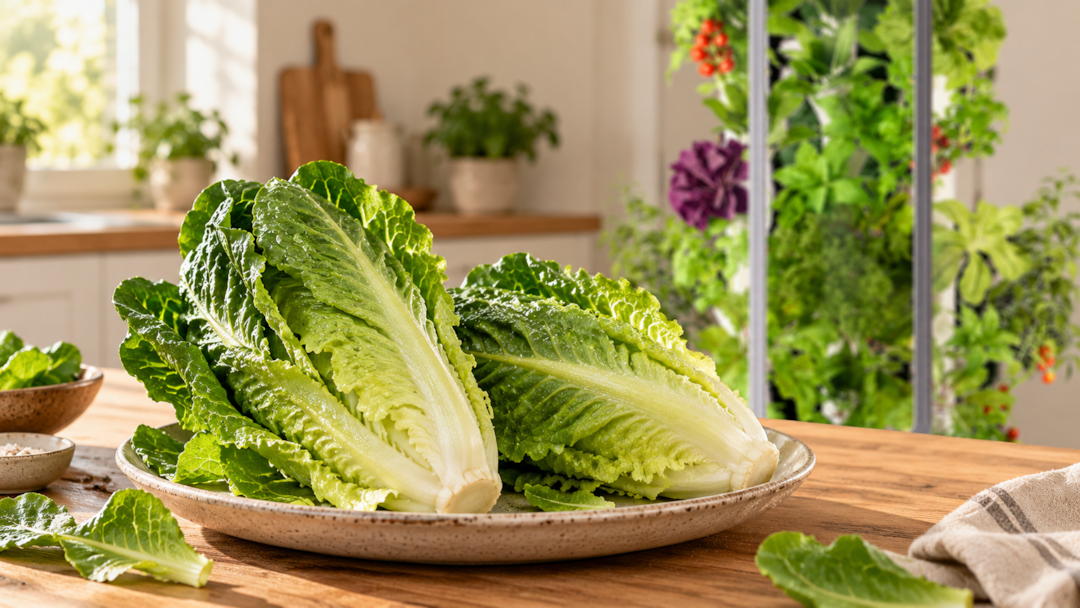
Romaine lettuce is the crop that convinces people they have a green thumb. It grows fast, tolerates beginner mistakes, and turns crisp, sweet leaves into Caesar salads, sandwiches, and wraps without a trip to the store. With the right light, cool temperatures, and a steady nutrient supply, you can harvest fresh romaine year-round — no backyard required.
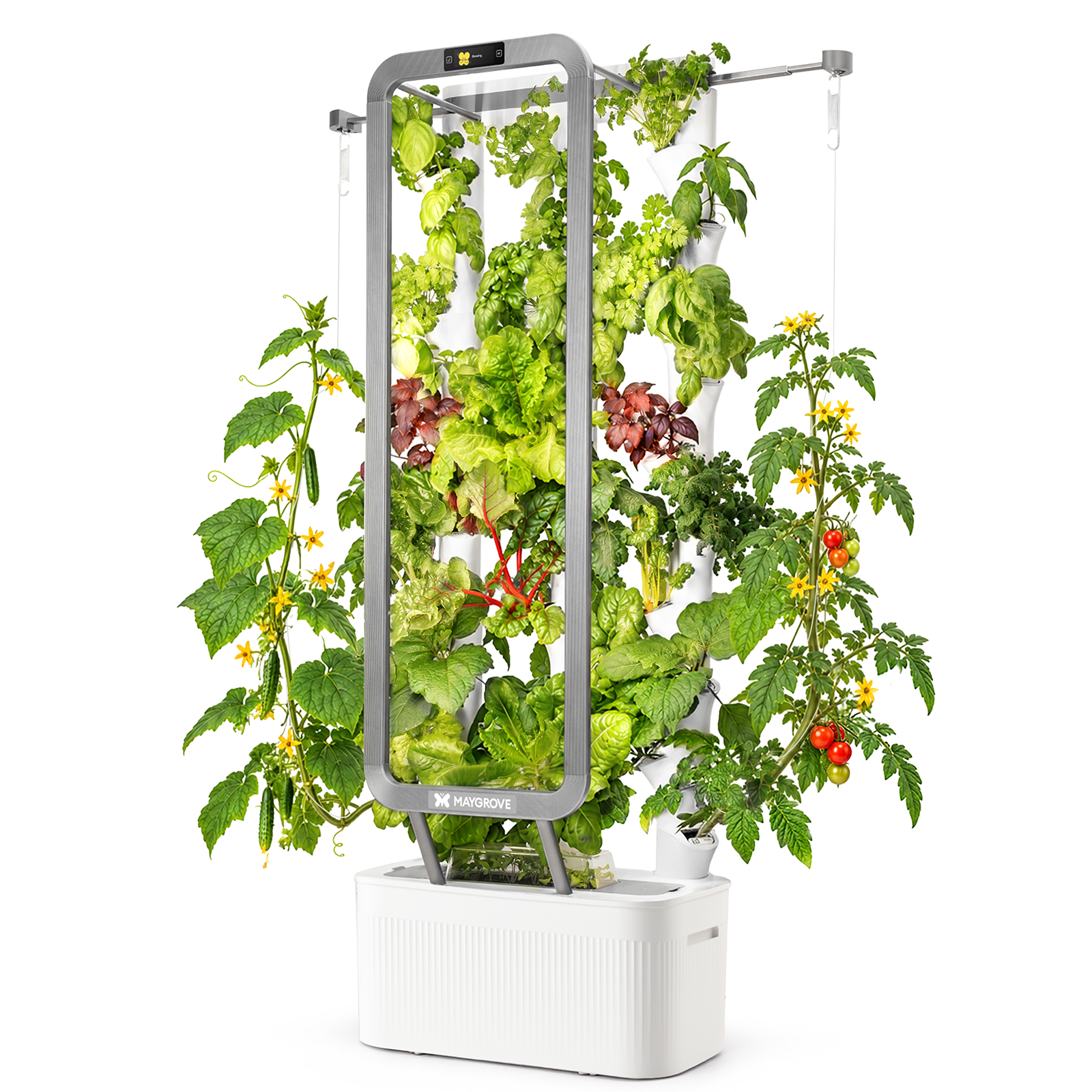
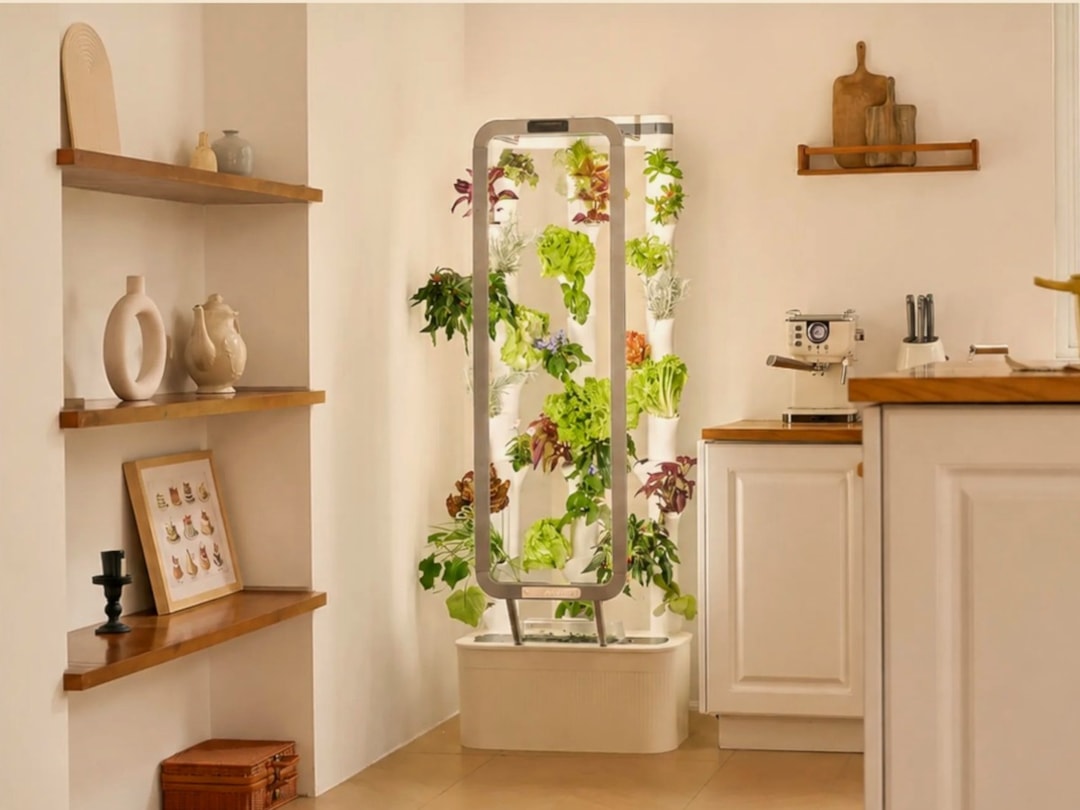
You can grow romaine in pots with potting mix or in a hydroponic system that delivers water and nutrients straight to the roots. For the simplest path, the Maygrove AI Growbot Verti 30 integrates lighting, water circulation, and nutrient dosing in one vertical unit, so the "right conditions" mostly take care of themselves.
This guide walks you through everything from sowing the first seed to cutting your first head — with the specific numbers that separate a thriving lettuce crop from a bitter, bolted one.
Can You Grow Romaine Lettuce Indoors?
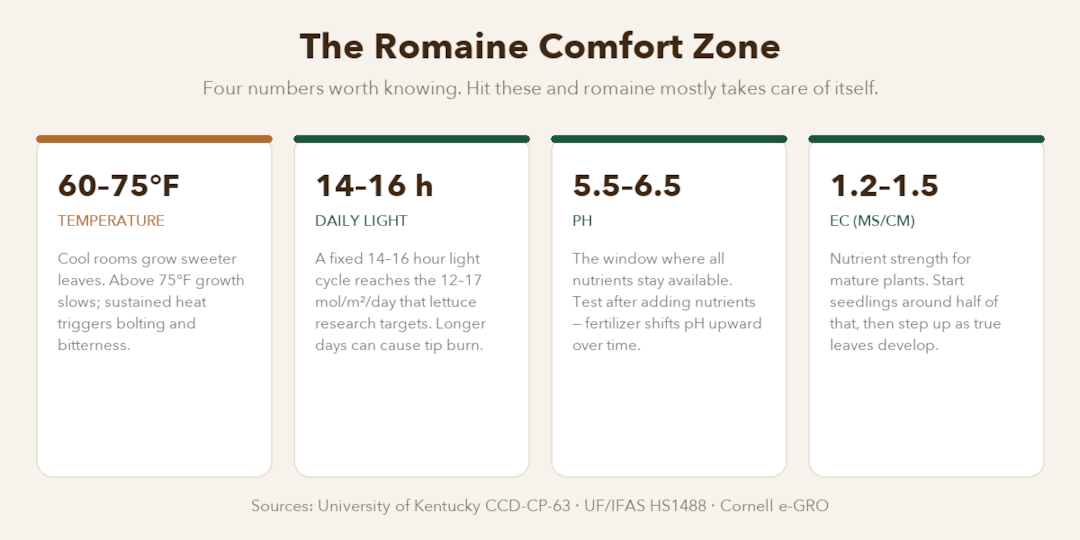
Yes — and romaine is arguably better indoors than out. Lettuce is a cool-season crop that outdoors constantly fights summer heat, and heat is exactly what ruins it. Utah State University Extension notes that lettuce grows best when temperatures stay at or below 75°F, and that sustained heat above that threshold drives bitterness, poor quality, and premature bolting. A sunny windowsill in July is not doing your romaine any favors.
Indoors, you control all four inputs that matter:
- Light: 14–16 hours under a grow light, which reliably reaches the 12–17 mol/m²/day daily light integral that lettuce research targets.
- Temperature: 60–75°F (16–24°C) by day, with nights in the mid-60s. Cool rooms grow sweeter, crunchier leaves.
- Water: consistent moisture. Lettuce has shallow roots and resents wet–dry swings, which toughen leaves and contribute to tip burn.
- Nutrients: a steady, balanced supply — lettuce is eaten young, so deficiencies show up fast.
If you are still deciding what to pair with your lettuce, our guide to what you can grow in an indoor garden covers how greens, herbs, and fruiting crops share the same tower.
What You Need to Grow Romaine Lettuce Indoors
Seeds, Growing System, and Nutrients
Start with quality romaine seed. For hydroponic growing, varieties bred for controlled environments germinate and head most reliably, but standard garden romaine works too — it just grows a little taller and looser.
For soil-based growing, you'll need:
- A pot at least 6–8 inches deep with drainage holes
- Quality potting mix
- Romaine lettuce seeds
- A grow light if natural light is insufficient
- A balanced water-soluble fertilizer
For hydroponic growing, you'll need:
- A compatible hydroponic system
- Romaine seeds or pre-seeded growing pods
- A hydroponic nutrient solution formulated for leafy greens
- Adequate lighting — water circulation and aeration are built into most systems
The Maygrove AI Growbot Verti 30 brings these components together, and compatible pre-seeded MayPods eliminate the fiddliest step for beginners: sowing tiny lettuce seeds individually.
Light, Temperature, and Growing Conditions
This is where most indoor lettuce is won or lost, so here are the exact numbers.
Temperature: The University of Kentucky's controlled-environment lettuce guide (CCD-CP-63) recommends keeping daytime air at or below 75°F (24°C) with nights around 65°F (18°C). It also warns that fluctuating temperatures can be more damaging than sustained warmth — one more reason a climate-stable living room beats a greenhouse.
Light: Lettuce growth is roughly proportional to the light it receives. A fixed 14–16 hour photoperiod under the Verti 30's integrated lighting lands in the target range without any measuring. Don't overdo it — photoperiods beyond 18 hours can cause leaf distortion and tip burn.
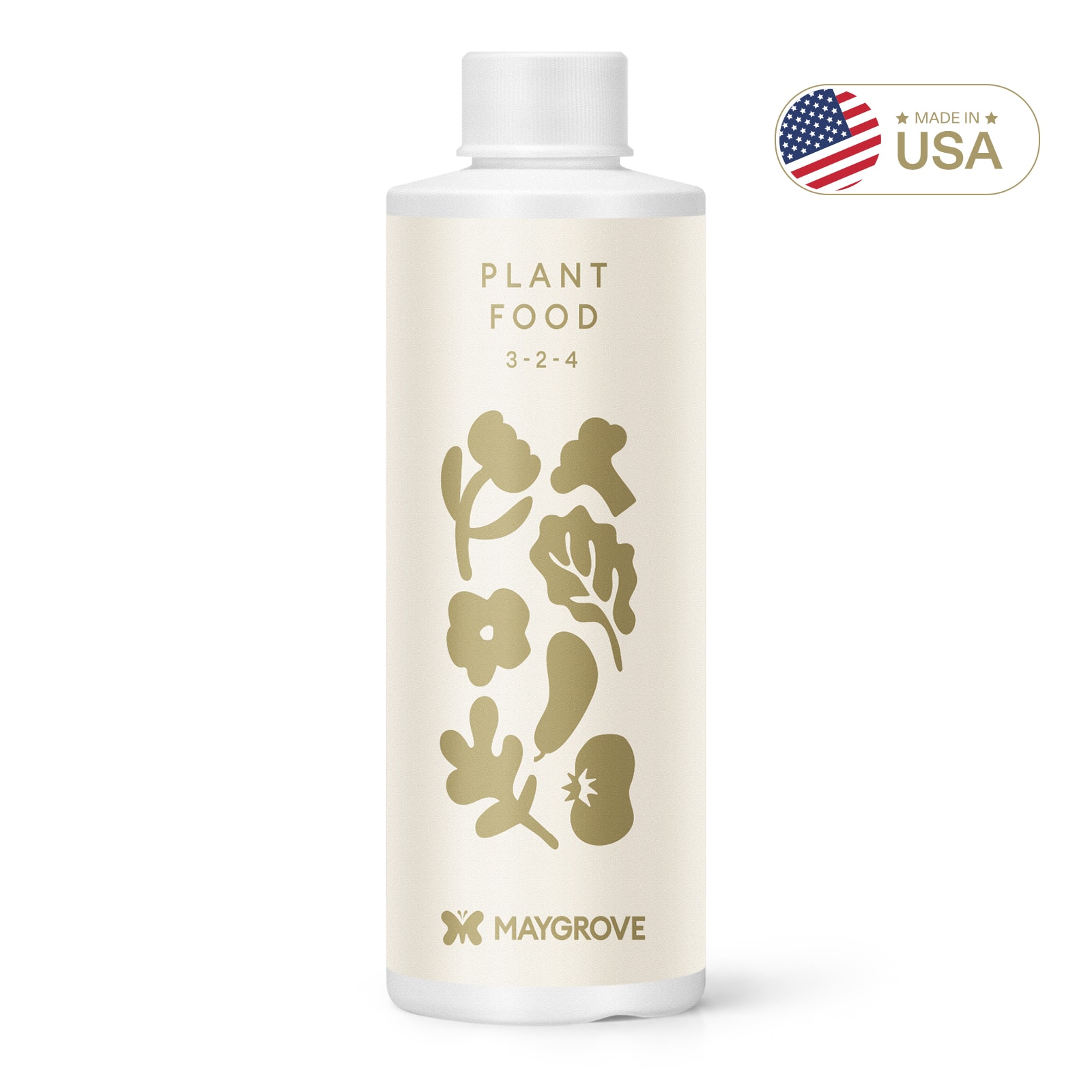
Nutrient strength and pH: For hydroponic systems, UF/IFAS recommends an electrical conductivity of about 1.2–1.5 mS/cm (~800 ppm) for lettuce, with pH adjusted to 5.5–6.0 — the window where every nutrient stays available. Seedlings should start at roughly half that strength, per Cornell's seedling research, then step up once true leaves develop. If you use Plant Food with the Verti 30, dosing follows the label; the app handles scheduling.
How to Grow Romaine Lettuce Step by Step
Step 1: Start Romaine Lettuce Seeds
Lettuce seeds germinate best at 60–70°F and sprout in 2–10 days. Two things matter most here:
- Don't bury them deep. Sow shallowly — ¼ inch in soil, or surface-sown in pods. Lettuce seeds are tiny and run out of energy before reaching light if planted too deep.
- Keep them evenly moist. A dry spell during germination, even a short one, wipes out the whole sowing.
In the Verti 30, pre-seeded MayPods handle this for you: insert the pod, and the system's automated cycles keep moisture and light at germination-friendly levels until sprouts appear.
Step 2: Thin Seedlings and Choose the Strongest Plant
If several seedlings emerge in one spot, they'll compete for light and nutrients and all end up weaker. Thin to the strongest seedling when the first true leaves appear — and don't feel bad about it: thinnings are a free micro-salad.
Overcrowding is more than an aesthetic problem. Tight spacing restricts airflow around leaves, which slows growth and invites disease. If you're planning a full tower, our guide to plant spacing for vertical gardens explains how to divide sites between lettuce, herbs, and larger crops.
Step 3: Support Healthy Leaf Growth
From week 3 onward, romaine stacks leaves into the upright rosette it's known for. Your job is consistency, not intervention:
- Keep the light cycle fixed — same hours every day.
- Maintain nutrient strength at full dose once true leaves are established.
- Keep temperatures in the comfort zone; move the unit away from radiators, ovens, and sunny windows that create hot spots.
- Give leaves room to expand; romaine heads need more elbow room than loose-leaf types.
One advantage of growing lettuce on a hydroponic tower: the roots sit in constantly oxygenated, constantly fed solution, so the wet–dry stress that plagues pot-grown lettuce simply doesn't happen. If you're curious about the mechanics, how a hydroponic garden works breaks it down.
Step 4: Monitor Growth and Plant Health
Check your plants every couple of days for color and posture changes:
- Pale leaves usually point to a lighting or nitrogen issue.
- Brown leaf edges on inner leaves often mean tip burn — a calcium-transport problem triggered by rapid growth, not something more fertilizer fixes. Lower the nutrient strength slightly and improve airflow.
- Wilting suggests water delivery problems or excess heat.
- Yellowing lower leaves deserve a closer look — our troubleshooting guide to yellow leaves in a hydroponic garden walks through the checklist in order.
The Verti 30's app-based monitoring automates light and nutrient schedules, but nothing replaces a 30-second visual check: healthy romaine looks perky, compact, and evenly green.
How Long Does Romaine Lettuce Take to Grow Indoors?
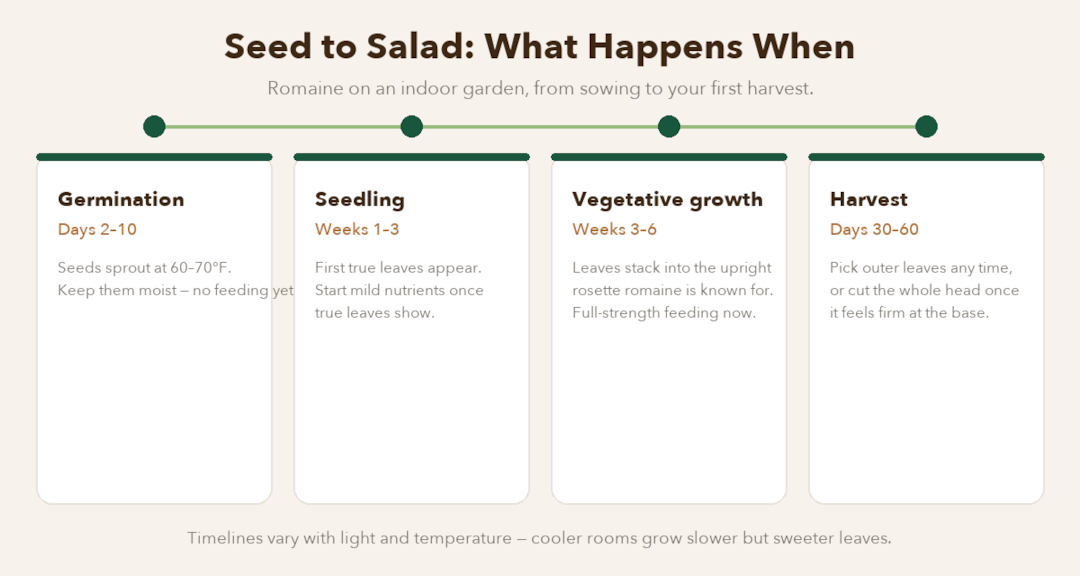
Plan on 30–60 days from sowing to first harvest, depending on variety and conditions. Under good light at stable temperatures, hydroponic romaine tends toward the faster end of that range.
| Growth Stage | Approximate Timing | What to Expect |
|---|---|---|
| Germination | Days 2–10 | Seeds sprout and develop first roots |
| Seedling | Weeks 1–3 | True leaves appear; start mild feeding |
| Vegetative growth | Weeks 3–6 | Leaves stack into the upright rosette |
| Harvest | Days 30–60 | Outer leaves ready to pick, or cut full heads |
These are estimates, not promises. Cool rooms grow slower but sweeter; dim conditions stretch time dramatically — Cornell researchers found lettuce at half the target light took twice as long to head.
When and How to Harvest Indoor Romaine Lettuce
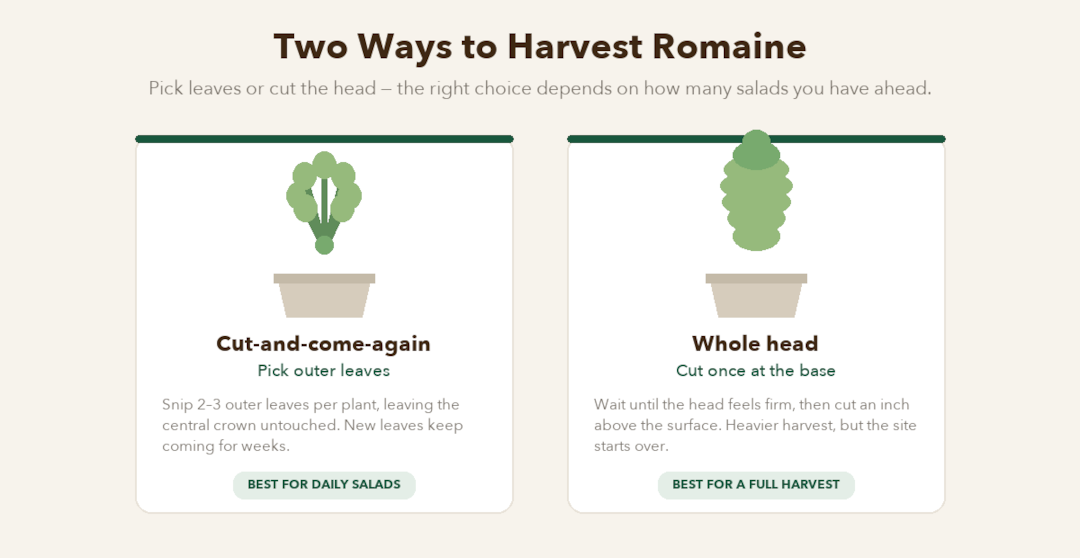
You have two options, and you'll probably use both:
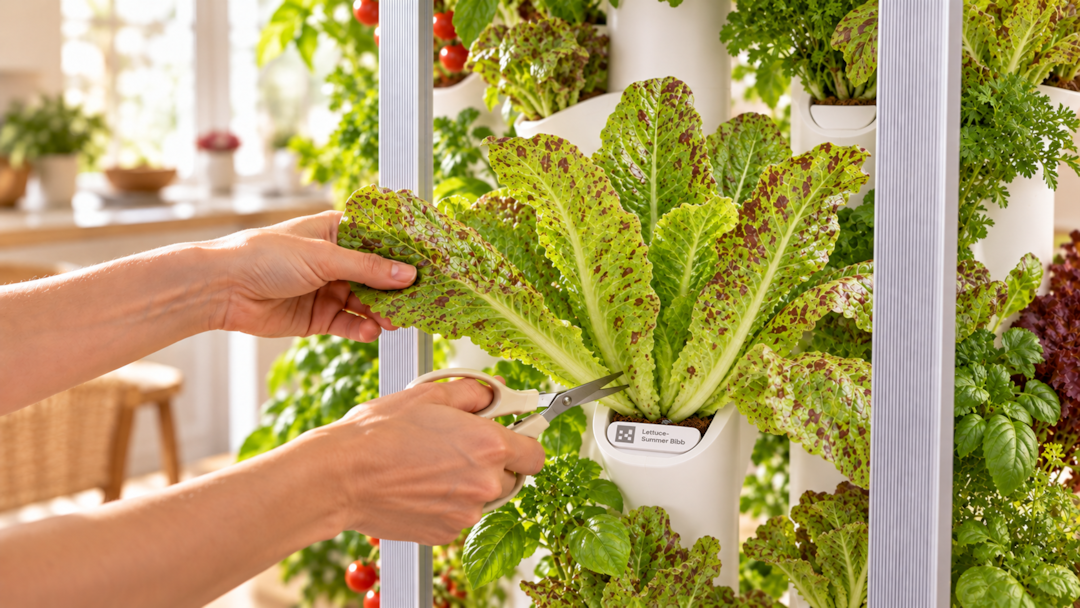
Cut-and-come-again (start around day 30). Pick 2–3 outer leaves per plant, always leaving the central crown intact. New leaves keep emerging, and one plant can feed you for weeks. This is the method I'd recommend for your first crop — it's forgiving and spreads the harvest.
Whole head (day 45–60). When the head feels firm at the base, cut the plant about an inch above the growing surface. You get the dense, sweet heart that Caesar salads are built for — but that growing site starts over from seed.
For the full decision guide — including the exact visual cues for peak flavor — see when to harvest romaine lettuce, and for keeping the harvest rolling across a whole tower, how to harvest lettuce for continuous growth covers staggered planting.
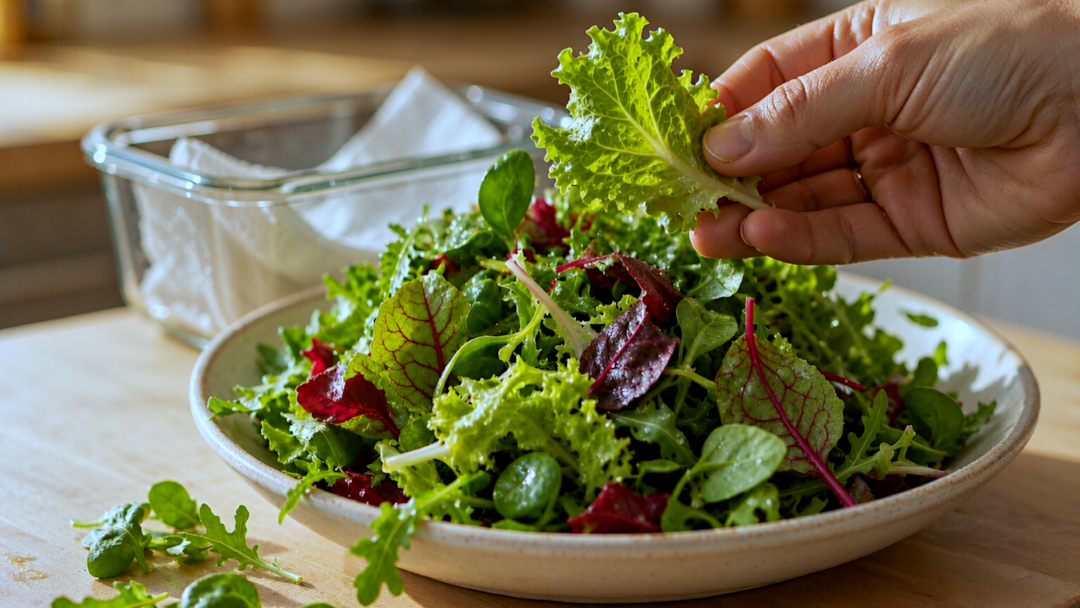
Once cut, the clock starts: lettuce wilts fast at room temperature. Rinse, dry, and store it properly — how to keep freshly harvested lettuce crisp covers the fridge setup that keeps leaves crunchy for over a week.
Common Romaine Lettuce Growing Problems
| Problem | Possible Cause | What to Do |
|---|---|---|
| Leggy, stretched seedlings | Insufficient light | Check the light cycle reaches 14+ hours; seedlings should be under light from day one |
| Bitter leaves | Heat stress or bolting | Keep the room below 75°F; harvest promptly |
| Tip burn (brown inner edges) | Calcium transport, often from rapid growth at high EC | Lower nutrient strength slightly, improve airflow |
| Yellowing leaves | Nutrient imbalance or root stress | Run the yellow-leaves checklist |
| Slow growth | Low light or cool temperatures | Verify the photoperiod; be patient — cool rooms grow fine, just slower |
| Premature bolting | Sustained heat or plant age | See the warning signs below; resow in a cooler spot |
Watch for These Bolting Warning Signs
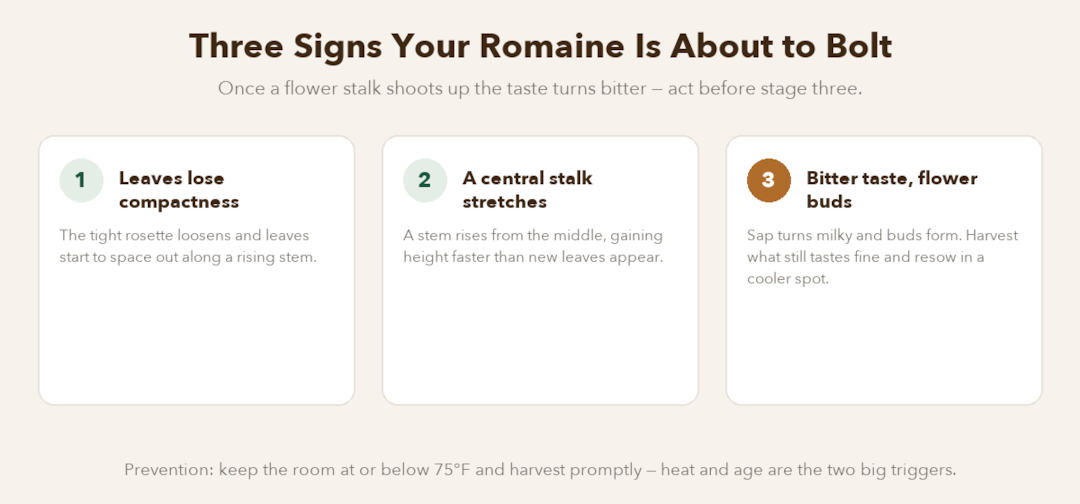
Bolting — when lettuce abandons leaf growth and shoots up a flower stalk — is irreversible, and the University of Kentucky guide lists sustained heat as the main trigger. Catch it early:
- The tight rosette loosens and leaves space out along a rising stem.
- A central stalk stretches visibly, gaining height faster than new leaves appear.
- Sap turns milky and the taste sharpens; flower buds form at the tip.
At stage one or two, harvest everything that still tastes good and resow. Don't try to "fix" a bolted plant — it won't return to leaf production.
A Romaine Rotation on the Maygrove AI Growbot Verti 30
Here's how experienced indoor growers keep a steady lettuce supply rather than a single boom-and-bust harvest:
- Give romaine the mid-level sites. Romaine is compact and upright — it doesn't need the trellis-friendly bottom sites that vining tomatoes and cucumbers claim. Mid-level positions put heads at easy eye level for checking and harvesting.
- Stagger your plantings. Instead of planting 8 romaine pods the same week, plant 2–3 pods every two weeks. You'll always have plants at different stages: seedlings filling in behind heads you're harvesting.
- Mix varieties for color and resilience. Green romaine, red romaine, and butterhead all grow happily side by side. Red varieties bring anthocyanins — and as our red vs. green lettuce comparison explains, the differences go beyond looks.
- Interplant with fast herbs. Basil and cilantro between lettuce sites use space the slower heads haven't claimed yet.
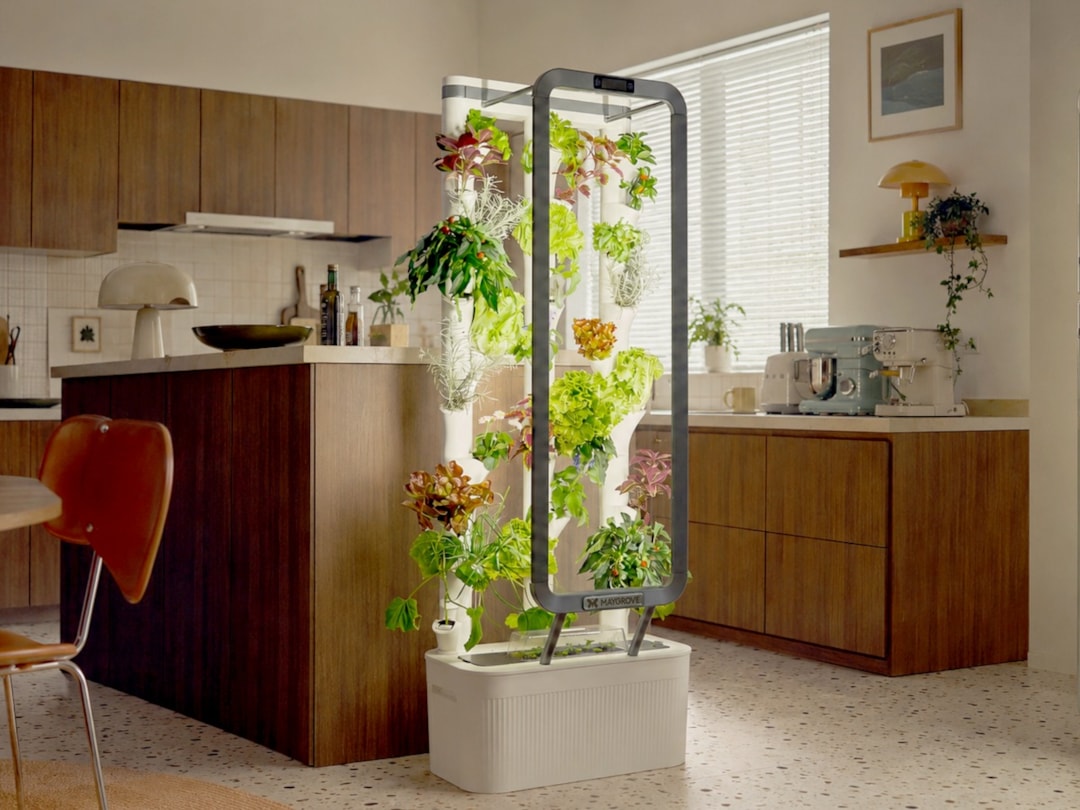
A practical starter layout on the Verti 30: 6–8 romaine sites staggered across the middle rows, a few butterhead or leaf lettuce filling gaps, and herbs up top where their scent benefits the whole kitchen.
Frequently Asked Questions
Can Romaine Lettuce Grow Without Direct Sunlight?
Yes. Romaine grows well under pure grow-light conditions — UMD Extension confirms lettuce tolerates less-than-ideal light better than most crops. A fixed 14–16 hour cycle under the Verti 30's lighting is plenty; direct sun isn't required, and hot window sun can actually cause bolting.
How Many Romaine Lettuce Plants Do You Need?
A salad for two uses roughly one small head or a big bowl of outer leaves. For a salad-serving household, 4–6 plants in rotation — with new plantings staggered two weeks apart — keeps a steady supply. On the Verti 30, that fits comfortably alongside herbs and other greens.
Can Romaine Lettuce Regrow After Harvesting?
Yes, if you harvest outer leaves and leave the crown intact — the plant keeps producing from the center for several weeks. After a full-head cut, the stump can sprout new leaves too, though regrowth is looser and shorter-lived than the original head. Eventually every plant bolts or slows; staggered planting is the real answer to continuous supply.
Why Is My Indoor Romaine Bitter?
Almost always heat. Sustained temperatures above 75°F push lettuce toward bolting, and bitterness arrives before the flower stalk does. Move the unit away from heat sources, improve airflow, and harvest promptly — some bitterness fades after a day or two in the fridge.
Should I Thin My Lettuce Seedlings?
Yes, when multiple seedlings share one site. Thin to the strongest at the true-leaf stage — thinnings are edible, so nothing is wasted. Pre-seeded pods are usually engineered with the right seed count, so check whether thinning is needed before snacking.
Do I Need to Pollinate Lettuce?
No — you're growing leaves, not seeds. Lettuce only flowers when it bolts, and bolting means the harvest is over. This makes lettuce one of the lowest-maintenance crops you can grow indoors; unlike tomatoes or cucumbers, it asks nothing of you at flowering time.
Can I Grow Grocery Store Romaine Stumps in My Indoor Garden?
You can regrow a stump in water, and it's a fun kitchen experiment — but the regrowth is sparse and won't form a proper head. For real harvests, start from seed or pods. The stump method belongs on a windowsill, not a growing system with sites to fill.
What's the Best Lettuce Variety for Beginners?
Loose-leaf types are the most forgiving, and mini romaines head reliably under lights. Standard full-size romaine does fine indoors with stable temperatures — it just needs a bit more patience and spacing. If in doubt, grow a mix: failures become learning data instead of empty dinner plates.
Grow Fresh Romaine Lettuce at Home with Maygrove
Growing romaine indoors is the rare project that pays for itself in weeks: low-maintenance plants, fast turnaround, and harvests that taste better than anything shipped in a truck. Cool temperatures, a steady light schedule, and staggered plantings are the whole secret.
The Maygrove AI Growbot Verti 30 handles the conditions automatically, so your attention goes where it matters — checking plants, harvesting leaves, and planning the next sowing. From a weeknight Caesar salad with freshly grown romaine to everyday sandwiches and wraps, there's a specific satisfaction in knowing your greens never spent a day in transit.
Start with a few pods, keep the room cool, and in about a month you'll be picking your own salad — then resowing the gap and doing it again.