Growing tomatoes, peppers, and cucumbers indoors lets you enjoy fresh produce without relying on outdoor garden space. But when your plants flower and no fruit appears, pollination is often the missing piece.
Outdoors, wind and insects move pollen between flowers for you. Indoors, those helpers are absent — especially in an enclosed growing space. The good news: many indoor fruiting plants can be pollinated with a few simple techniques that take about two minutes.
Tomatoes and peppers are generally self-pollinating, while most common cucumber varieties require pollen to move from male flowers to female flowers. Understanding this difference helps you choose the right approach for each crop.
If you are still deciding which crops to pair with your greens, our guide to what you can grow in an indoor garden covers how fruiting plants fit alongside lettuce and herbs.
In this guide, you'll learn how pollination works, when hand pollination is useful, and how to pollinate indoor tomatoes, peppers, and cucumbers without damaging their flowers.
Why Indoor Fruiting Plants May Need Help with Pollination
Flowers must be pollinated successfully before they can develop into fruit. Although indoor plants can flower normally, producing flowers does not guarantee fruit set.
In an outdoor garden, several natural factors help pollination happen:
- Wind: Movement and vibration can release pollen from flowers.
- Insects: Bees and other pollinators transfer pollen between flowers.
- Plant movement: Gentle movement can help release and distribute pollen in some crops.
An indoor growing area lacks wind and visiting insects. Even in a room with good air circulation, the movement is rarely enough to release pollen from every flower.
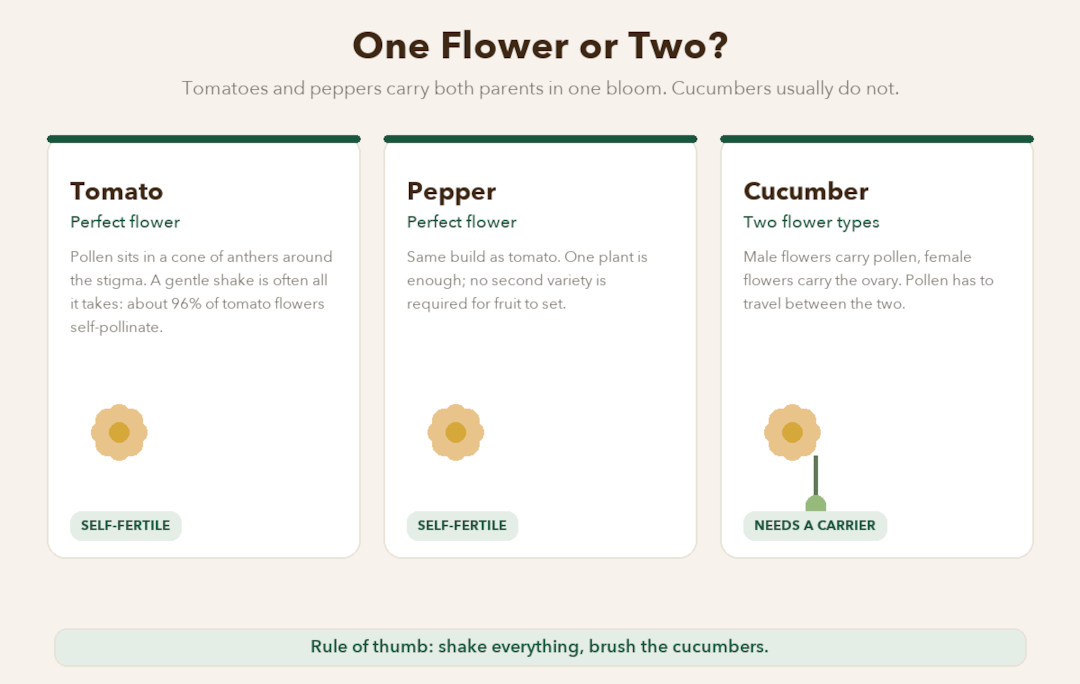
Tomatoes and peppers can often pollinate themselves because their flowers contain both male and female reproductive structures. However, pollen still needs to reach the receptive part of the flower. Gentle vibration helps this process.
Cucumbers are different. Many common cucumber varieties produce separate male and female flowers, so pollen generally needs to move from a male flower to a female flower for fruit to develop.
Hand pollination can help when natural pollen transfer is limited. It is not a guaranteed solution, though: temperature, light, nutrition, water stress, and plant maturity also affect fruit production. We'll come back to those in a moment.
How Pollination Works in Tomatoes, Peppers and Cucumbers
Although all three crops produce fruit from flowers, their pollination requirements differ — and the difference comes down to flower anatomy.
Tomatoes
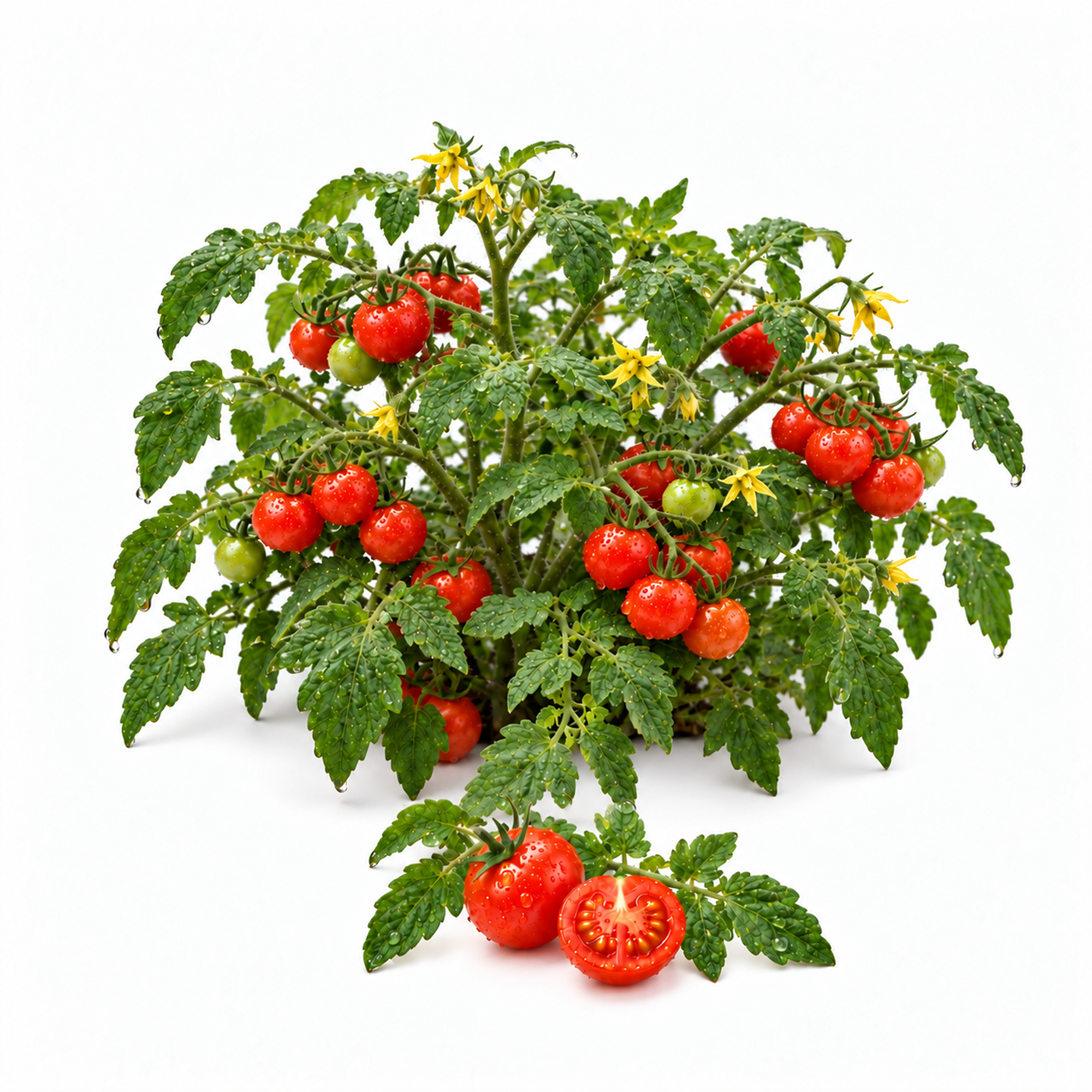
Tomato flowers contain both male and female reproductive structures in the same bloom — what botanists call a perfect flower. Their anthers form a cone around the style, and pollen is released through small openings in the anthers.
Tomatoes are strongly self-pollinating. University of Maryland Extension researchers note that tomatoes self-pollinate about 96% of the time, and that the pollen is heavy and sticky — it needs to be jostled loose by wind or a visiting bee before it can fall onto the stigma.
That jostling is exactly what's missing indoors. The challenge is not the flower; it is helping the pollen move out of the anthers and reach the stigma. Gentle vibration of the flower or its supporting stem does the job.
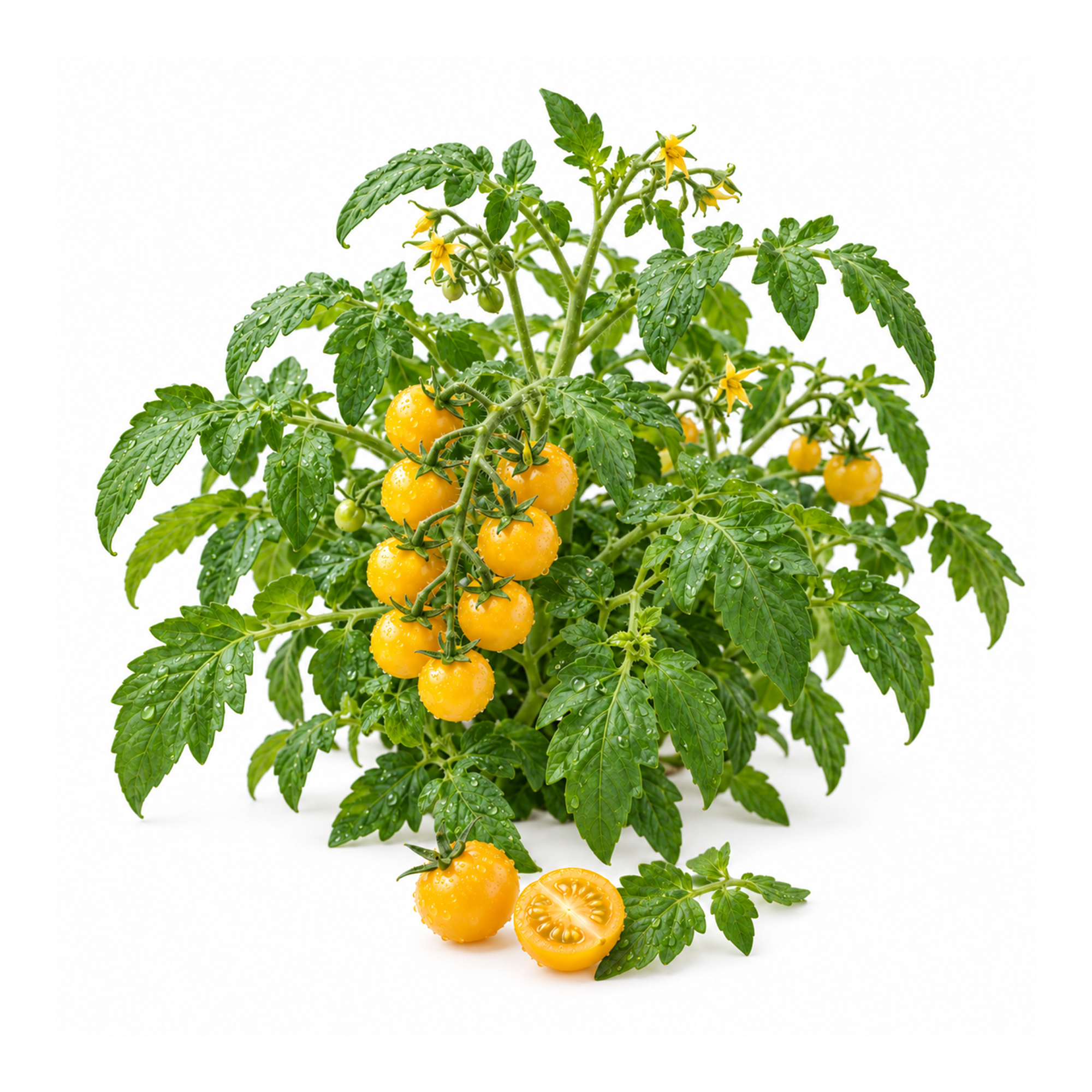
This applies to many common indoor tomato varieties, including Cherry Tomato, Red Cherry Tomato, Salad Tomato, and Tiny Tim Tomato. Individual cultivars differ in growth habit and productivity, but they share the same basic pollination process.
Peppers
Pepper flowers are also perfect flowers: both male and female structures in one bloom. Most common sweet and hot pepper varieties are self-pollinating, so they do not need pollen from a separate plant.
As with tomatoes, pollen must still reach the stigma, and still indoor air rarely provides enough movement. Gently tapping the flower or supporting stem helps; a small, soft brush works too.
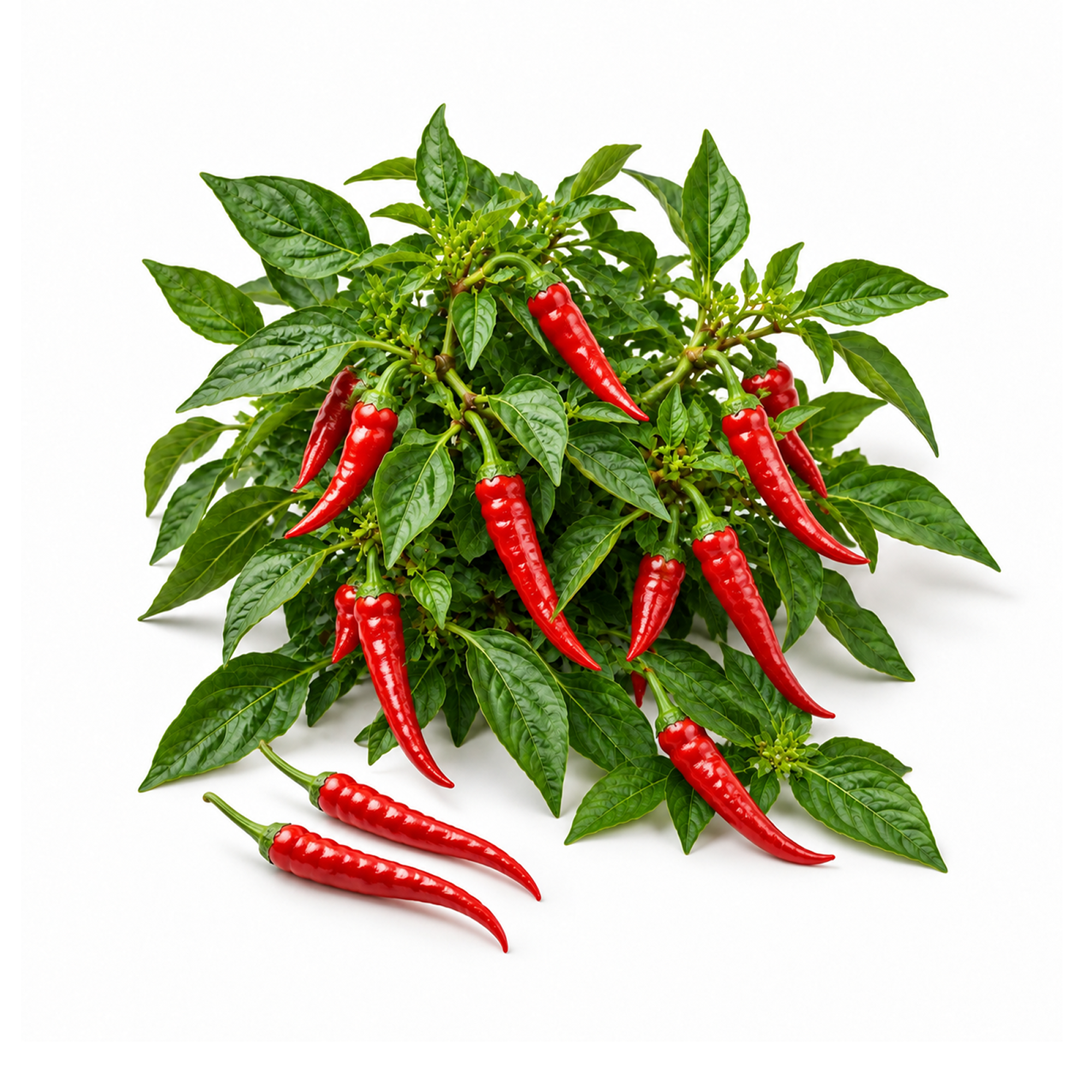
This applies to varieties such as Cal Wonder Bell Pepper, Golden Cal Wonder Bell Pepper, Mini Yellow Bell Pepper, Mini Red Bell Pepper, and Long Slim Cayenne Pepper — if you're weighing which to plant, our comparison of green, yellow, and red bell peppers breaks down the flavor and nutrition differences.
A second pepper plant is not normally required for fruit production, although cross-pollination between varieties can occur. Cross-pollination affects the genetics of the seeds rather than the fruit developing on the current plant.
Cucumbers
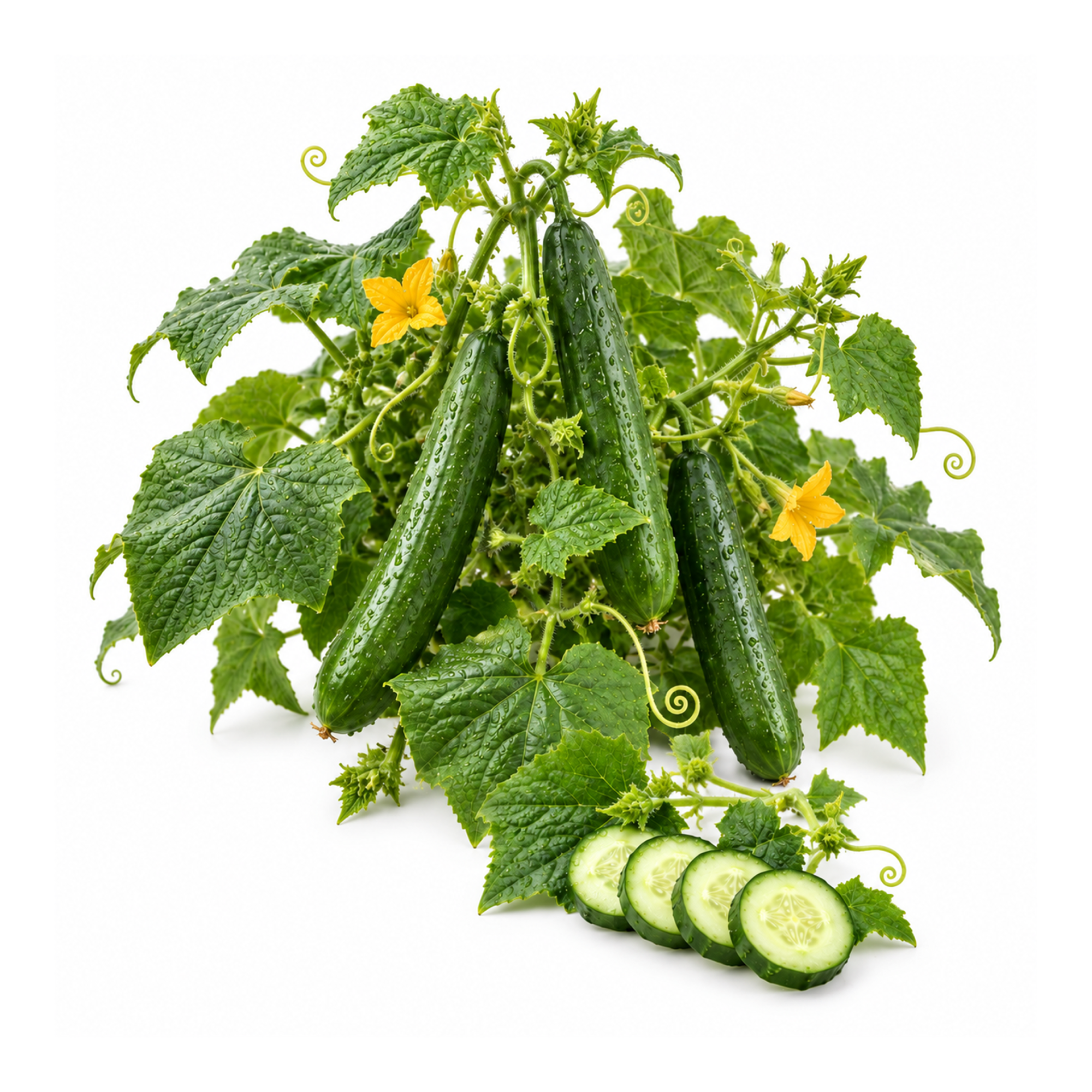
Many common cucumber varieties produce separate male and female flowers.
Male flowers produce pollen. Female flowers contain the ovary, which looks like a small cucumber behind the flower. If pollination and fertilization succeed, that ovary develops into a mature cucumber.
For these varieties, pollen needs to be transferred from a male flower to a female flower — by you, indoors.
Some cucumber varieties are parthenocarpic, meaning they can develop fruit without pollination or fertilization. These are especially useful indoors because they don't depend on pollen transfer at all.
Before deciding whether your cucumber needs hand pollination, check the variety's growing information. The distinction matters: pollinating a parthenocarpic variety is unnecessary and, in some cases, can result in seeded or misshapen fruit.
Do Indoor Tomatoes Need Hand Pollination?
Not always — but usually yes if you want consistent fruit.
Tomatoes are self-pollinating, and some indoor plants set fruit without any help. However, natural pollen release is unreliable in still indoor air. Commercial greenhouse growers treat hand pollination as standard practice: Colorado State University Extension lists hand pollination as required for tomatoes, peppers, and cucumbers grown in enclosed greenhouse spaces — essentially the same still-air environment as your living room.
Hand pollination is worth doing when:
- Your tomato plant produces flowers but repeatedly fails to set fruit.
- Flowers drop before small tomatoes begin to develop.
- You grow tomatoes in a space with limited air movement.
- You want more consistent pollen release during flowering.
If your plant already produces healthy fruit, you do not need to hand-pollinate every flower.
Timing matters more than most people realize. University of Maryland Extension found that tomato flowers must be pollinated within about 50 hours of opening, or they abort and drop. A flower skipped for days is usually a lost one, not a delayed one.
Also, remember that flower drop does not always indicate a pollination problem. High temperatures, inadequate light, water stress, and unbalanced nutrition can all interfere with fruit set.
How to Pollinate Indoor Tomatoes
Tomatoes are among the easiest indoor fruiting plants to hand-pollinate. All three techniques below take about two minutes.
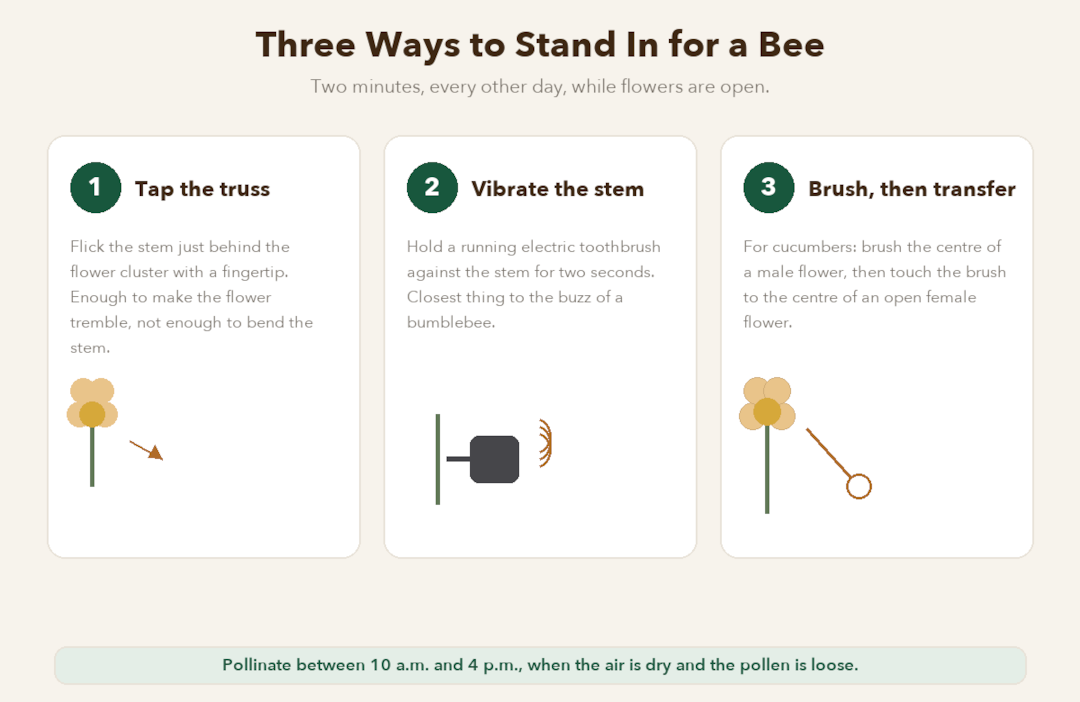
Method 1: Gently Vibrate the Flowering Stem
This is the simplest method, and the one university extension researchers recommend most.
- Identify an open tomato flower. Fully open flowers are the best candidates.
- Gently tap the stem supporting the flower cluster, or lightly flick the flower stem. The flower should tremble, not the whole plant.
- Repeat with other open flower clusters.
- Avoid shaking the entire plant forcefully or bending delicate stems.
The University of Alaska Fairbanks Cooperative Extension, which studied greenhouse tomato pollination in detail, found that vibrating flower clusters is more effective than blowing air at the plants, and recommends vibrating the clusters at least every other day while new flowers open.
A small electric toothbrush works well here: hold the running head against the stem just behind the flower cluster for two seconds. This mimics the buzz of a bumblebee, which is how tomatoes are pollinated in commercial greenhouses. Use it gently, and avoid pressing the vibrating head against delicate petals.
Method 2: Use a Small Brush
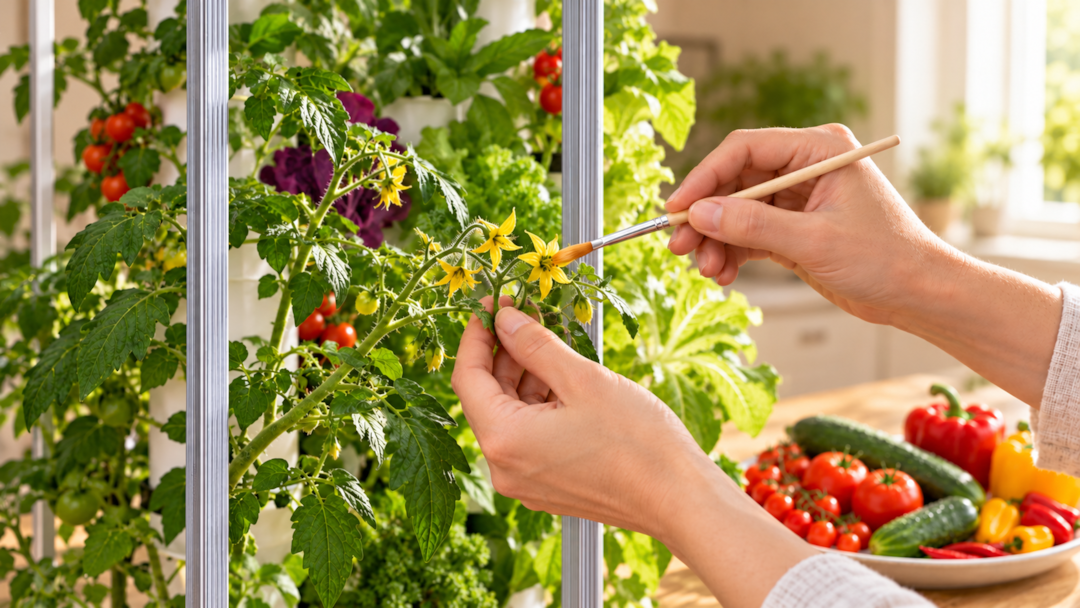
If you prefer a more controlled approach, use a clean, soft artist's brush.
- Select an open flower.
- Lightly touch the brush around the inside of the flower where pollen is released.
- Gently move the brush within the flower to help transfer pollen toward the stigma.
- Repeat for other open flowers.
Tomato flowers release visible pollen when conditions are right — a small yellow dusting on the brush — although you may not always see it. Do not scrape the flower or force the brush into its reproductive structures.
How Often Should You Pollinate Tomatoes?
During active flowering, vibrate or tap every two or three days, particularly when several flowers are open. Pollination happens most reliably between 10 a.m. and 4 p.m., when the air is drier and pollen releases more easily.
After pollination, watch the flower over the following days. A successfully developing tomato becomes visible as the flower fades and the small ovary starts to enlarge. The exact timing varies with the cultivar and growing conditions.
How to Pollinate Indoor Peppers
Peppers usually need less intervention than cucumbers because their flowers are self-pollinating. When natural pollen movement is limited, a gentle tap or brush helps.
Method 1: Gently Tap the Flowering Stem
- Identify an open pepper flower.
- Gently tap the stem or branch supporting the flower.
- Repeat for other open flowers.
- Avoid shaking the plant hard enough to damage flowers or branches.
This movement loosens pollen within the flower.
Method 2: Transfer Pollen with a Soft Brush
For small or delicate pepper flowers, a soft brush is useful.
- Choose a fully open flower.
- Lightly touch the brush to the flower's reproductive structures.
- Move the brush gently within the flower to distribute pollen.
- Repeat for other open flowers.
A clean brush avoids transferring unwanted material between plants. If you grow several pepper varieties and care about seed purity, use separate brushes or clean the brush between varieties.
Do Pepper Plants Need More Than One Plant to Produce Fruit?
Usually not. Most common sweet and hot peppers set fruit through self-pollination.
However, fruit set still depends on pollen viability, suitable temperatures, sufficient light, and healthy growth. If flowers keep dropping after you've tried gentle hand pollination, our article on pepper plants flowering but not fruiting walks through the seven most common causes and fixes.
How to Pollinate Indoor Cucumbers
Cucumber pollination requires more attention because many varieties produce separate male and female flowers.
Before starting, confirm that your variety needs pollination. If it is parthenocarpic, manual pollen transfer is unnecessary.
Step 1: Identify Male and Female Flowers
The easiest way to tell them apart is to look behind the flower.
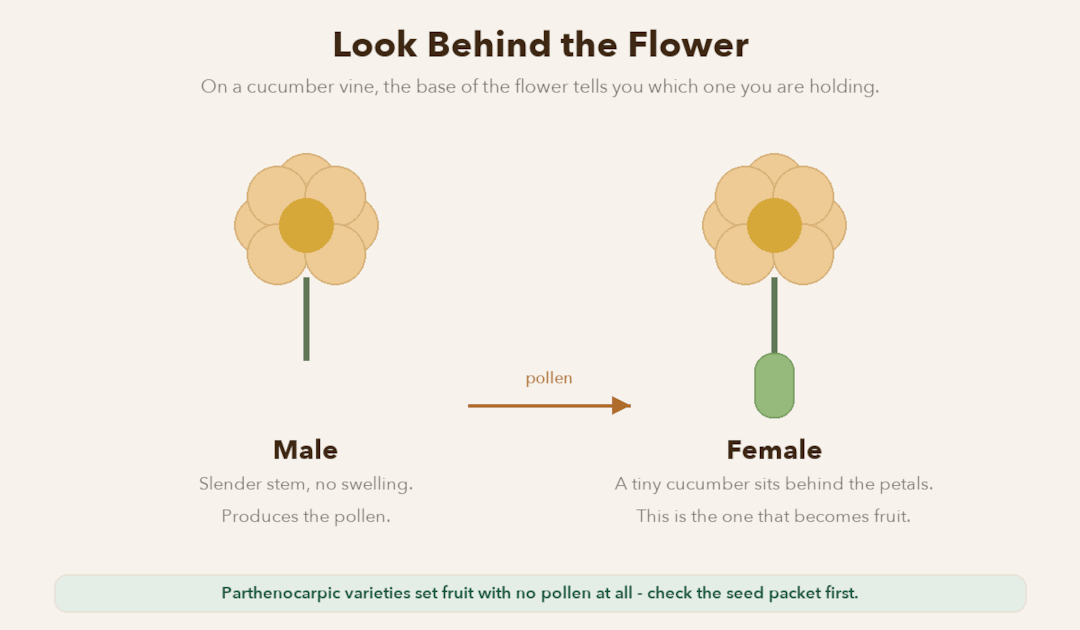
Male flowers:
- Grow on a slender stem.
- Do not have a miniature cucumber behind the petals.
- Produce pollen in the center of the flower.
Female flowers:
- Have a small, elongated ovary directly behind the flower.
- The ovary resembles a tiny cucumber.
- Need compatible pollen for normal fruit development in varieties that depend on pollination.
Both flower types appear on the same cucumber plant. Male flowers often open before female flowers, although flowering patterns vary by variety and conditions.
Step 2: Choose Fresh, Open Flowers
Choose an open male flower with accessible pollen and an open female flower.
Flowers are most useful for hand pollination when freshly open. Avoid flowers that are already wilting or damaged. University of Florida IFAS Extension recommends using freshly opened flowers in the morning hours for squash-family crops, which includes cucumbers.
Step 3: Transfer Pollen
Two methods work.
Method A: Use a Male Flower
- Pick a freshly opened male flower.
- Carefully remove its petals to expose the pollen-bearing structures.
- Gently touch the exposed pollen-bearing part to the central reproductive structure of the female flower.
- Make sure pollen reaches the receptive surface without damaging the flower.
- Repeat with other open female flowers as needed.
Method B: Use a Soft Brush
- Lightly brush the pollen-bearing structures inside a male flower.
- Transfer the pollen to the central receptive structure of a female flower.
- Repeat for additional female flowers.
Use a clean, soft brush and avoid rough handling. If the male flower produces little visible pollen, try another freshly opened flower.
Step 4: Monitor the Small Cucumbers
After successful pollination, the small ovary behind the female flower begins to enlarge.
If it stays small, turns yellow, shrivels, or drops, pollination may have failed. But unsuccessful pollination is only one explanation. Temperature stress, inadequate light, water problems, and other growing conditions can also cause young cucumbers to abort.
Which Cucumber Varieties Produce Fruit Without Pollination?
Some cucumber varieties are parthenocarpic: they set fruit without pollen fertilization.
This is particularly useful indoors because it removes the dependence on manual pollen transfer entirely.
However, not all cucumber varieties are parthenocarpic. Many produce separate male and female flowers and require pollen transfer for fruit development.
For the Beit Alpha Cucumber and Sweet Success Cucumber, check the seed supplier's growing information to confirm whether the cultivar is parthenocarpic. Do not assume that every cucumber sold under a market category has the same pollination requirements.
If your variety is confirmed parthenocarpic:
- You do not need to transfer pollen to produce fruit.
- Do not assume every flower needs manual assistance.
- Follow the cultivar's specific growing recommendations.
- Watch for fruit development and investigate environmental causes if young fruit aborts.
If your variety requires pollination, hand transfer between male and female flowers is an effective indoor technique.
A Weekly Pollination Routine on the Maygrove AI Growbot Verti 30
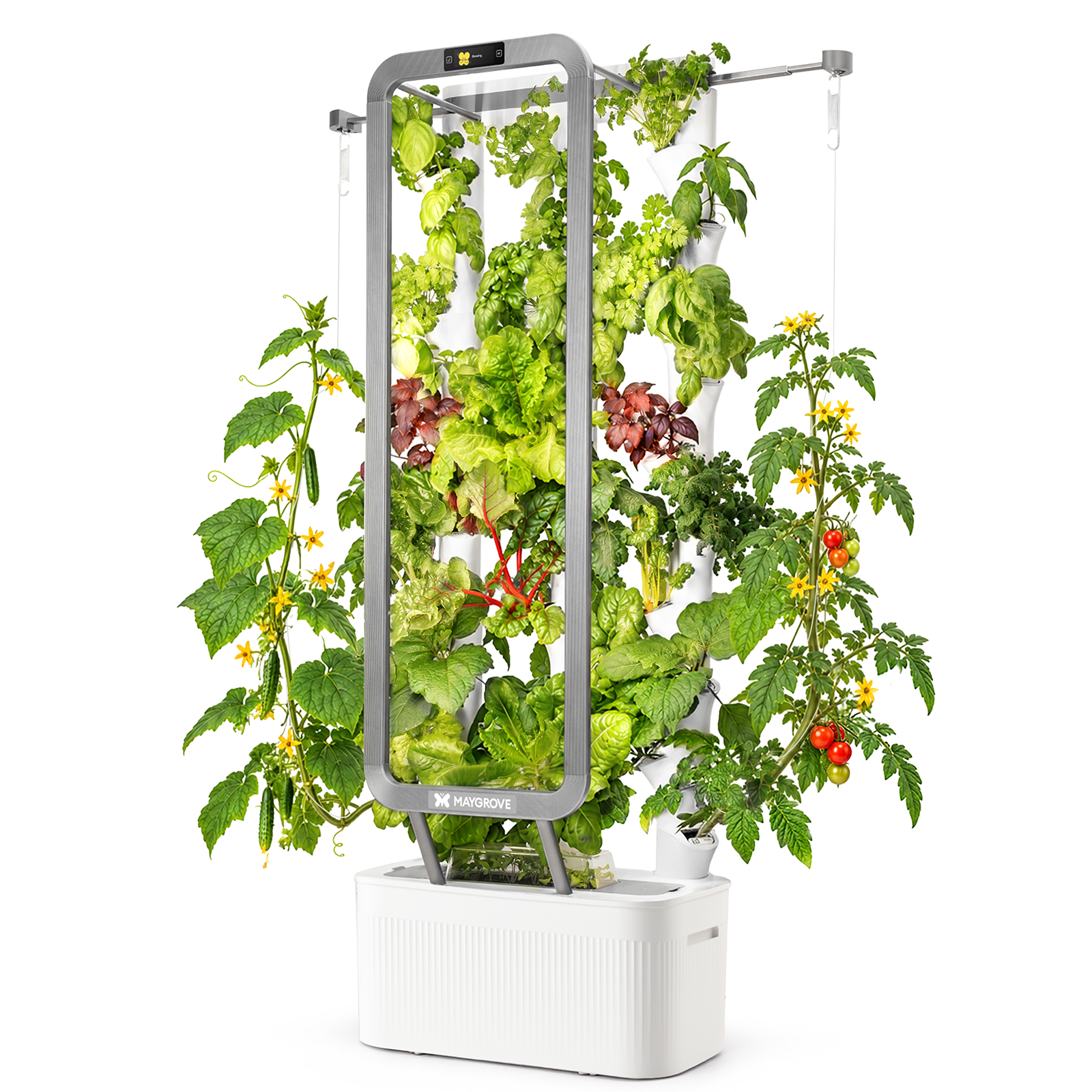
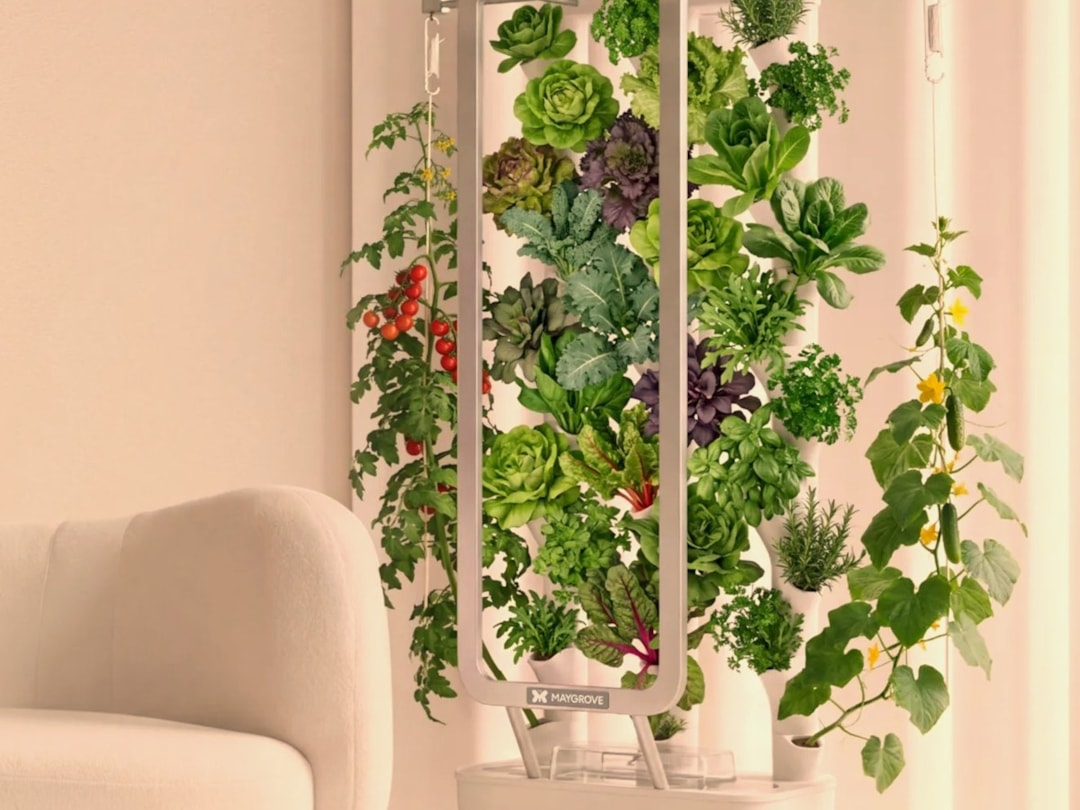
On the Maygrove AI Growbot Verti 30, fruiting crops get a natural head start: the two climbing slots at the lower left and right of the tower sit beside the extendable side trellises, which is exactly where a tomato vine and a cucumber vine should grow. Give each vine its own side — one tomato on the left, one cucumber on the right — and let them climb the trellis as they flower. Compact pepper plants do well in the middle tiers, where their flowers sit at eye level and are easy to reach.
A routine that takes about five minutes a week:
- Monday and Thursday: tap or vibrate every open tomato and pepper flower cluster; brush pollen into each open female cucumber flower.
- Keep the air moving: a small fan on low, aimed past — not directly at — the plants, helps pollen release and prevents hot spots.
- Watch the reservoir: fruiting plants drink noticeably more than lettuce. Top up before it runs low.
- Check the numbers: keep EC and pH in range for fruiting crops; our guide to how a hydroponic garden works explains what those readings mean.
Since the Verti 30 supports a maximum of two climbing plants, one per side trellis, plan the rest of the tower around them: peppers and compact fruiting varieties in the middle tiers, leafy greens and herbs up top where they finish fastest.
How to Recognize Poor Pollination
It takes some observation to distinguish poor pollination from other growing problems.
Tomatoes and Peppers
Possible signs of unsuccessful fruit set include:
- Flowers drop without a fruit developing.
- The flower fades, but the small ovary does not enlarge.
- Several flowers fail to set fruit over an extended period.
However, flower drop can also result from heat stress, inadequate light, water fluctuations, or nutritional imbalance.
Cucumbers
For cucumber varieties that require pollination, possible signs include:
- Female flowers fade while the small fruit behind them remains underdeveloped.
- Young cucumbers yellow or shrivel shortly after flowering.
- Fruit growth stops soon after the flower closes.
Poor pollination can contribute to misshapen or poorly developed fruit, but other causes are possible. Environmental stress and cultivar characteristics also affect fruit shape and retention.
A useful rule: if a flower drops before the plant develops fruit, investigate pollination and growing conditions together rather than assuming one is responsible.
Other Reasons Indoor Plants Fail to Set Fruit
Hand pollination helps pollen reach the right part of the flower, but it cannot correct every problem that prevents fruit development.
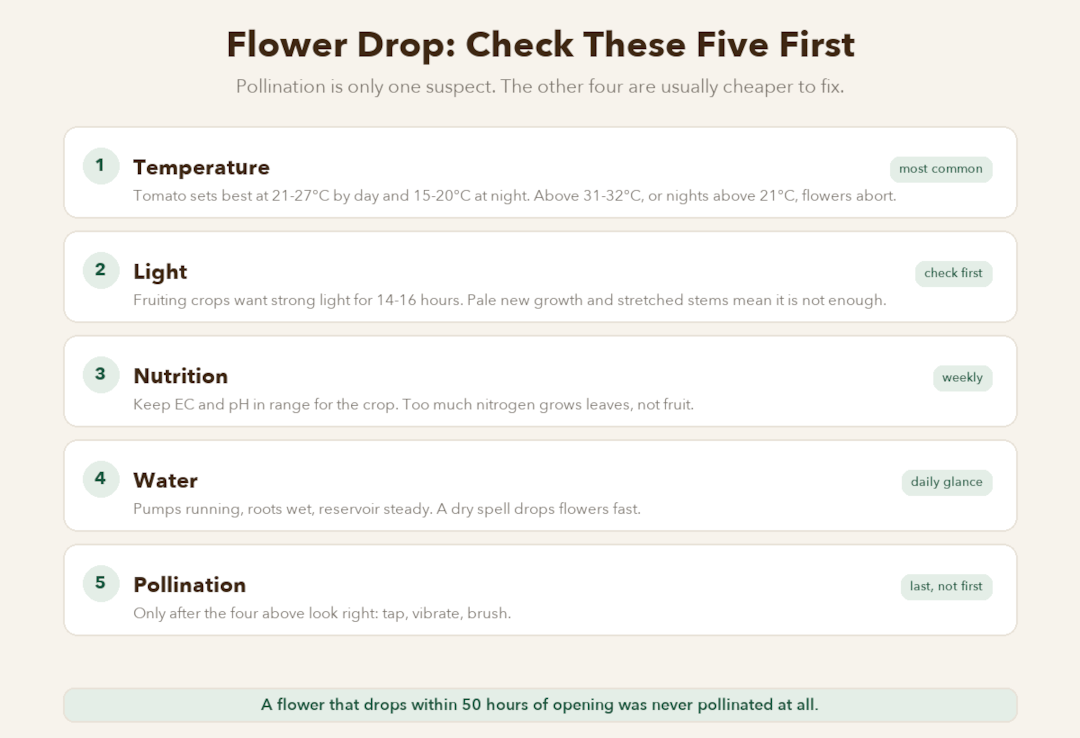
If tomatoes, peppers, or cucumbers keep flowering without producing healthy fruit, review the following conditions — in this order.
Temperature
Temperature affects pollen viability, fertilization, and fruit development, and it is the most common culprit behind flower drop.
University of Maryland Extension measured the thresholds for tomatoes: plants drop their flowers when daytime temperatures climb above 31-32°C (88-90°F) or nighttime temperatures stay above 21°C (70°F). On the cold end, nights below 13°C (55°F) interfere with pollen tube growth. The University of Alaska Fairbanks guide adds that humidity around 70% is optimal for pollen transfer — air that is too humid keeps pollen damp and sticky.
Tomatoes, peppers, and cucumbers have different preferences, and cultivars vary. Check the recommended range for each crop rather than assuming one setting suits every fruiting plant.
If flowers repeatedly drop during a warm spell, fix temperature before increasing the frequency of hand pollination.
Light
Fruiting plants need substantially more light than leafy greens to support flowering and fruit development.
If light is too weak or daily exposure is inadequate, plants produce fewer flowers, grow slowly, or struggle to retain young fruit. Look for supporting signs: elongated stems, pale new growth, small leaves.
Simply extending the lighting period does not solve the problem if intensity is insufficient — plants also need an appropriate dark period.
Plant Nutrition
Flowering and fruit development require balanced nutrition.
Too little of an essential nutrient limits growth, while excessive fertilizer creates imbalances and interferes with water uptake. Excessively high nitrogen relative to other nutrients encourages leafy growth at the expense of fruit.
Use a complete nutrient formula appropriate for the crop and follow its mixing instructions. Check pH and, where available, EC before adding supplements. If leaves are yellowing while you troubleshoot fruit set, our article on yellow leaves in a hydroponic garden helps you read the pattern.
Do not assume every flowering plant needs extra phosphorus or potassium. Adjust nutrients based on the plant's requirements and the condition of the solution.
Water Stress
Inconsistent water availability interferes with flower retention and fruit development.
Watch for wilting, unusually dry growing media, interrupted nutrient delivery, or significant fluctuations in the reservoir. In hydroponic systems, check that pumps and water-delivery components are functioning and that roots receive water and nutrients as intended.
Avoid abrupt changes to the nutrient solution while solving a pollination problem. A stable environment makes the real cause easier to identify.
From Flower to Fruit
Hand pollination rewards consistency more than effort. Two minutes every other day — tap the tomatoes, brush the cucumbers, check the thermostat — is enough to turn a flowering tower into a fruiting one.
And when the first cucumber reaches full size or the cherry tomatoes turn red, the harvest is the payoff: salsa ingredients steps from the kitchen, and a small weekly ritual that ends at the dinner table.
Frequently Asked Questions
Do I need to hand-pollinate indoor tomatoes every day?
No. Tomatoes are generally self-pollinating, and many will set fruit without daily intervention. If natural pollen movement is limited, gently vibrating flowering stems every two or three days while flowers are open is enough. Adjust your approach based on flowering activity and fruit set.
Can I pollinate tomatoes with a toothbrush?
Yes. A small electric toothbrush provides gentle vibration when held near a flower stem or cluster, which helps release pollen — this is the same method university extension researchers recommend for greenhouse tomatoes. Use it carefully, without pressing hard against the flower or damaging delicate stems.
What time of day is best for hand pollination?
Late morning through mid-afternoon, roughly 10 a.m. to 4 p.m., when the air is drier and pollen releases most easily. Avoid very humid periods: high humidity keeps tomato pollen damp and sticky, which reduces transfer.
Can peppers self-pollinate indoors?
Yes. Most common pepper varieties have perfect flowers containing both male and female structures and can self-pollinate. Gentle tapping or brushing helps pollen move when natural movement is limited. A second pepper plant is not normally required.
How do I know if a cucumber flower is male or female?
Look behind the flower. A female flower has a small, cucumber-shaped ovary behind the petals. A male flower grows on a slender stem without that miniature cucumber and produces pollen in its center.
Can cucumbers grow indoors without bees?
Yes, depending on the variety. Parthenocarpic cucumbers develop fruit without pollination, making them ideal for indoor growing. Other cucumber varieties need pollen transferred from male to female flowers — by you, indoors. Check the specific cultivar's growing information before planting.
Why are my tomato flowers falling off without producing fruit?
Flower drop can result from unsuccessful pollination, but it is just as often caused by temperatures above 31-32°C (88-90°F) or below 13°C (55°F) at night, insufficient light, water stress, or nutritional problems. Try gentle vibration during flowering, then review growing conditions if the problem continues.
Why do my small cucumbers turn yellow and fall off?
Possible causes include unsuccessful pollination in varieties that require it, temperature stress, insufficient light, and inconsistent water or nutrients. First confirm whether the variety needs pollination, then check the plant's growing conditions.
Does hand pollination guarantee more fruit?
No. Hand pollination improves pollen transfer when natural movement is limited, but fruit set also depends on viable pollen, suitable temperatures, plant health, and sufficient light and nutrients. If flowers continue to drop, investigate those factors too.
Do I need a fan in my indoor garden?
A small fan on low helps in two ways: it moves pollen loose from tomato and pepper flowers, and it prevents heat buildup around the light. Aim it past the plants rather than directly at them — strong constant wind can damage petals and dry the growing media.