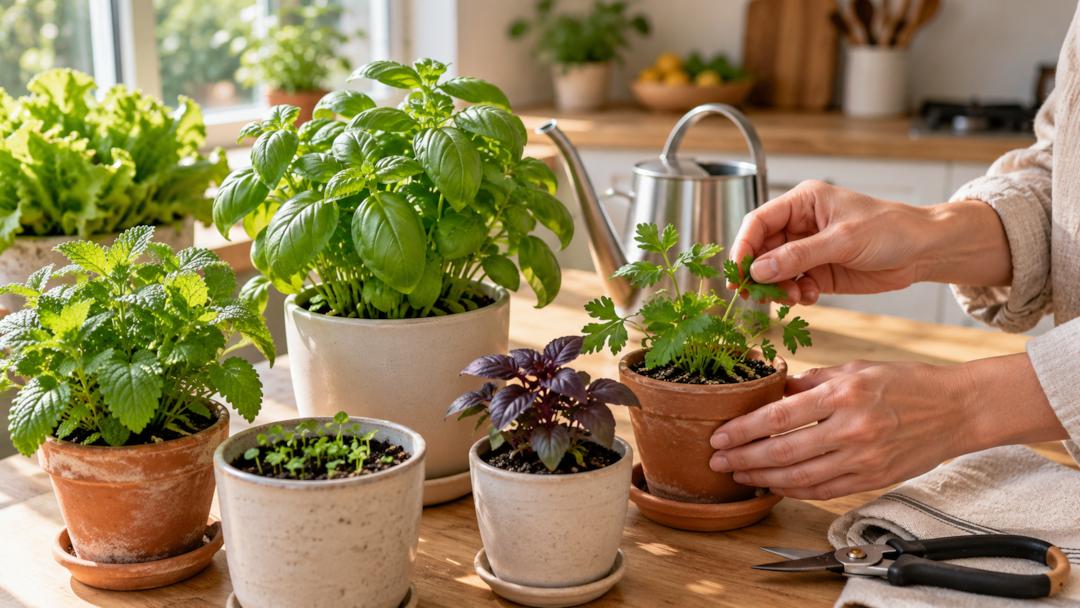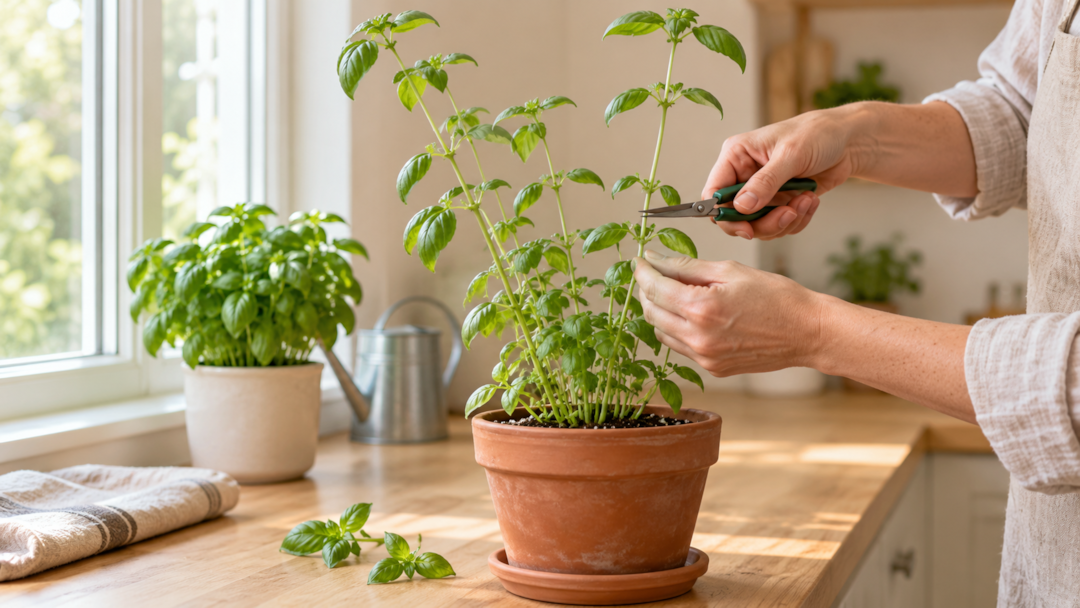
If your basil is growing tall and thin, with long stems, widely spaced leaves, and very little fullness, you're probably dealing with a common growing problem: leggy basil.
Instead of developing into a compact, leafy plant, your basil stretches upward. The stems may look weak, the leaves may be smaller than expected, and the plant may lean toward the nearest light source.
This can be frustrating when you're growing basil indoors for fresh leaves. You want a healthy, bushy plant that provides plenty of flavorful foliage—not a tall stem with just a few leaves.
The good news is that leggy basil is often a sign that the growing conditions or harvesting routine need adjustment. Insufficient light is one of the most common causes, but temperature, plant density, and pruning habits can also influence how basil grows.
Whether you're growing Genovese Basil, Lemon Basil, or Red Rubin Basil, understanding the reason behind the growth pattern will help you encourage healthier, fuller plants.
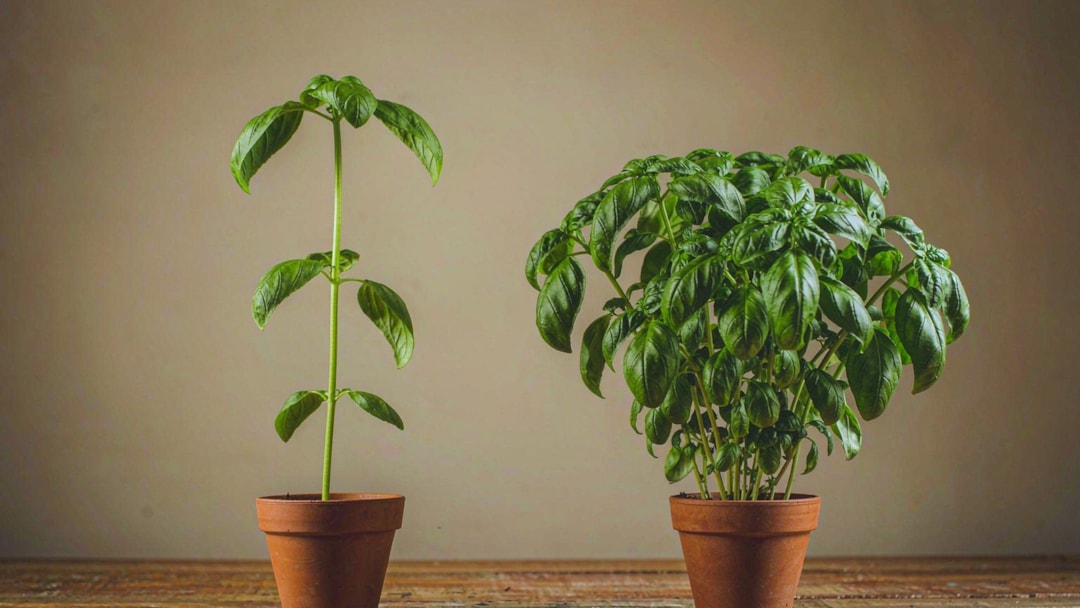
What Does Leggy Basil Look Like?
Leggy basil typically has long, thin stems and leaves spaced farther apart than you would expect from a compact, healthy plant.
You may notice several signs:
- Long stems: The plant grows upward rapidly without developing much fullness.
- Widely spaced leaves: There are noticeable gaps between leaf pairs along the stem.
- Small or sparse foliage: The plant has fewer leaves relative to its height.
- Leaning growth: Stems bend toward a nearby window or grow light.
- Weak stems: The plant may struggle to support its own height.
A tall basil plant is not automatically leggy. Basil naturally develops taller stems as it matures, and different varieties have different growth habits.
The key distinction is the relationship between stem length, leaf development, and overall plant structure.
A healthy basil plant generally develops sturdy stems, healthy leaves, and branching growth when it receives suitable light and care. A leggy plant often puts more growth into extending its stems than into developing a compact canopy.
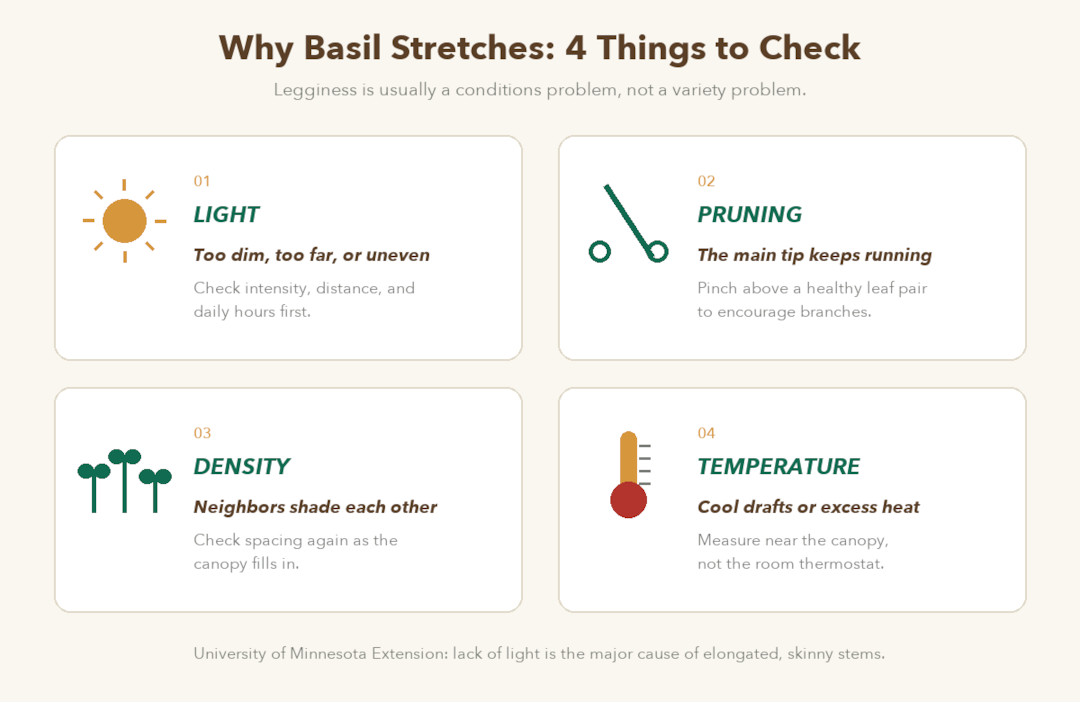
Four things account for most leggy basil indoors: light that is too dim or uneven, a growing tip that is never pinched, plants crowding each other, and growing conditions that stress the plant. Work through them in that order.
1. Insufficient Light Is the Most Common Cause of Leggy Basil
Basil needs adequate light to support healthy leaf and stem development. When light levels are too low, the plant may respond by extending its stems in an attempt to reach a brighter area.
This response is called etiolation, a growth pattern associated with insufficient light. Stems may become elongated and weak, while leaves remain relatively small or widely spaced.
Why Indoor Basil Often Becomes Leggy
Indoor environments can appear bright to people while still providing insufficient light for plants. University of Minnesota Extension identifies lack of light as the major cause of elongated, skinny stems, and notes that windowsill-grown seedlings tend to be too tall, with thin, bent stems. The same principle applies to basil: a spot that looks bright to you may still be dim for the plant.
A kitchen counter near a window, for example, may receive only a few hours of direct sunlight. Light intensity can also drop considerably farther from the window, particularly in rooms with limited natural light.
Basil grown under an unsuitable grow light may show similar symptoms.
Common lighting problems include:
- The grow light is too weak for the crop.
- The light is positioned too far from the plant canopy.
- Nearby plants block light from reaching the basil.
- The daily lighting schedule is too short for the growing conditions.
- The light reaches some planting positions more effectively than others.
How to Fix Leggy Basil Caused by Low Light
Start by checking the light reaching the leaves, rather than simply adding more hours to the schedule.
If you're growing basil near a window:
- Move the plant to a brighter location if practical.
- Observe whether it receives direct sunlight and for how long.
- Rotate the plant when appropriate if growth is noticeably uneven.
If you're using a grow light:
- Check the manufacturer's recommended distance and coverage.
- Make sure the light reaches the entire canopy.
- Follow a consistent daily lighting schedule.
- Avoid assuming that longer lighting hours can compensate for inadequate light intensity.
Many indoor basil plants benefit from approximately 12–16 hours of suitable grow light per day, depending on light intensity and the growing environment. This is a general starting range, not a guarantee that every setup will provide enough light. For indoor seedlings, UMN Extension suggests keeping fixtures roughly 2–4 inches above the plants and giving them 12–16 hours of light daily, with a dark period each night — a useful reminder that distance matters as much as duration.
Basil also needs a regular dark period. Leaving grow lights on continuously is not a reliable solution to leggy growth.
Important: Existing elongated stems will not suddenly become shorter after you improve the lighting. The goal is to encourage healthier new growth and improve the plant's structure over time.
2. Your Basil Needs Regular Pinching and Pruning
Basil naturally grows upward from its growing tips. If you allow the main stem to continue extending without pinching or pruning, the plant may develop a taller, less branched structure.
Pruning helps redirect growth and encourages the development of side shoots.
How Pinching Encourages Bushier Basil
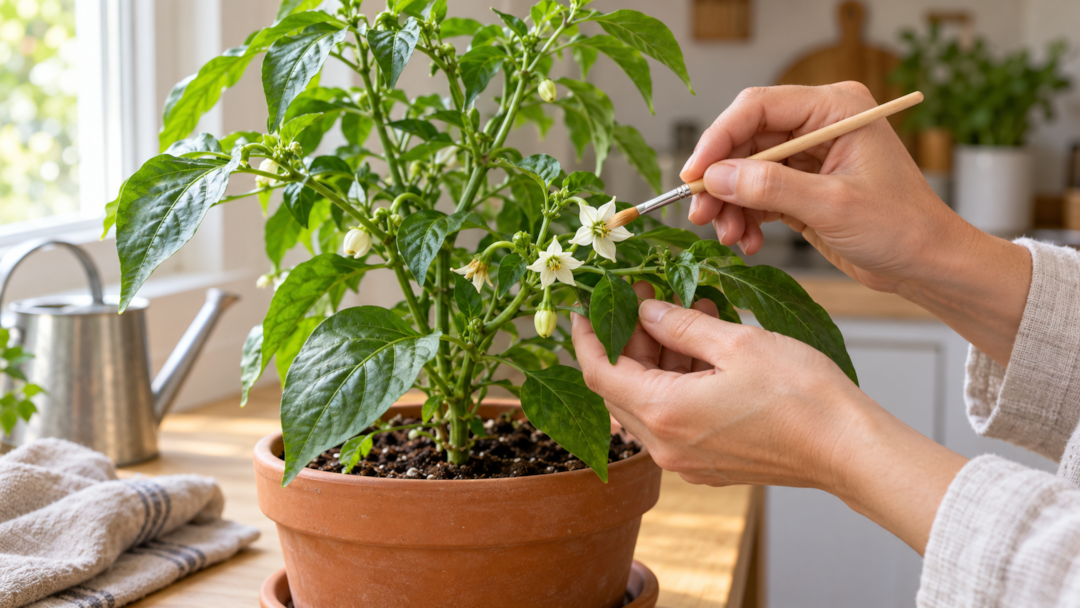
Basil stems contain pairs of leaves, and small growing points are located where the leaves meet the stem.
When you pinch or cut the stem just above a suitable leaf pair, the buds at that node can develop into new branches. Instead of relying on one dominant stem, the plant can begin producing multiple growing shoots.
Clemson Extension describes the same practice in its basil guide: pinching out the terminal growth periodically encourages branching and creates thicker plants with more tender foliage for harvest.
This creates a fuller structure and more potential sites for future leaf production.
How to Pinch Basil Correctly
- Wait until the basil plant has several sets of true leaves and is established enough to tolerate pruning.
- Identify a healthy stem with a pair of well-developed leaves.
- Pinch or cut the stem just above that leaf pair.
- Leave the lower leaves and growing points intact.
- Give the plant time to produce new side shoots before pruning again.
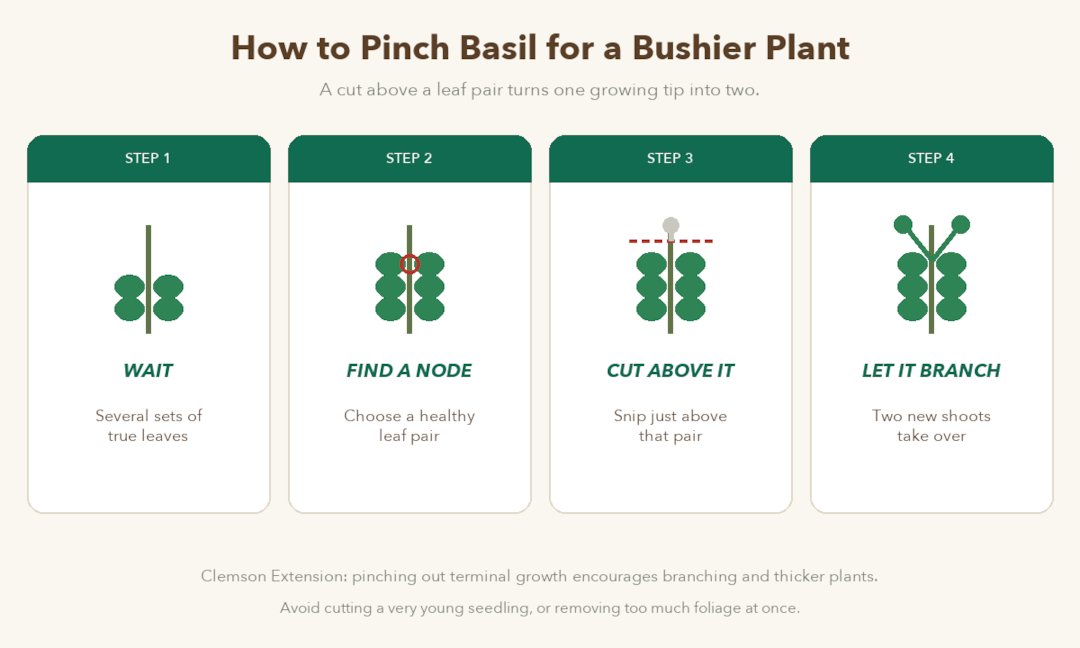
Avoid removing the growing tip from a very young seedling before it has developed enough foliage.
You should also avoid cutting away too much growth at once, particularly if the plant is already weak or stressed.
Should You Prune Leggy Basil?
Yes, in many cases. If the plant is healthy and has suitable lower nodes with healthy leaves, selective pruning can help encourage branching.
However, pruning alone will not correct the underlying problem if light levels remain too low. A plant that is repeatedly cut back but continues receiving insufficient light may simply produce more weak, elongated growth.
For the best results, combine appropriate lighting with a consistent pruning routine.
3. Too Many Basil Plants Are Growing in One Space
Basil seedlings can look small and harmless when they first emerge. But as they grow, crowded plants may compete for light and room.
When several seedlings grow close together, taller plants can shade their neighbors. Plants may stretch upward as they compete for better access to light, creating a crowded canopy with uneven growth.
Overcrowding can also restrict airflow and make it harder to inspect individual plants.
How to Manage Basil Plant Density
- Follow the recommended planting density for your growing system.
- Thin seedlings when necessary, using the instructions for your seeds or system.
- Remove or reposition plants that are clearly overcrowded, where the system allows it.
- Monitor how the canopy changes as the plants mature.
- Prune established basil plants to prevent excessive overlap.
In a vertical garden, spacing needs to account for more than the distance between planting openings — our vertical garden plant spacing guide covers how to plan for the size of a mature canopy. Mature leaves and stems can extend beyond the original planting position.
A basil plant may be appropriately spaced when young but become crowded several weeks later.
If one basil plant grows much taller than its neighbors, check whether it is receiving more light or shading other plants before assuming that its variety is naturally more vigorous.
4. Temperature and Growing Conditions May Be Affecting Growth
Basil is a warm-season herb. It generally grows best in warm conditions with adequate light and suitable root-zone conditions.
Cool temperatures can slow growth, while excessive heat combined with inadequate light or other environmental stress may contribute to weak development.
Temperature does not always cause legginess directly, but it influences how a plant develops and how effectively it uses available light.
What Temperature Problems Look Like
If your basil is growing slowly as well as becoming leggy, investigate the growing environment. Slow growth on its own is a different problem, with its own checklist — see why indoor herbs grow slowly for causes such as root stress and nutrient balance.
Possible warning signs include:
- Growth slowing during cold periods.
- Leaves becoming damaged after exposure to cold drafts.
- Uneven growth near windows or air-conditioning vents.
- Plants struggling despite an apparently adequate lighting schedule.
How to Improve Growing Conditions
Keep basil away from cold drafts and sudden temperature changes. Follow the recommended temperature range for your specific variety and growing system.
Also check root health and moisture conditions. A plant experiencing root stress may produce weak growth even when its light and temperature are suitable.
Avoid trying to solve every growth problem by changing several environmental factors at once. Make adjustments based on the symptoms you observe, then monitor how new growth responds.
How to Fix Leggy Basil: A Quick Troubleshooting Guide
Use this table to identify the most likely cause of your basil's growth pattern and decide what to check first.
| What You Notice | Possible Cause | What to Do |
|---|---|---|
| Long, thin stems with widely spaced leaves | Insufficient light | Check light intensity, distance, and coverage |
| Plant leans toward a window or grow light | Uneven light exposure | Improve light distribution and positioning |
| One main stem grows tall with little branching | Lack of pinching or pruning | Pinch or cut above a healthy leaf pair once established |
| Several plants are stretching and shading each other | Overcrowding | Check planting density and thin seedlings when appropriate |
| Basil grows slowly and looks stressed | Unsuitable temperature, root conditions, or nutrient balance | Check the environment, roots, and growing-system instructions |
| New growth is compact but the plant remains tall | Previous growth was elongated | Continue providing suitable light and prune selectively if appropriate |
| Leaves are pale, damaged, or yellowing | Multiple possible causes | Investigate light, water, roots, temperature, and nutrients before treating |
These symptoms are clues rather than definitive diagnoses. If yellowing is the main symptom rather than tall stems, start with our hydroponic yellow leaves checklist instead. If several problems occur together, address the underlying growing conditions before repeatedly pruning the plant.
The Bottom Line
Leggy basil is rarely a lost cause. In most cases it is a signal that light, pruning, spacing, or temperature needs attention — and the fix shows up in new growth rather than in the stems you already have. Start with light intensity and coverage, pinch established plants just above a healthy leaf pair, then give the plant a couple of weeks of steady conditions before judging the result.
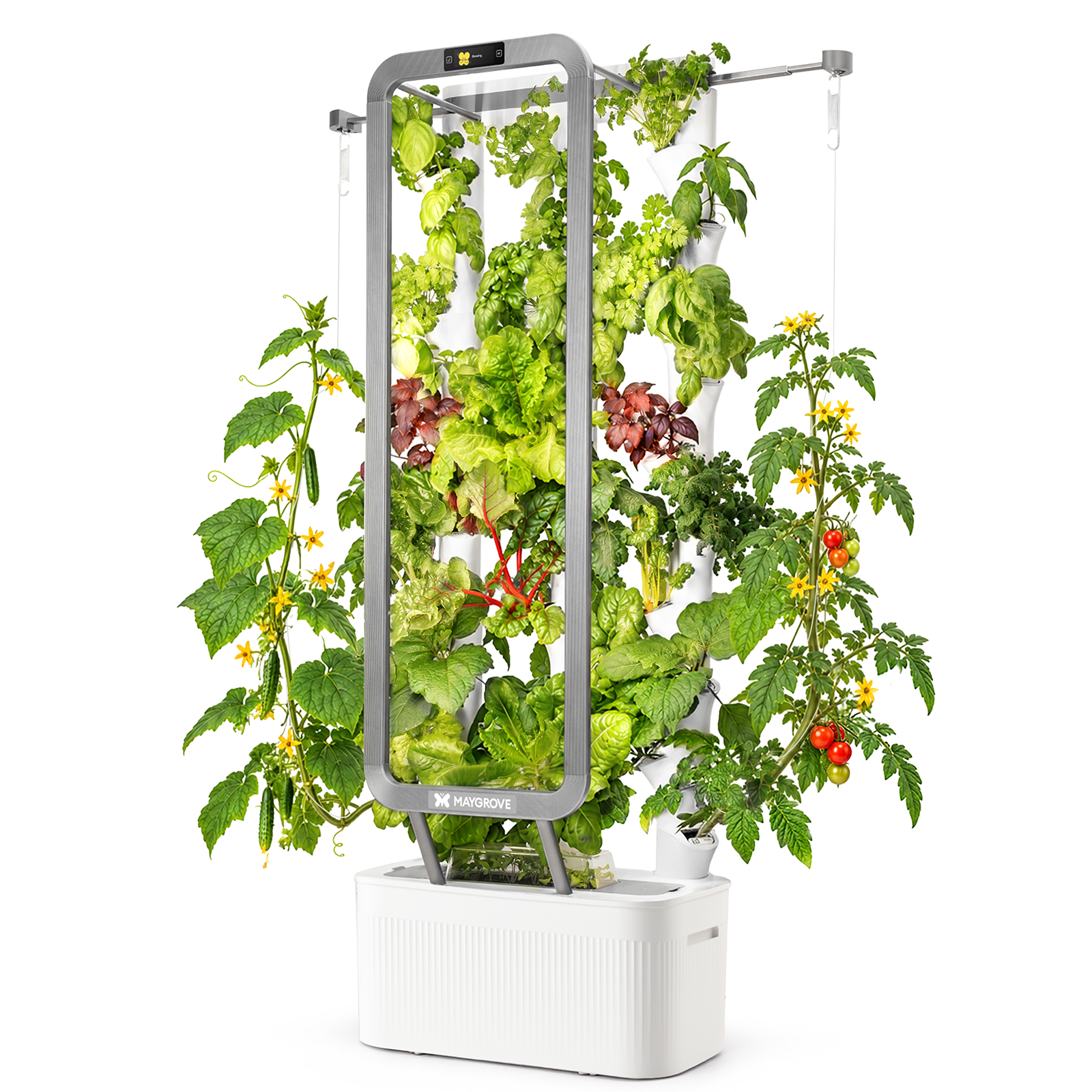
Most legginess comes from conditions that drift: a lamp that sits too far away, a window that gets only a few hours of sun, a canopy where one plant shades another. The Maygrove AI Growbot Verti 30 keeps light, water, and nutrients consistent across every planting position, so the environment is one less thing to troubleshoot. You will still pinch and thin — that is part of growing basil — but you will be doing it on a plant that has what it needs to branch.
When the plant does fill out, a batch of fresh basil pesto is the easiest reward, and our indoor garden guide has ideas for what to grow next.
Frequently Asked Questions
Why is my basil growing tall but not bushy?
Basil may grow tall without becoming bushy because it is receiving insufficient light or has not been pinched to encourage branching. Check the light intensity and coverage, then pinch established plants above a healthy pair of leaves to encourage side shoots.
Can leggy basil recover?
Often, yes. If the plant is otherwise healthy, improving the light and pruning selectively may help it develop better new growth. Existing elongated stems will not become shorter, so focus on encouraging a healthier structure as the plant continues growing.
Should I cut back tall basil?
You can prune established basil if it has healthy leaves and suitable nodes for new growth. Cut just above a healthy pair of leaves to encourage branching. Avoid removing too much foliage at once, particularly if the plant is young or stressed.
How many hours of grow light does basil need?
Many indoor basil plants do well with approximately 12–16 hours of suitable grow light per day, depending on light intensity and growing conditions. Follow the recommendations for your variety and growing system, and provide a regular dark period.
Does Genovese Basil grow differently from Lemon Basil and Red Rubin Basil?
Yes. These varieties can differ in leaf size, pigmentation, branching, and mature shape. However, all need suitable light and growing conditions. Compare each plant with the expected characteristics of its variety rather than using height alone to judge its health.
Why is my basil leaning to one side?
Basil often leans toward the strongest available light source. Check whether a window or grow light illuminates the plant unevenly. Improving light distribution can encourage more balanced growth.
Does pruning make basil grow faster?
Pruning does not automatically increase the plant's overall growth rate. However, correctly pinching established basil can encourage branching and create a fuller shape, providing more potential sites for future leaf growth.
Is a sunny windowsill enough for basil indoors?
Clemson Extension notes that basil prefers full sun and grows reasonably well with about six hours of sun per day. Many indoor windowsills fall short of that in winter, and UMN Extension warns that windowsill-grown seedlings tend to be too tall, with thin, bent stems. A grow light positioned close to the canopy is usually more predictable.
Can a grow light be too close to basil?
Very close fixtures can stress leaves if they give off a lot of heat, while distant lights are a common reason stems stretch. UMN Extension suggests keeping fluorescent or LED fixtures roughly 2–4 inches above seedlings. Follow your own light's instructions and watch how new growth responds rather than relying on a fixed distance for every setup.